• Atlanta was where the very dear beverage of Coca-Cola was first concocted by the pharmacist John Pemberton. He made a thick deep brown syrupy version of the drink which he mixed with soda to sell a highly refreshing drink in May of 1886. Today, the drink has made its way all across the globe and is greatly loved by everyone looking for a refreshment and some who even claim it’s useful application as a toilet cleaner!! My childhood pediatrician for one recommended half a bottle of coke for the brother and me to treat stomach upsets! Coke did work as a wonderful medicine for all those troubles! But with a greater taste for mango drinks, (read slice and maaza) and haters of fizz, we never did take to coke but for its medicinal values. Even today, as we indulge in spicy, oily Chinese food, we do love the taste of the American drink on the side. Whether in floats, or neat, Coke was my proverbial arm-candy in all college frat-parties or distinguished office meetings over the years. While I’ve since switched to more a respectful sweet lime soda for arm-candy, though still not a fan of carbonated or sparkling water, I could not resist visiting the Coca-Cola world in downtown Atlanta. After all what is the story behind Pemberton’s invention and a company with an annual revenue of over 45 Billion dollars!


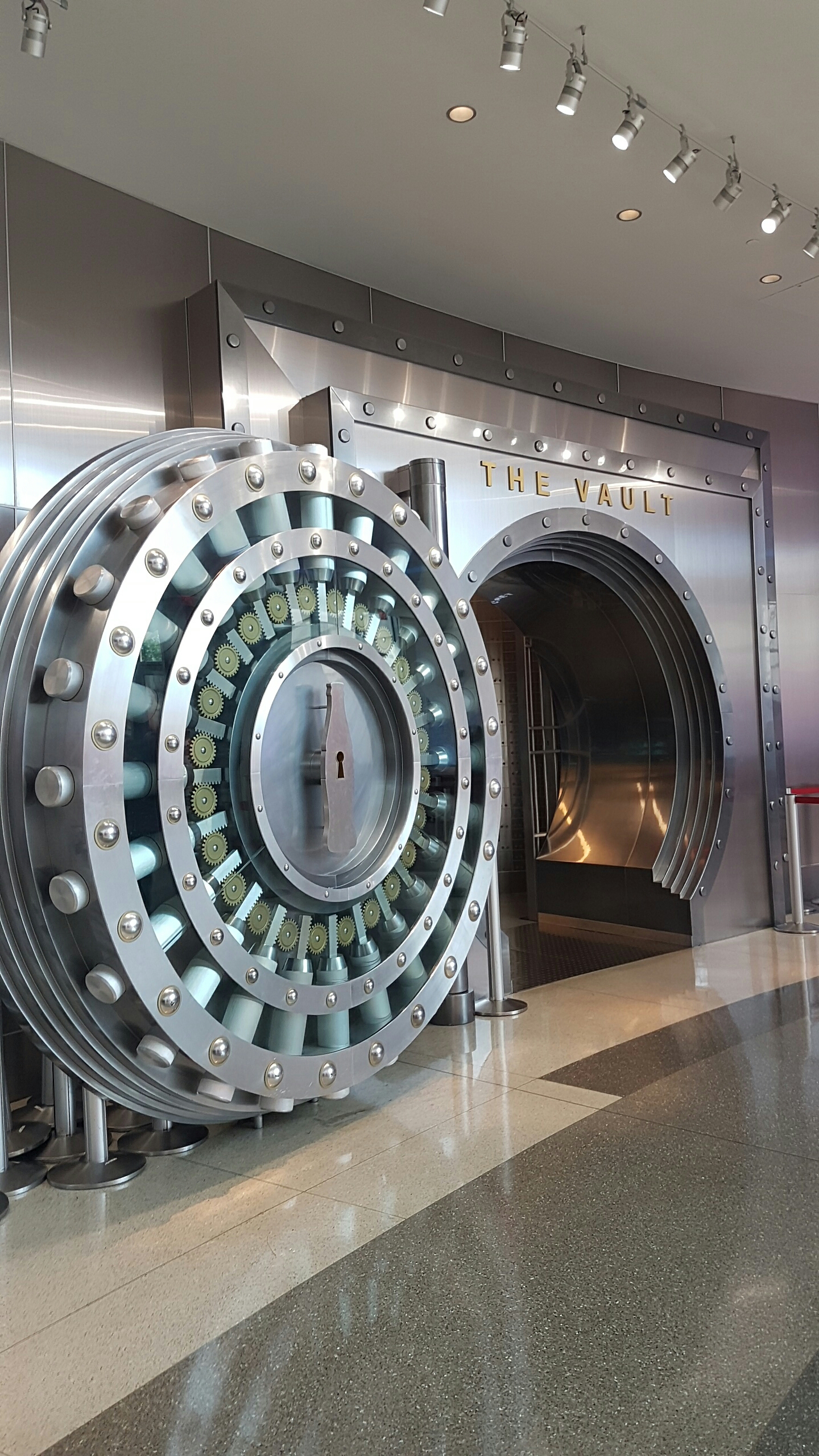
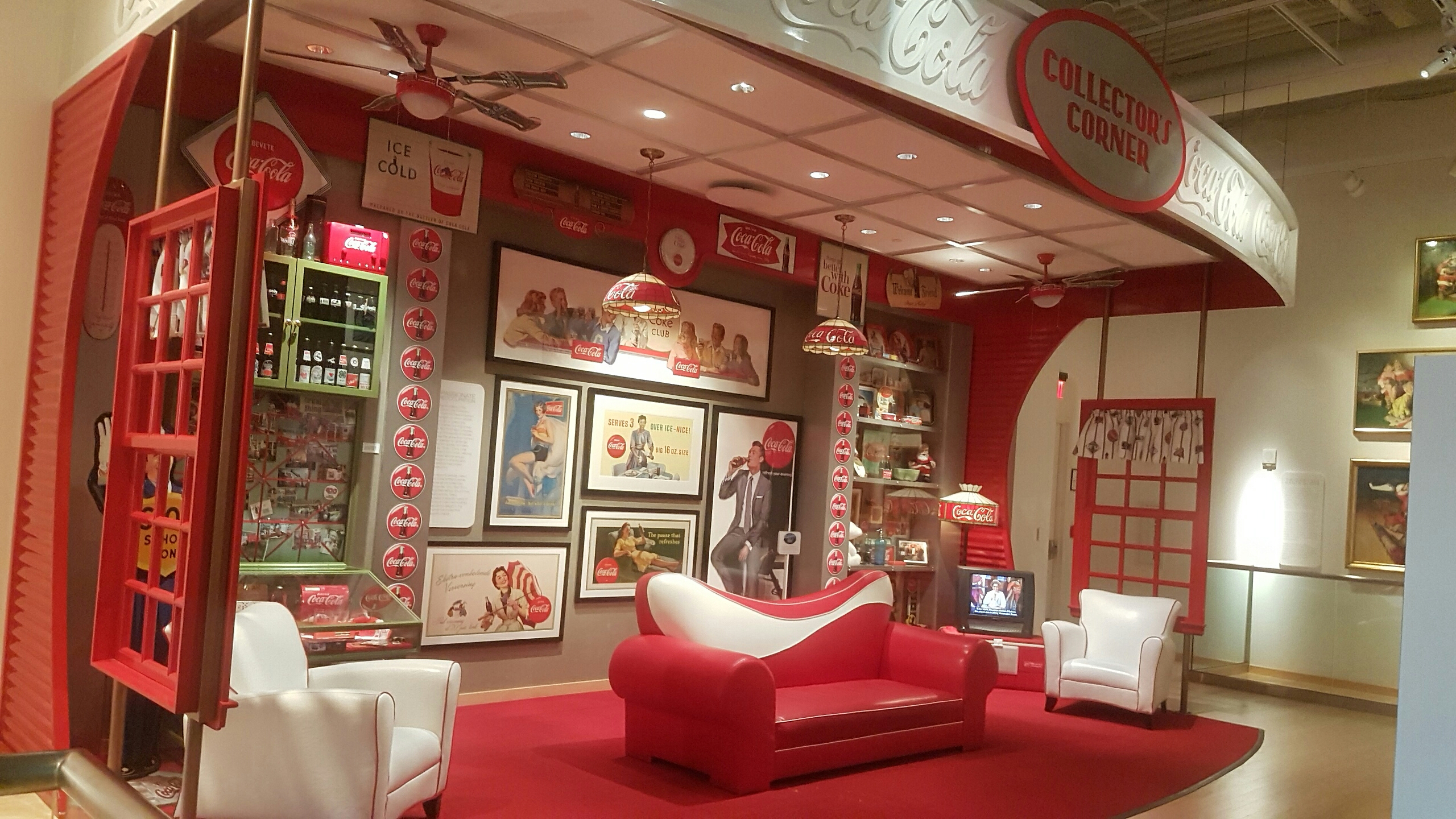
    Jacobs pharmacy was first where the drink was served as a fountain soda, instantly becoming popular in the summer of ’86. The museum documents the journey of the cola from it’s invention by Pemberton, the sale of it’s recipe to the Candler, further it’s distribution to various countries across the globe, documenting the adverts the company brought out over time, the very many different marketing gimmicks it works on, it hosts the safe that carries the secret formula, happily displays scamsters over the years who claimed to know better and finally even encloses a drink hall gleefully giving away coke along with other competitive drinks from other markets. Their confidence on the superiority of coca-cola over the others is quite palpable! Rigged or not, it tends to be the preference of most people. Apart from it’s extensive market presence and its immense popularity, I am a huge patron of most of their advertisements, and after visiting the museum, their artwork for sure! The polar bear, a mascot for the beverage, has had the company scramble to support the cause of saving polar bears. With their budgets and a nobility in intention, they have made more than a brief impact on the cause. The endearing bear did make for a wonderful photo-opportunity! It did look a wee bit emancipated if anything!!


    Though coca-cola is widely criticized for being a cause of obesity apart from a wide range of health issues, one cannot dismiss its virtue as a refreshment! The team’s marketing prowess also functioning as great contributing factor. While am a great patron of junk food, coke and like included, I did wonder if Coca-cola that once began with an intent to boost energy and aid digestion went massively wrong along the years. Portion-control may well be a factor, a little of the pharmaceutical concoction every once in a while would surely not hurt, but in great quantities is definitely a major trouble brewer. Our thoughts play a much greater role in defining the nutrition garnered rather than the scientific quality of food we consume. In the Coca-cola world one cant help but marvel at the great journey of the humble beverage and we absolutely cannot overlook it’s presence in our lives! Binding people, quenching thirst, sometimes purer than water, it is one of those man-made inventions that has reinvented itself over the decades! On other fronts the company definitely deserves commendation for innovating interesting and ingenious ways to stay trendy. The bottle for instance is a product of a design brief that had asked to envisage a bottle that is easy to hold, and easily distinguishable even if broken!

  • Susegad!

    Rubbing off a little of the Goan culture is a must for one in a lifetime. Inducing type-B personality in even the most ambitious figure the tiny Indian state inspires the slow life like no other. Originally a Portuguese colony, the Konkan coastal state never willingly wanted to be a part of India. Happily Portuguese, they reveled in the European way of living, holding Portuguese passports for more than a decade before being forcibly added to the Indian Union post a military invasion!

    Even today the state flaunts its erstwhile glorious err chilled out past wearing its “susegad” mantle with great ease. Susegad is the term in Portuguese meaning to convey the carefree, laid back, contended and relaxed attitude seen, felt and heard in Goa! Translating to Aaram se, take it easy, relax or chill out, its one word that describes what the great art of idleness is all about. But idleness in Goa is not all about swatting flies, who by the way in great numbers are quite a past-time. Getting absorbed in the lush greenery, the blue sea, the even bluer skies, slowing down, breathing and well frolicking about water is all included. While I’d been contemplating about the genius of a relaxed attitude, the clime of the India’s seventh smallest state admeasuring roughly 3700 sq km sealed the deal on the benefits of being relaxed. At a time when unwinding doesn’t come easy, the fresh clean air, the balmy temperatures, the brilliant coastline, and the south-west monsoons bring out the most cheery smiles and relaxing every muscle, ligament or tendon there is!

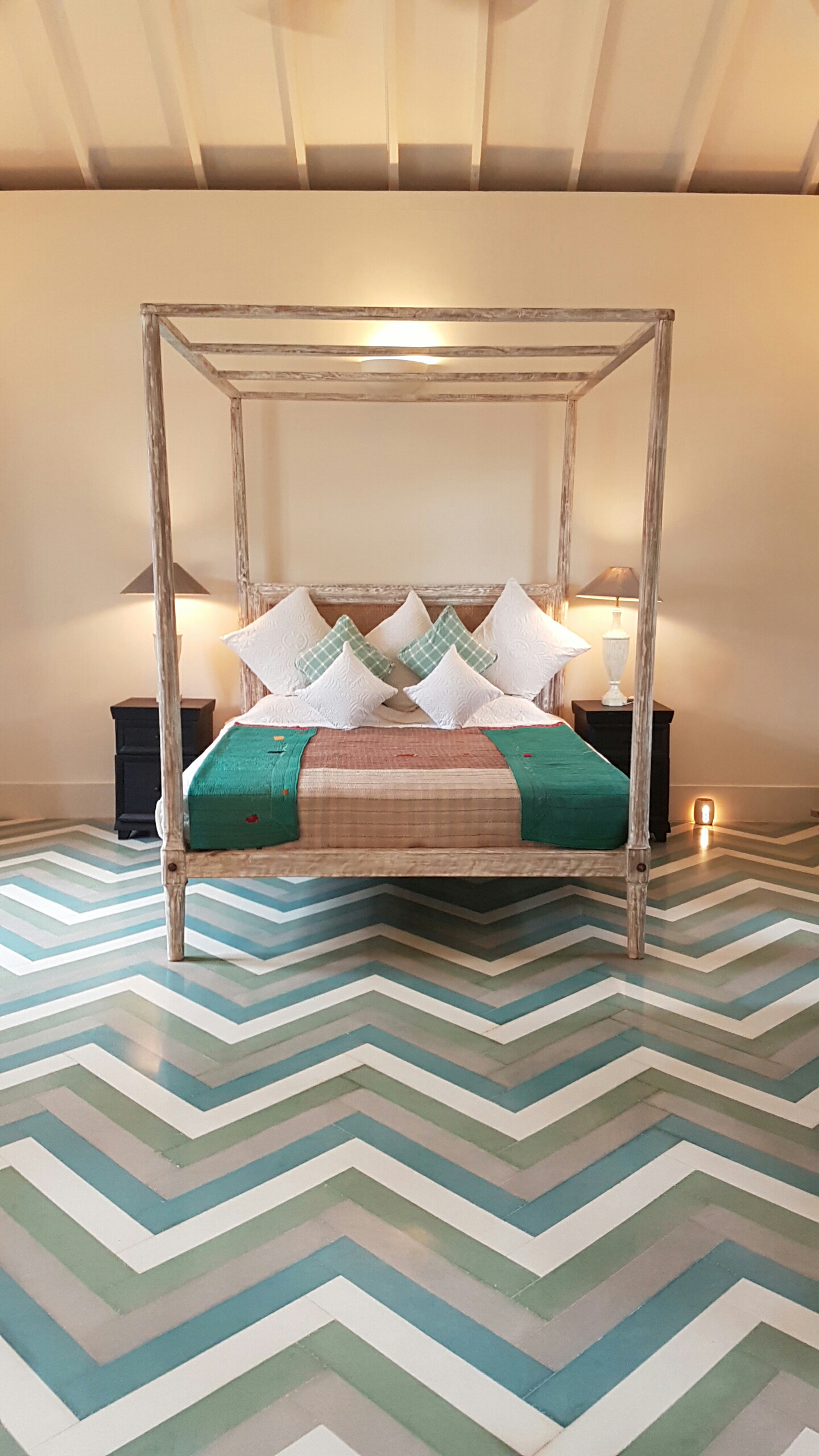
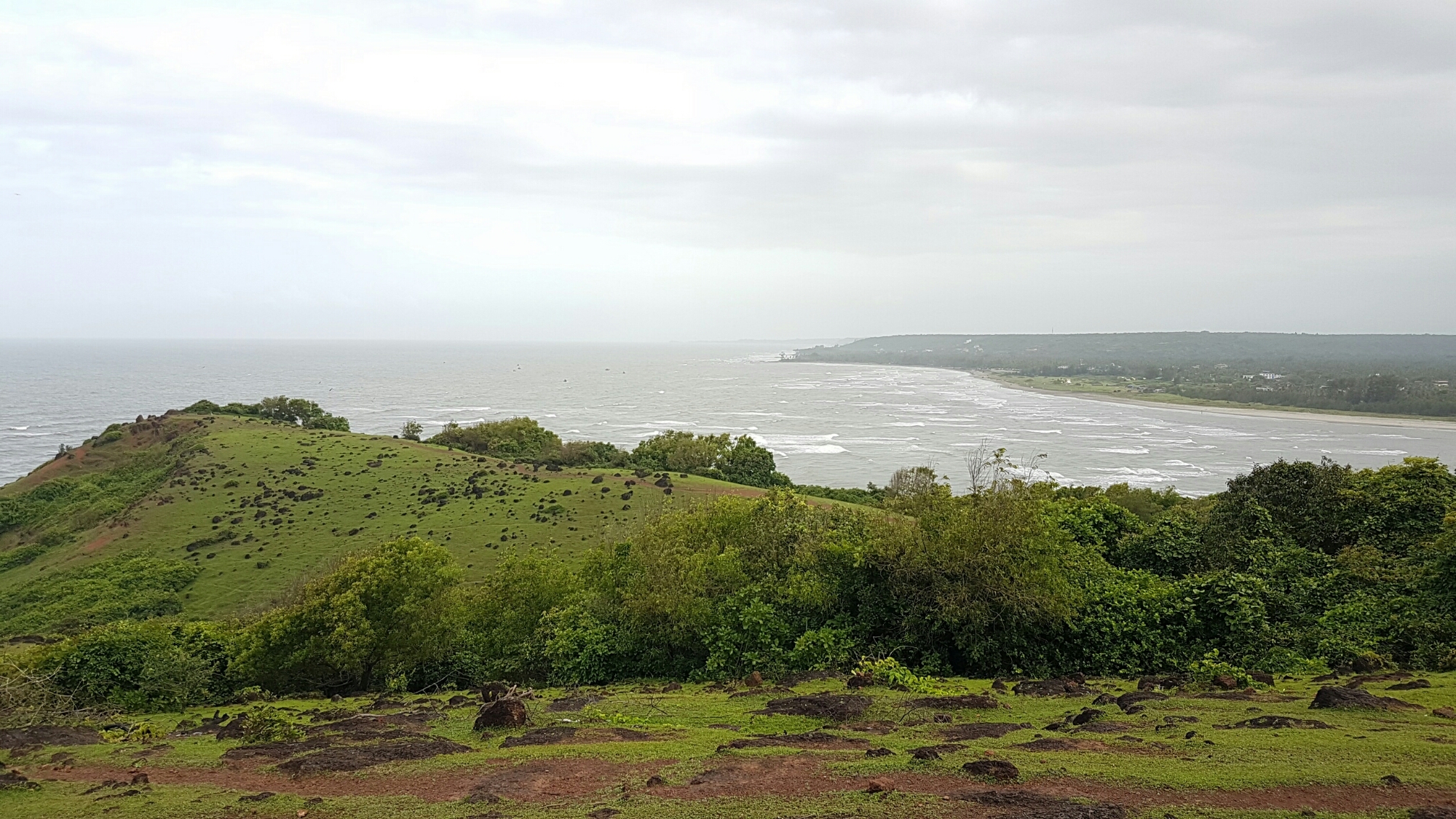
    While happiness makes for good luck almost always, a relaxed sensibility makes a great company for life. Traditional Goan architecture reflects the relaxed world view with sprawling bungalows offset by large verandahs, sloping tiled roofs and courtyard spaces set in lush green surrounds. Colored in bright hues mostly royal blues and cheery yellows, sometimes jarring purples, elegant peaches or soothing mint, they are all completed with white trimmings. Retrofitting traditional Goan villas into more modern ones, with added amenities and luxury defines Isprava’s properties in the idyllic state. Villa Verde is one such luxury villa capturing the essence of Goa with added luxuries of the day. Incorporating Portuguese and Mediterranean elements, the villa is filled with antiquities sourced from old palaces and mansions. It has a regal aura coupled with an easy breezy effect in all. The colors are charming and calming both in equal measure. Whilst the monsoons raise the sea levels, the Chapora fort offers the best views of the most cool, happy-go-lucky and easy-breezy state!

  • Guest diary #2

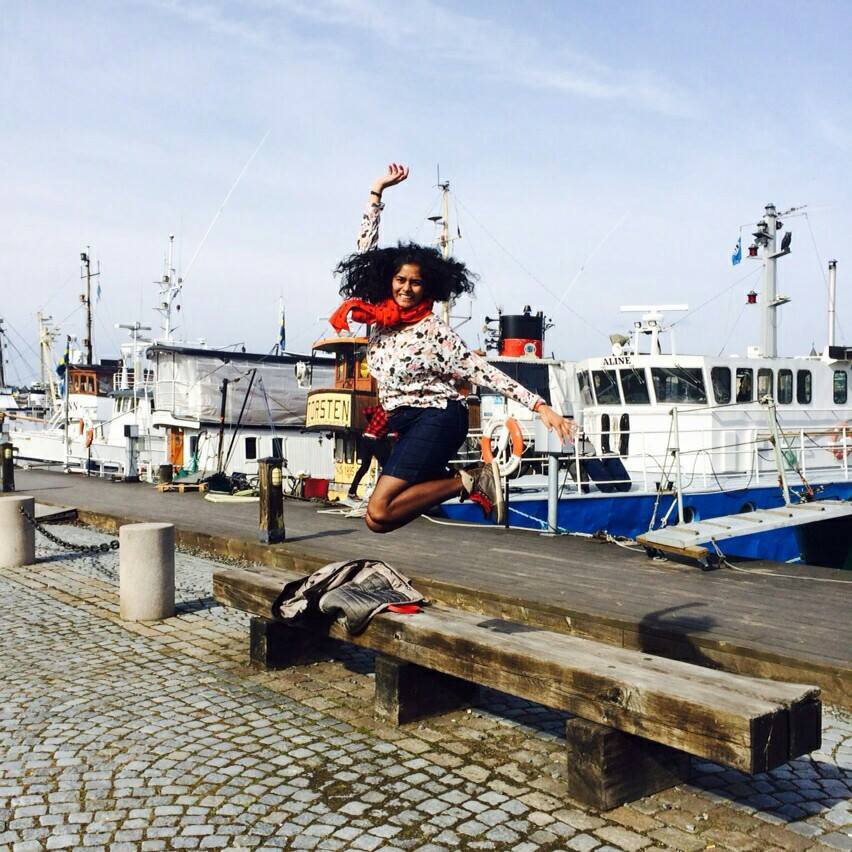
    Crossing the bicentenary mark, publishing 200 posts calls for a celebration! And to add cheer to this milestone this post features a jet-setting, smart-working, truly cerebral and quaintly Indian travelista! Mahi Payardha our guest on this occasion has clocked half a decade in Germany, Malaysia and Sweden, sometimes working and mostly having a ball! A proud IITian, graduating from India’s premier engineering institute, she currently tinkers technology at Ericsson. Just out of a long vacation bouncing around Europe with family, we pop her a few questions while she pops the champagne!

    This slideshow requires JavaScript.

    1. A building that has influenced your life, which, when, where, how and why?
    Dresden Frauenkirche (Church of Our Lady). This magnificent domed Baroque church was destroyed during second world war and several other such buildings, which make the Dresden skyline on the bank of river Elbe.
    This entire stretch of the old town was completely rebuilt with all the details intact. I was amazed at how much can be brought back after being completely destroyed and how no matter how we try it will just not be the same it was when it was originally built. There will always be the taint or left overs of the new artist. This was quiet a learning for me. It has changed me as a person. To know that change and healing is possible. Even rebuilding is possible but there will always be a tiny bit that will remain but as a beautiful scar.

    2. Your most treasured life lesson in a line, one line.
    There are so many. Cannot choose one. Have two
    i. Anything that can be solved with money and time, is not a problem.
    ii. No matter, where we come from, which language we speak, how much money we have, what colour our skin is and how we dress and eat, at the end there are only two kinds of people in the world. Men and women

    3. The bestest country ever, that you have been to and why?
    a. Germany. They have so much history, so many stories, guilt, structure, craziness, rain, snow, sun, sadness, confusion, rules, mountains, plains, rivers, sea, castles, forests, friends and leaders.

    4. What makes you feel beautiful?
    Laughing or smiling and the cold breeze on my face when the sun is shining.

    5. Place, clothes, profession. Which of these maketh a person?
    None of these or all of these, not just a single one of these.

    6. Describe a real place that relaxes you, makes you happy and contended?
    An island next to my house. Sitting on a blanket in the sun, with some snacks and a drink and watching the water hit the tiny beach in a rhythm. This relaxes me, makes me happy and contented.

    7. Your most endearing travel story, in preci, specifically 110 words?
    I was travelling to a small town in Finland called Turku also called åbo in Swedish, for work. Very few Finnish speak English and it turned out to be a lonely and boring trip. The next day at work started off good but then I got really sick. So sick that I could not work any longer and decided to fly back to Stockholm that very evening. I was so distraught that I wasted the company money for nothing, irritated and home sick. On the way to the airport in the taxi, I suddenly burst out laughing and the poor Finnish driver not knowing what got into me asked something and I just said “Tikka Masala”. He tried to communicate more but couldn’t get through to me. What had happened was that I saw on the directions board, that there is a city called “Masala” in Finland.

    Everything suddenly felt so comfortable cause I realized that even if am far far away from home in the middle of nowhere I would for sure find a part of me, my home and my identity all over the world.

  • Moscow Times!

    This slideshow requires JavaScript.


    Maybe, said Putin when asked whether Russia would go to war against the United States, to Charlie Rose on the prime time show of 60 minutes. Marked by unabashed confidence and an unflinching nerve he may well be an embodiment of the steely resolve of his fatherland. Lugging a treasure-trove of history and an even more remarkable collection of geography the country is an enigma unfolding every step of the way. Once ruled by Czars, or Tsars as some may like, the world’s biggest country also has one of the sparsest population densities, a statistic that doesn’t apply to its capital Moscow. From wealthy autocratic Czars to people-minded Communists and now well-intended democracy inspired Putinism Russia has seen it all. While the breadth of the country has been home to literary geniuses like Leo Tolstoy, Alexander Pushkin, not to forget my personal favorite, Anton Chekhov; the Kremlin has played host to several eccentric figures, be it the Tsars Ivan, the Terrible, Peter, the Great, the communists who led the Russian Revolution Lenin, Stalin, the Soviet leader Gorbachev or even the ex-KGB spy and the second and fourth President Vladimir Putin. When the Union of Soviet Socialist Republic collapsed in the early 90s the iron-clad Kremlin lowered the sickle and hammer as Gorbachev made way to the more dynamic Yeltin. And testimony to their times the architecture and urbanscapes seen in Russia are as scintillating as the history that was once played out in them. The extravagant palaces, the onion-domed and brilliantly gilded cathedrals, the huge public squares, the changing face of the Kremlin are all remnants of the past that also showcase a culture that is both vast and deep. Playing host to the dire aspects of life even today the Moscow trundles on towards dynamic action and reaction to the world at large. Though an active member of the United Nations, Russia has always maintained its own unique stance on world affairs hardly ever influenced by bigger bullies in the world market, a trait inherited from the past!

    Landing in Moscow, Indians may well be introduced to the workings of the spy-country! But do not take the treatment to heart as Russians in general love Indians and are more than ready to help out at every instance or greet the average looking Indian on the street with disarming smiles and warm welcomes! Succulently testing even a well-seasoned traveler’s patience a two-hour wait at immigration leaves one sufficiently embarrassed and travel-worn with suspense on imminent deportment. After thorough police verification of the passports and several hours added to the already long journey, Moscow all with it’s Stalin’s seven sisters and Lenin’s grand squares lends a warm welcome to the weary traveler. The ride from the Sheremetyevo International airport to the effervescent Arbat Street covers quite a distance and passes by the popular Moscow Zoo. Though hostels and star hotels are the most popular locations for the stay in Moscow, the city also does offer a range of boutique hotels, mostly the 17th century apartment or residential buildings converted to quaint properties hosting tourists with the essential heating and cooling(oh yes!) devices in place.

    Architecture is but the mark of a civilization, the setting against which life happens and a testimony to the times, it makes for the best study of history, human behavior, besides shaping our own lives. The rather grim and eventful past of the Moscow and in effect Russia is exhibited through the stone, concrete, brick and steel structures that stand across the city in indication to its times. Stalin’s skyscrapers for one, stand out defining the skyline quite distinctively. Announced in 1948, and popularly called the seven sisters, the seven skyscrapers placed around Moscow are imposing and important buildings today housing the Moscow State University in Sparrow Hills, the Ukraine Hotel, now a Radisson hotel, the Ministry of foreign affairs, the Hilton Leningradskaya and other administrative building. Stalin commissioned architects to build towering skyscrapers on the likes of the New York giants, mainly inspired by the glorious Empire State building in NYC. The seven sisters therefore bear a massive imprint in terms of massing from the Empire State. On the outside of the walls of Kremlin the brutalism in architecture is exacerbated in not just the buildings but also the urban-scape of the city. Wide avenues marked by high modeled stone structures are crowned up intimidating sidewalks. The Soviet regime in all its Communist glory ensures to dictate even through it’s architecture on how the state is bigger than the individual, on all counts.


    On the insides, these buildings are gilded with golden frames, Russian art, warm carpets and cheery wall-papers. Grand stairways or hallways with dog-legged staircases lead one onto the upper levels of the magnificent buildings. A Stalin building that is now the Four Seasons, closer to the Kremlin, bears an elevation with distinctly different sides on the same façade. Legend holds that the architect drew up two different styles on the same façade to understand from his client Stalin, which one he like better, Stalin on his part signed in the middle, afraid to ask him which did he like the construction team built both on either side. It is therefore strange to note the irony of fear in the limits of communism. What is the point of communism that instills fear in people? What is the point of anything that instills fear in people! Apparently the Russians saw that too, and hence embraced a democracy, even if a tad hesitantly as the State Duma is continued to be dominated by the United Russia party, the stronghold of the current President and Russia’s frontman Vladimir Putin. For he is one who cannot be missed in the extents of the country, even souvenirs hold his presence with smart sunglasses, on mugs, badges, fridge-magnets and scarves. He may well be Russia’s most popular export today! Once queuing up for even a loaf of bread or rations from the state, Russia has come a long way with people engaging in dacha as they lovingly call organic farming on country estates in the weekend, buying Starbucks, right around every corner, or grabbing the quintessential American food, the burgers, fries and steaks off Burger Kings, Shake Shacks and cheery Mac Donalds. When the first Mac Donald opened in Russia the queues lasted remarkably long.

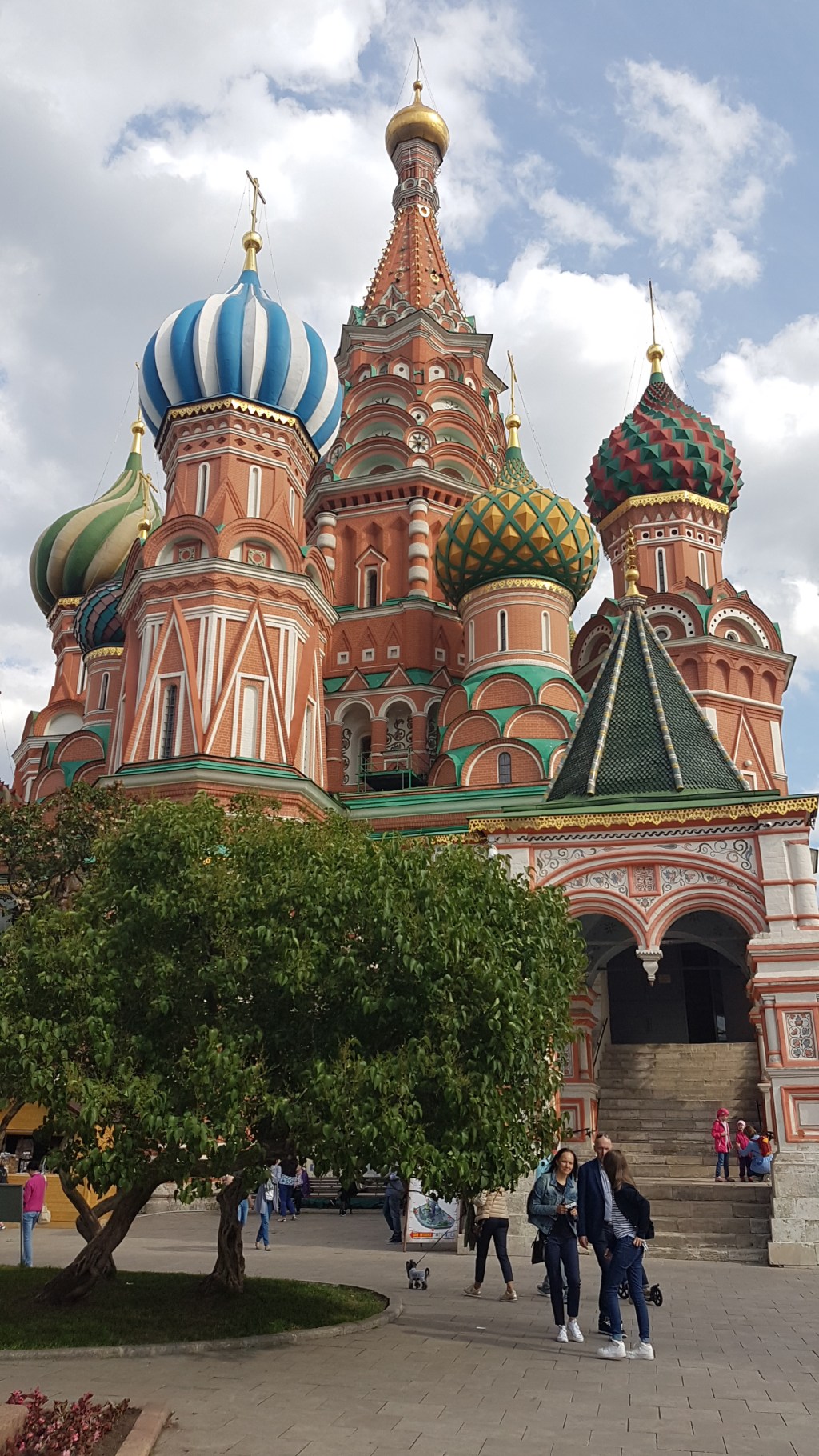
    Despite the immense globalization in Russia since the 1990s, no one can discredit the comfort of MacDonalds across the world, the at-home feel it gives the world, the most endearing part of Moscow is its old architecture, its quirky locals, the well-laid out infrastructure, its fallen rouble, but ofcourse and the radial city planning that emerges from the Kremlin quarters. Kremlin is often called the Eighth wonder of the world and quite rightly so. The crucible of Moscow, the Kremlin is where Moscow had its initial beginnings, the walls of the Kremlin now symbolic is red were not always red in color, they were initially and until recently white, the Red Square bears the name not for it’s color, not even as tribute to the blood of the people but instead it is called so because red means beautiful in Russian and indeed it is beautiful. White stone readily available around Moscow caused all the buildings to have white facades and hence Moscow is even addressed to as the White City. The walls of the Kremlin have only recently been painted red. As for the Red Square, the large public plaza sets a frontage for an entry into the Kremlin, is home to the oddly-beautiful St Basil’s cathedral and is flanked by the vintage GUM shopping mall. The immaculately maintained Kremlin is lined by the tombs of Lenin and the unknown soldier while its walls are where several communist leaders were once buried in patronage! The Kremlin in Moscow is the most popular of all the kremlins, a term used to describe the Russian citadels, once fortified the residence of the Tsars, the royal Bayors, once included five Royal palaces, four cathedrals and the towers of the Kremlin. Today the complex is home to the armory, the State offices, the cathedrals and draws in major tourists visiting the country. The Russian guards watch over intently as tourists are restricted to only a few zones inside and are quick enough to detect even the slightest movement into the restricted areas. The four cathedrals are crowned by the famous Onion domes, glistening in gold and capped by crosses. Russian orthodoxy is the major religion followed in Russia and the Byzantine interiors are modeled on their counterparts in erstwhile Constantinople. As Islam gained popularity in Constantinople and the religious atmospheres were undergoing a major overhaul in Istanbul, many Byzantine Christian leaders fled towards Moscow. It is however interesting to note that the Imperial family in Russia never did patronize any religion, calling avid followers fools. (!)

    As a radial city, all roads lead either to the Kremlin or around the Kremlin, the citadel being the major centre-point. A tour of the inner complex of cathedrals and the Armory museum provide a significant insight into the making of Russia, its glorious past and its autocratic Tsars. Contrary to the proverb history does not repeat itself. It hardly ever does. The richness of the past, the jeweled and furred crowns, the steely arms, silk-gowns, golden table-ware, sapphires and rubies set in gold tell a wonderful story of the different times and the visual encyclopedia demonstrates how a civilization evolves sometimes never to look back. The memorabilia however are spell-binding much the same. A glimpse into the world of the Tsars, Peters, Ivan, Catherine, Anna and all the many dukes and duchesses is one large spectacle. Their times and lives were mostly inspired by the French, the German, the Scandinavians and all the others in the region in the past. Many duchesses took to the nunneries turning to religion and God more often than not. The Novodevichy convent patronized by the imperial family holds fort beautiful premises by the lake and the best in terms of the Byzantine domes, gilded and decorated with a great deal of detailing. The Church of our savior Christ across the Kremlin is one more of the many orthodox churches in Moscow.

    Set within these extremities of religion, art and literature blossomed in Russia, the rigors and capacity of the Russians to wield the human will to unbelievable limits blossomed the average French ballet into the finest of them all, the Russian Ballet. A show at the highly acclaimed and well-designed Bolshoi theatre is a treat to the senses. As the ballerina weightlessly struts around the stage flying like a butterfly albeit without wings, the orchestra plays the tune to administer a huge dose of culture. The lives of the performers are governed by the thrill of performance, the high of creativity and also once offered an opportunity to get out of the country to mostly greener pastures, considering the difficulty in staging an exit. Performers however were allowed to travel to learn and showcase their skills in dance and music. In the same locales the literature of Tolstoy, Pushkin, Chekov exhibit the layers and complexities of human nature thrived. War and Peace by Tolstoy is considered the best book to ever read and figures in the list of the major rankings. It mirrors the complex world we live in today with depth and alacrity like few other pieces of fiction. In any civilization, culture, art and literature were patronized by the rich, sometimes the church or mostly the royalty. Art works at the various museums of art in Russia are dotted by figures and paintings of baby Jesus in the arms of the Virgin Mary crowned and clothed in beaten and embellished gold with the faces painted in clarity. In modern times most Russian jewelry is inspired by nature and architecture is modeled on sustaining the earth by consuming lesser energy.

    When backed by a multitude of history and a glorious past, modern new-age Russians are anything but grim, hardly mysterious and completely high-spirited. In Arbat street, a safe distance from the Kremlin, the quirks of the city are out in full display. A topsy-turvy house, crazy glass and mirror mazes, street artists enliven the atmosphere of the city, while restaurants serve up cuisine from across the world and one can relish a Soviet-style ice-cream, basically an ice-cream in a flat cone. The Louis Vuittons and Manolo Blahniks have easily made their way into the main street as the tall Russian women strut around flicking the goldilocks more than once. The Moscow metro stations much like their counterpart in St Petersburg are decorated in great luxury, mostly a visual treat. They were redesigned to boost the morale of the urban populace who had enough of being treated poorly and in an economy that did not supply them with even the most basic necessities. Today’s Russia wears its past quite proudly and bravely looking out to a new horizon with great zest and mostly a greater sense of humor. When the wives of the officers saved the GUM shopping mall opposite the Kremlin, not allowing their only place of leisure from turning into the department of Heavy Industries little did they know of the favor they were doing to their country. Even the Red Square once the address to public prosecutions or public outcries now is venue for various Rock concerts and musical shows. The festivities run far close to the Kremlin, setting a stark contrast to the dapper guards keeping a strong vigil over time. Though the various streets, maps are not mentioned in the global language of English, it helps that Cyrillic, the script of the Russian, resembles most of the English alphabets, causing one to play match-the-following to get the bearings right! Helpful faces come forward ever so often volunteering information mostly displacing the prejudice. The love for India is also clearly visible apartment from the fact that them Russians are now heartily laughing. Just as she finished her tour with us, our guide peppered her stories with genial jokes on the Russians, the Soviets and even the current affairs in the country, stating that’s something she wouldn’t be caught dead sharing at the red square a couple of decades ago!

    The St Basil’s cathedral is mostly the mouth-piece for Russia today, a visual metonym, almost a mascot for the country. The colorful turrets and buffoonish structure cannot help but make the happy-go-lucky ones laugh and the serious wince in delight. The friendly vibe coupled with the need to lift the iron veil has had a lot of the citizens bounce out, opening up to visitors, letting go of the need for the infamous mystery and secrecy. A walk on Traversky could have been anywhere in Europe, munching Spanish Churros or buying a LongChamp from Paris. As the world is increasingly made flat Moscow is breaking bad and more often than not moving with the times. They even have curated a love-lock brick all equipped with flower arches and lock trees! While exhibitions in parks have budding artists use cheery oranges and bright pinks adding cheer to the atmosphere and good-natured Russians getting in a huddle while hopping and singing along just as actively. With the world becoming flat come other environmental disasters like inconsistent temperatures, precipitation and global warming, well in case of Russia, global cooling!

  • Of Saints and Apostles!

    Looking west, St Petersburg named after the Apostle Peter, by the Europe loving Tsar Peter was first a Swedish settlement on the bank of the River Neva. In line with a few cities in Alaska it is the highest in latitude city with a populace of over a hundred million, with no city further not being home to that many people. Crown prince Peter, unlike his predecessors enjoyed the great outdoors and would go to any length to quest his love for travel but when he inherited the Russian empire he was tied down to the Kremlin. Hating the hierarchy and utterly convinced that the Boyars were scheming to kill him he boldly attested to shift the capital to a Swedish rampart that was recently won by the Russians after defeating the Swedish in an unlikely defeat. The very swampy marsh eagerly looked out into the Gulf of Finland, easily connecting to the rest of Europe accessed by boats. Six-hundred odd kilometers away from Moscow he was convinced of the location prodding the rest of his subjects to move along virtually deserting the Kremlin. Loving Italian architecture, which left a deep impression on him as a young boy, he commissioned Rapheal to build the city of his dreams, which would look as beautiful as Rome, Venice, Pisa and Milan all rolled into one. When he discovered that the traditional medieval white stone was not easily available in the precincts of his new town he imposed a stone tax(!) commanding citizens coming to St Petersburg to carry a sizeable amount of stone into the new capital city. So brick by brick, or rather stone by stone St Petersburg was built right from the scratch.


    It now is the second largest city in Russia and by far the quaintest town drizzled in art and peppered with culture from upper-crust Marinnsky performances to the more humble but just as good street performances. While Moscow is intimidating in most places, apart from its parks, St Petersburg is delightful in every turn of the road. The buildings hardly ever go higher than the prescribed four-storey limit and unless absolutely essential, the proportion of the streets and the side-walks are maintained to lend to the city a grand yet warm feel. The river Neva is tapped into the city through various canals marked by tiny bridges at safe distances. The city itself is hinged on the two banks of the Neva crossed by iron-bridges that lift up to let ships into the city facilitating movement of goods into the city. With every building mimicking the proportions of Rome in massing and doused in pastel colors of France, the city is widely candy-like reminding one of a well built cake. The whizzing of the motorcars may just be the draw into reality! Though Peter the Great did establish the city and faced the other royals head-on he did not live long enough to see his vision turn into a reality. After his death the politics of the heavy-headed royals put a brief stop to the city development which only continued in full swing under his daughter Ekaterina as the Russians call her, or Catherine the Great as more popularly known. Steering the city to a fine completion Catherine the Great was known for her golden rule of Russia. Under her thumb the various monuments of the city were built, monuments that just-married couples tour across the city. It is customary for brides and bridegrooms in the city to walk around to major monuments across the city after a simple church wedding, wedding party intact, taking in the sites and mostly letting the city and it’s monuments know of their tryst with holy matrimony! So tourists can behold several beautiful brides and dapper grooms prance around with best men and maid of honor in tow! Most brides wear a fur coat too all in the ensemble!


    With a not so long history and a more youthful geography St Petersburg is widely chilly in winters but glows very warmly in the few months of summer. As the snow melts away and the warmer climes approach, the people shed all those layers to emerge in a happy-go-lucky fervor matching their easy smiles with pretty flowers in full bloom. With white nights unfolding, a natural phenomenon where the sky is lit all through the night due to the sun’s angle with earth’s horizon, the city comes alive donning a hat of fun and frolic in a shroud of un-leaving sunlight. Artists of all kind take to the street, performing rock, singing aloud, drawing the weary or thrilled passerby, completing an art project, dishing out an ice-cream, doling out hot yummy corn on the cob, jiving to a dance move and hence sending out those precious vibes into the atmosphere, dressing up in face-paint, standing as still as a perfectly chiseled statue, standing on poles to become a rather out-of-proportion cartoon character, performing a randon trick or two, blowing out massive soap bubbles into the atmosphere, selling rare manuscripts or even playing a tune on the vibrofone! The vibrofone was undoubtedly my most favorite of them all, the subtle and sweet sounding organ could easily make one pause in their tracks and in tune with bright pink sky transport one into a painting nonetheless!

    Unlike Barcelona’s La Rambla or Paris’s Champs de Ely sees the urban performance-scape of St Petersburg during the white nights is not restricted to one street or one area, the entire city streets become a place of wonder with Nevsky Prospekt definitely leading the list. The UNESCO World Heritage site is also a city of museums hosting the largest number of museums in the world in one city. The Hermitage leading the pack is one of the biggest museums with large floor plates in the world, it is thronged by a large number of tourists joining the ranks of the Louvre in Paris or the Met in New York. At the Hermitage one is treated to the large collection of art ranging from the Byzantine era to the more recent modern works of art. Van Gogh, Monet, da Vinci are some of the works in the Hermitage that is also flooded with several art collections of the Tsars, the Soviets and more recent government departments of Russia. Home-town to Putin, the city is as fun as ever and a potpourri of a number of European cities with the best of Russia. The Hermitage too is not as specifically Russia as it is all about the world in general. Artifacts from Egypt, the Bahamas and even Phillipines makes the private collection very comprehensive and largely endearing, the fact that it is housed in and tied in seamlessly to the Winter Palace of the Tsars makes the journey through the museum distinctly Russian. It does however bear an uncanny resemblance to the Louvre minus Pei’s very popular glass pyramid. The grand staircase and the house of portraits are reminders of the country’s glorious past and the bravest of them all. Visiting the palace along with the Italian Prime Minister in tow serves to remind one the lack of distinction between the leaders and us humble followers. He did shake hands benevolently and chatted up with the museum goers with ease though followed by a very loyal entourage. Taking well over a day at the museum soaking in all the extents of art it is a rather tedious affair! But after a day well spent the canals make for an uplifting companion through the white nights walks!

    The night/day life notwithstanding, since there is technically no night I could hardly call it a night-life, with streaks of sunlight left on all night long does hardly see any difference. The phenomena of white nights inspires a festival and is an inspiration to artists of all types, plays, musicals, ballets, visual and aural art-work. The entire city celebrates the natural wonder playing to their own strengths. Once in motion the joy of the absence of snow seems quite palpable for a city that is submerged in snow for the greater part of the year. At Peter and Paul’s fortress, across the River Neva, the walrus club indulges in active sunbathing lying down on the infill of the fortress. The famous club is also known for winter activities that includes breaking a sheet of ice and diving into the water below during the frigid winters. The thermal shock induced in the body is good for health and the skin as such as the club claims! The Peter and Paul fortress is where the Swedish first built a settlement and where Peter began his dreams of St Petersburg. The complex inside the fortress also included a prison that has never hosted serious criminals except for the revolutionaries. Comprising of an active cathedral, living quarters, government offices the fortress opens out into several gates to the island it is built on. Well documented prints displayed in the fort enclosures give a clear idea on the conception and building of the ramparts and the structure. To fill into a skewed hexagonal space the ground was infilled into the waters to create a firm foundation. Every noon a cannon ball devoid of gunpowder is fired by a volunteering tourist and one by a Russian officer to mark the tradition held in the fortress for over many years. The nearby Velikan park is a popular children’s hub and hosts one of the city’s famed metro stations.

    Like in Moscow, St Petersburg’s metro station are decorated in beautiful stone, metal and plaster of paris work lit with gargantuan chandeliers and are steep with the earth at about a hundred metres. Long escalators funnel people through the escalators taking one down several floors, keep right to allow the not-so-faint hearted to run down the moving escalators where people with pace-makers are clearly asked to keep out of, noticeably so! The beautiful metro stations were again, like in Moscow, redecorated to improve the social feelings of the denizens, assuming that a thing of beauty would bring joy forever. The adage is wholly true, cause the beautiful stations do bring joy to the passers-by. Doing up the metro seemed like a great idea, as a major part of the population use the metro to commute daily. With signages in English and Russian the city is much more easy to traverse in, it also is a popular destination for tourists who take the Scandanavian cruises and touch upon Russia through St Petersburg. The city is extremely tourist-friendly. The metal bridges of the ancient times attract a huge crowd as the draw bridges are hosted up at midnight for an hour to allow ships to pass into the Neva River. Though now only a crowd puller, the draw bridges were once a very important part of the city’s progressive growth, bringing in people and material from nearby Europe.

    The Marinnsky theatre too drew in it’s fair share of talent hosting several plays and ballets and is a major attraction figuring only after it’s counterpart Bolshoi in Moscow. The theatre has been redesigned to include a brand new building and hosts many events in it’s new and old buildings. As students and ballet professionals perform the pride of the country truly lies in it’s exponential quality of performing arts, mainly the ballet. The Marinnsky palace in the area is home to the city’s legislative assemble, another building built in the Italian style with fluted columns and the triangular In terms of visual architecture, the St Isaac’s cathedral is made of a beautiful Byzantium dome over a cylindrical drum located very close to the Bronze Horseman, that is the statue of Peter the Great on his horse. The mosaic art in the cathedral displays great dexterity and skill, much on the lines of the of the ancient domes of Rome. The portrait of baby Jesus with Virgin Mary is a much repeated scene while the verses of the holy books are scripted on the walls of the cathedral either as text or as visual depictions. A scaffolding model used to build the church at a scale of one-sixteenth showcases the complexity of building which took forty years to be completed finishing between 1818 to 1858. Various drawings of the cathedral made during the time of construction are keenly displayed. The walkway to the base of the dome and encircling the drum provides extremely scenic views of the city across all the sides. The beauty of the city is captured from all angles around the cathedral.

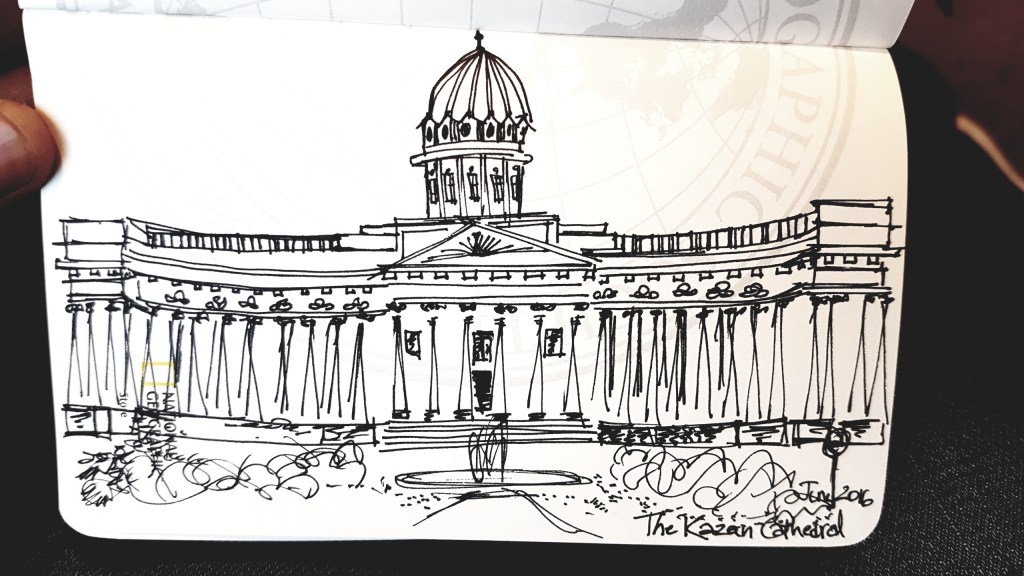
    More active than the Isaac’s cathedral is the Kazan cathedral built as a confluence of two religions, the Russian Orthodoxy and the Roman Catholic. It is the only cathedral of that kind in the world. It was commissioned to commemorate Russia’s victory over Napolean and modelled on the St Peter’s basilica in Rome. It is dedicated to Our lady of Kazan, probably the most venerated icon in Russia. In midst of a Sunday mass the cathedral is lit up in all its glory resonating with the chants of prayer, people singing along in a group, the cathedral lit up in golden chandelier is a prayer hall filled with positive ions. Large verandahs with columns in a semi-circular archways flank the either side of the main hall reminiscent of the St Peter’s basilica in Rome. The white stone of the Kazan cathedral is one of the usual medieval stone found extensively in the region. Of all the cathedrals in St Peterburg, the Church of Our Saviour on Spilled blood, is extremely striking with the typical onion domes but unlike the turrets of the St Basil’s cathedral, this church dons more mature and subdued colours. Its structure and placement along a canal however make it a place of attraction to artists who draw and sell a pictorial depiction of the structure.

    But the most beautiful of them all is undoubtedly the Peterhof Palace popularly known as the Summer Palace located at a comfortable distance from the city of St Petersburg. Though there are several ways to access the palace and its fabulous lower grounds, the way through the hydrofoil is the most glamorous. Walking across the lower gardens which look more like a forest, because of its high expanse of trees, the palace delivers a very pleasant surprise. The water body forming a central access and reaching the palace in a perpendicular dimension leads to the central axis of the Summer palace. Painted in pleasant yellow with white coloured columns, the palace preceded by spectacularly engineered water fountains and crowned by the light blue skies, on good days mostly! The Summer Palace was also designed by Raphael and each of its rooms are equipped with mirrors, lights, chandeliers lighting up the interiors two-fold. The mirrors at different levels of the vertical space increase the quality and feel of daylight within the spaces. The palace looks the best in Summer with cheery colours and a beautiful expanse that glorifies the great Italian architect. Beautiful places leave a lasting impression more often than not, the Peterhof palace is one such place. Compared to the most beautiful palaces in the world, the Peterhof is as delightful as ever. Whether in colour or in form. The upper gardens may not be as beautiful as the lower gardens but lead one onto the interiors. The water fountains, a great sight at the palace were engineered to perfection working on gravity. Just as the Russian tycoons pride themselves on the make of their yachts, the Tsars enjoyed patronising and loved the working fountains playing with water and adding another layer to witnessing architecture, a trend also clearly applied by Tadao Ando in most of his works. The ingenuity of Russians with the water bodies is also seen in other gardens dotting the city, including the very dainty summer garden. Reconstructed in parts the garden is built over existing remains that were found in the area over the years.

    Ahead of the upper gardens at the Peterhof palace is the town of Peterhof, the home of the Russian Raketa watches. Now housed in a dilapidated factory building the watches may have lost the competitive edge in comparison to their peers but they are as well-crafted and boast of many different styles and types from over the ages. Worn by Gorbachev during his time as a Soviet leader the brand saw a sharp rise in its value. A long train ride away from the city centre, the Peterhof palace presents a stunning experience mostly because of it’s make and the setting it is located in. Its an italian palace located in a truly Russian setting and it makes for a truly heady mix! Lined with cafes and restaurants, the city and its streets embraces American food, clothing but not so much it’s President, hating the leader quite openly, and alarmingly. While the malls are flooded with merchandise from all over the world, the truly Russian brands stand out with their much lower rates. Fur coats on display including mink are only just a testimony to the severity of the winters. The old architecture mimicking the buildings of Italy with a dash of France are hardly as climate responsive as the new structures drawing in ample amounts of daylight with glass fenestrations and the sun for warmth.

    Built on the premise of beauty, St Petersburg is delightful and ingenious marking a world of a dainty visual splendour. From the story of Disney’s Anatasia demonstrating palace coups to the bestest macarons and fondants of Keeives, it is a visual splendour that delights all the senses!

    This slideshow requires JavaScript.

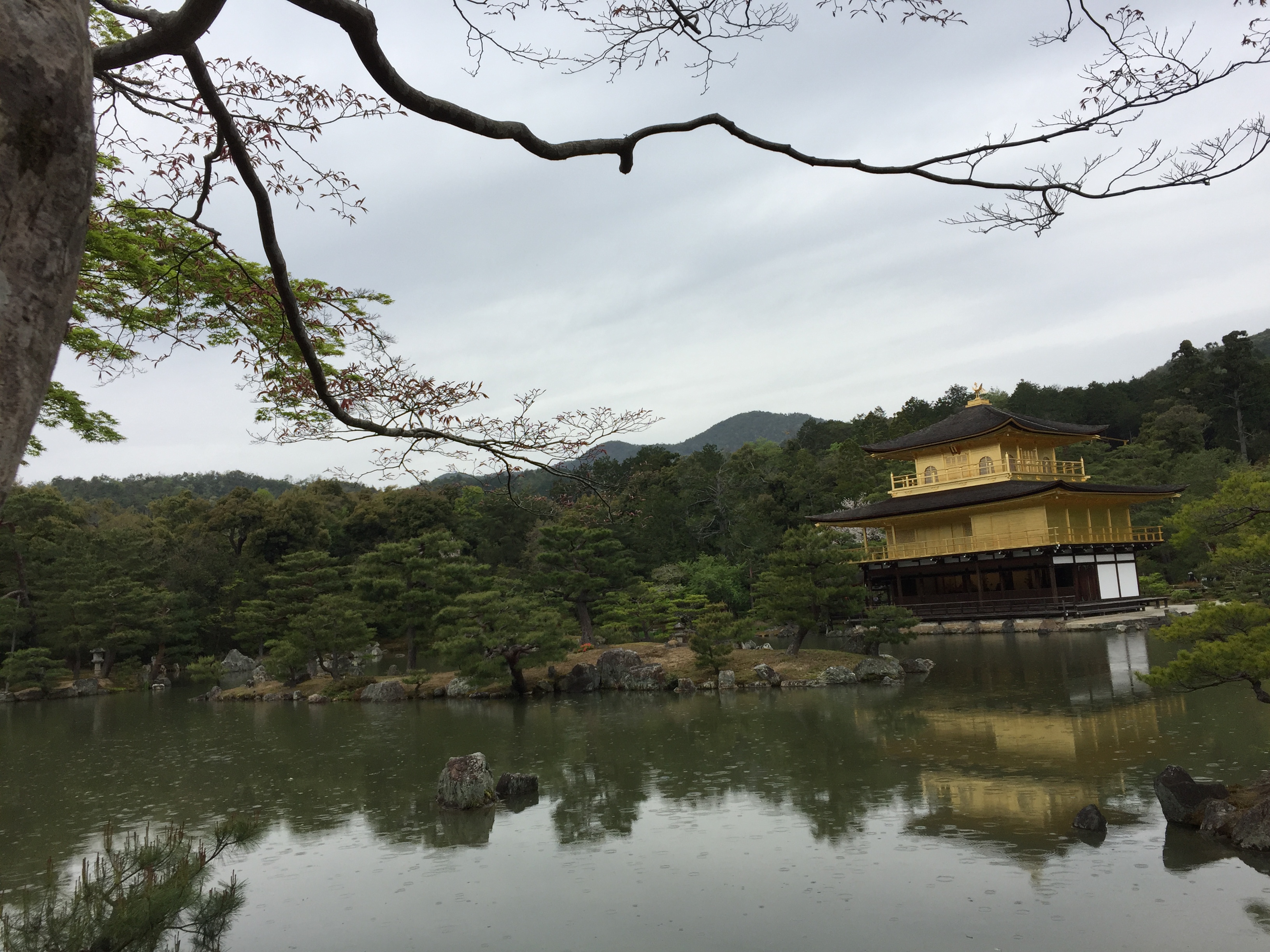
  • Kinkaku-ji!

    IMG_0611


    The wonder of the past

    in the tumultuous future

    A shimmer of golden

    in ripples that embolden

    There is no last

    in the tents of nature

    And in earth laden

    drizzled with laughter

    Is the urge to fast

    glorious and furious

    In spite of the blast

    and all the slaughter

    Leaving some aghast

    and others afar

    There are the larks

    who shun the dark

    Brightening alike

    bringing life to life

    For matter the distance

    and all of the friction

    the beauty of contemplation

    on utter insistence

    Brings out a mast

    calling peace aloud

    From years of experience

    telling tales of mention

    To shun the swords

    needles and moulds

    Awakening a beginning

    forever embracing

    Missions in sight

    for all the might

    Settling the senses

    calming the nerves

    The vision enlightening

    a sense of foreboding

    There is a right

    for every light

    Of Zen and listening

    the joys beckoning

    Cherry-blossoms in sight

    however dark the night

    Lanterns full of light

    not far from sight

    Every crest has a trough

    every cloud a lining

    Laying out the whining

    in warm surroundings

    In the land of rising

    and the shimmering

    A reason for loving

    and mostly celebrating

    The very early sighting

    of the golden noble sun!


  • This slideshow requires JavaScript.

    Kiyomizudera or the Pure Water Temple in Kyoto looks out to impressive views and brings forward the love of water manifested in architecture. Built with solid wooden logs in a visibly complex structure the temple is reached from the highest level and then descend downwards. The water collected on the roof of the temple is further directed down to the drains through water chains. The temple is ancient with weathered wooden logs and beautiful in case of it’s surrounds. Interlocking wooden base is the winning element as is the dialogue with water present at every scale. The stage that looks down 13 m is the reason for the popular expression in Japan, “to jump off the stage at Kiyomizu” meaning the same as the English equivalent of “to take the plunge”. And blind superstition held that taking the plunge, literally jumping off the stage granted one’s wishes. 234 jumps were recorded during the Edo period, of which 85.4% survived, I presume the rest wished to die!

    However the practice is now forbidden but for the superstitiously inclined the host of shrines at the temple include the Jishu shrine, the God of love and of good matches, that possesses a pair of love stones laid 18 m apart. The belief lays that walking from one stone to the other with eyes closed with success ensures that one will find love, or more precisely true love! Descending down from the main hall is the Otowa waterfall where three channels of water fall into a pond. Drinking the water is believed to grant the wishes. For a temple doused with so many superstitions it made it to the 21 finalists of the seven wonders but missed by the whisker! The wooden log understructure is brilliant and the heavy wooden logs a wonder in itself.

  • Shintoism in Nara!

    This slideshow requires JavaScript.


    UNESCO sites and World Heritage towns have a certain air about them that call for a completely divine experience and when coupled with one of the older religions in the world the effect is sublime. Nara located in the Kansai region of Japan is one such place. The small town of Nara attracts a host of tourists because the Great Buddha it houses but also because of what it is as such. The quaint town boasts of ample greenery, a spiritual history, well-livered populace, artists who spend a day in the park creating a masterpiece, snazzy shopping quarters, great food places and Sentos or Japanese communal bath-houses. So on a bright summer day Nara presents a delectable version of sites concocted to perfection!

    Walking about in Nara and a trip to the Kasuga-Taisha shrine is a perfect ending to any Japanese experience. The Nara Park, with the nearby Man’yo botanical garden, is filled with deer, again messengers to God, roaming about in the lush green park accepting biscuits and food from the lesser mortals as they prance about the complex of religious buildings. Nature is God, Shintoism strongly prescribes and the walk to Kasuga-Taisha is quite an ennobling experience with large doses of nature along the way. I think, therefore I am said Buddha. And reflecting well and often is a way to be, a way to think for oneself. As the park gives way to the shrine the stone lanterns begin to make an appearance. The multitude of lanterns one after the other guide the average walker to the shrine that is filled with lanterns of every sort. While the sculptural lanterns look pensive and wabi-sabi in every sense, in the evening they are lamps of hope brightly lit and not fighting with might the darkness.

    The shrine that practises Shintosim is active and alive with followers who come from far and wide to pray. School children by the dozen prance about on a day off. While they make conversation one cannot help but wonder how beautifully the famed manners of the country have trickled down over many generations and have not got lost in spite of globalisation and fast-changing world. They speak with twinkling eyes and a disarming smile posing for pictures with us specimens from the other world, cause Nippon, as they lovingly address their country, is another world in itself. Apprehensively purchasing a ticket to the inside I walk through to mainly see the old-world temple coloured in a peppy orange and including the bonsai plants by the dozens. Crossing one room to another the route takes its own way before commencing into the lantern room, a dark room with twinkling lanterns one after the other hung in different designs and types all across the room. Walking through the lanterns thrills the senses and the burning lamps shimmer playfully all across the room, its a case of first loves. The votive lanterns are offered with the fulfilment of a vow and suddenly the space symbolised with fulfilled vows makes for an extremely uplifting experience.

    With a host of positivity and if I may say, divine intervention the walk back is no different, with vendors selling away delicious sweet potatoes and cherry-blossom ice-cream in season! Just as we made our way out school children came up with school assignments sitting about in the Nara park and solving some really long division sums! Soaking in at a Sento in Nara, the experience of the brilliant lanterns replays and a Dylan Thomas comes to the mind.

    “Do not go gently into that good night,

    rage rage against the dying of the light!”

    _ Dylan Thomas

    No, do not!

  • This slideshow requires JavaScript.

    American architects have a great love for the Japanese sensitivity to design and architecture in general. Or let me rephrase, architects have a great respect for the Japanese sense of building and quite rightly so. From the mid-80s architects have thronged to Japan to study Tokyo and in general visit the country that is magnificently steeped in natural beauty, hit by disaster unlike any another and yet emerged a rising sun every single time. The greatest American architect who is deeply inspired by nature, likening it to Godliness, who was the inspiration to Ayn Rand’s Fountainhead and a man who dared to think for himself even if it was different, Frank Llyod Wright. Born this very day roughly 149 years ago Wright designed several buildings including my favourites, the Guggenheim Museum in New York and the Falling Waters Residence in southern Pennsylvania.

    Wright made his first foreign trip in 1905 at the age of 38 to Japan, he was deeply influenced by the perspective of the Japanese when it came to building and his architecture ever since bears a reference to the Japanese love for nature and building with sensitivity to the environment. Though the Imperial hotel is Wright’s most popular building in Japan, precisely in Tokyo, built for the increasing number of western tourists in the 1910s at the behest of the Japanese aristocracy, the Yodoko Guesthouse in Awaji is a fine example of the architecture of Frank Llyod Wright. Built as a summer villa, the guest house was designed in 1918 and built 6 years later. The architectural expression of the guesthouse includes high quality woodwork, small windows that dot the upper level of the rooms and several enclosures divided by screens and furnished with Tatami mats.

    Though parts of the guest-house has been refurbished since, the main drawing room and dining rooms are intact as designed by Wright. Known for his love of detailing, Wright designs not just the house but also every integral part of the interiors including furniture and products, even influencing mostly the kind of art exhibited on the walls. The layout of the guest-house is not the usual with the public spaces of the house including the drawing room and the dining room levels sandwiched by  level of private living spaces.  A very classical staircase is also included providing a vertical connection between the levels. The drawing room as first envisaged is filled with octagonal tables and art-deco chairs with an attached pantry. A level above are the private areas of the house above which are placed the formal dining and kitchen on the highest level. The dining room opens into a terrace that is adorned by a spectacular view of the Awaji island and the sea.

    The house is further towered by a chimney that runs through the height of the building warming up intermittently the indoor spaces. The Yodoko Guesthouse has several Japanese characteristics but it essentially is American in spirit, mostly FLW in make. The attention to detail is immaculate and the finish adorably art deco. The smaller windows aid ventilation and the larger ones bring in ample sunshine into the indoor spaces. Covered in Oya stone, an igneous rock created from lava and ash the house shares its facade material with that of the Imperial Hotel in Tokyo. The stone is fireproof and very vernacular to it’s context. Wright excels as an architect with a vision whose buildings stand the test of time both qualitatively and quantitatively!

    Just as the master says,

    “Nature is my manifestation of God. I go to Nature everyday for inspiration in the day’s work. I follow in building the principles which nature has used in it’s domain.”

    and decidedly, the mother of art is architecture!

  • The Great Buddha of Nara!

    IMG_1656

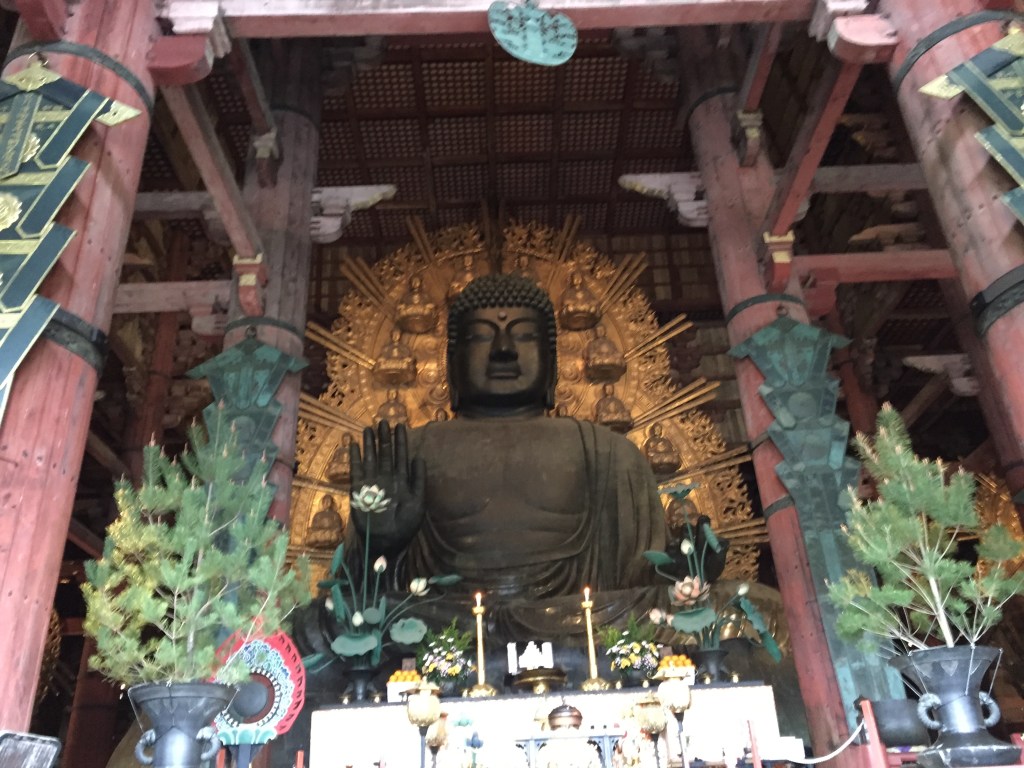
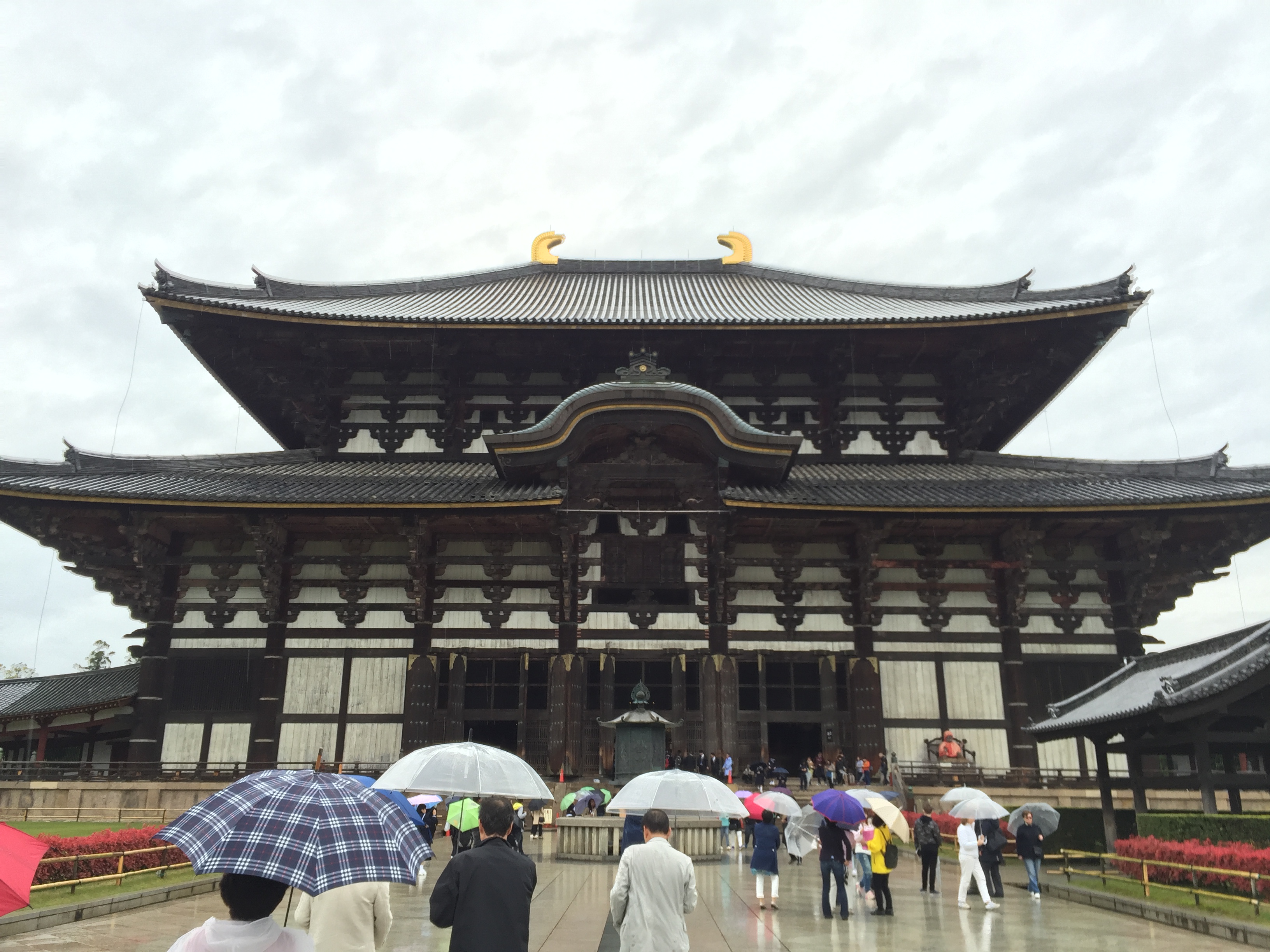
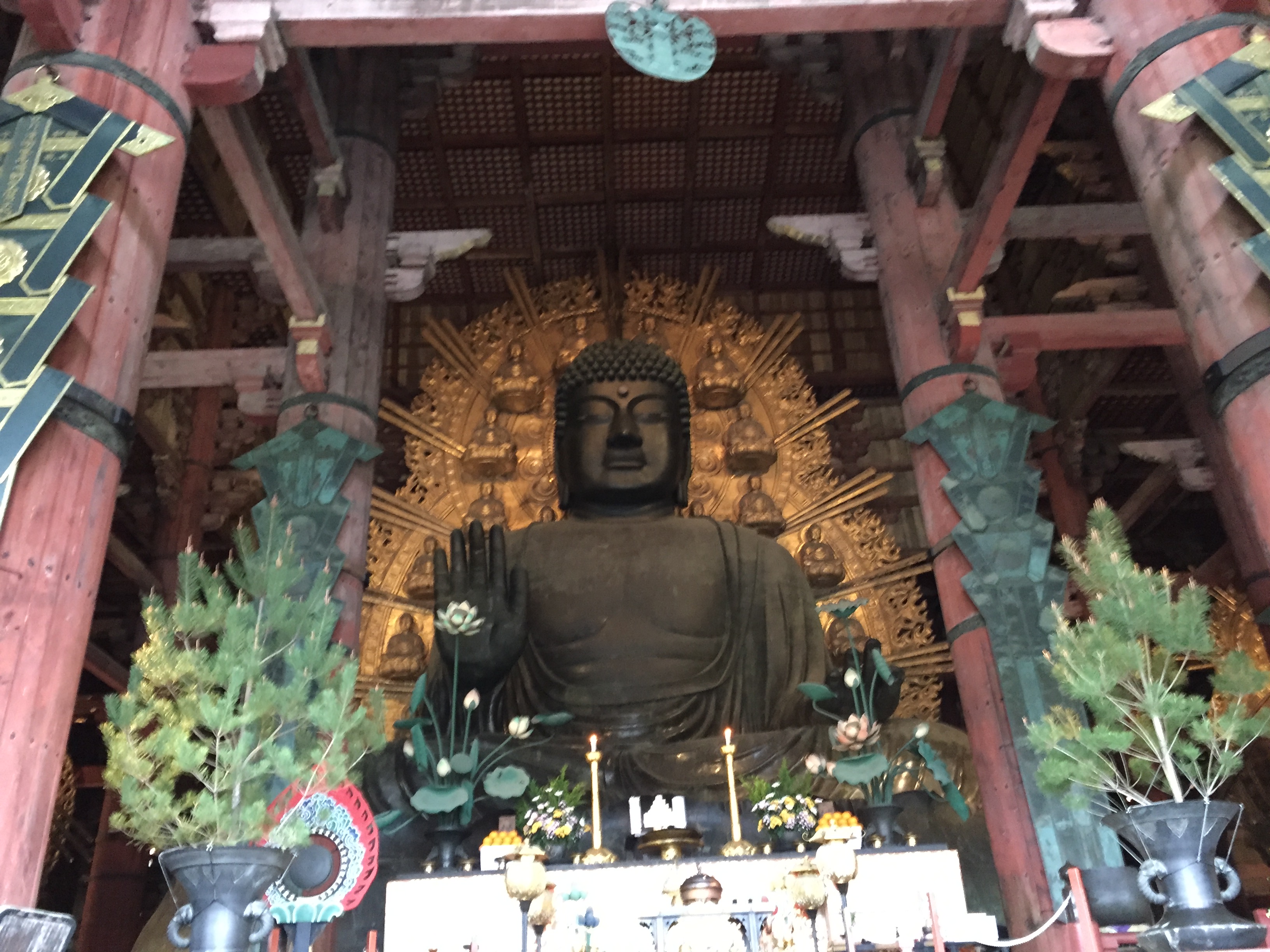
    Todai-ji was once the one of the powerful Seven Great Temples houses the great bronze Buddha, the largest Buddha statue in the world, of Vairocana, even today it serves as the Japanese headquarters of the Kegon school of Buddhism. It is a place where tourists and the famous deer of Nara roam together in one of the World Heritage Sites holding its place firmly in the list complied by UNESCO. Deer are regarded as messengers to God in the doctrine of Shintoism and they roam freely at this temple site. Feeding biscuits to the deer is an encouraged practice, while one slips in a wish or two to the deer while bribing it! Once one makes their way through the hordes of tourists and the bulk of deer there is the gorgeous statue, of the Buddha to take in and admire. Nara is a small town and the Great Buddha of Nara is famous all over the world. Decorated by the main statue are the Bodhisattvas adorning the sides. The tranquil face of the giant Buddha statue is beguiling and wonderfully crafted.

    IMG_1754

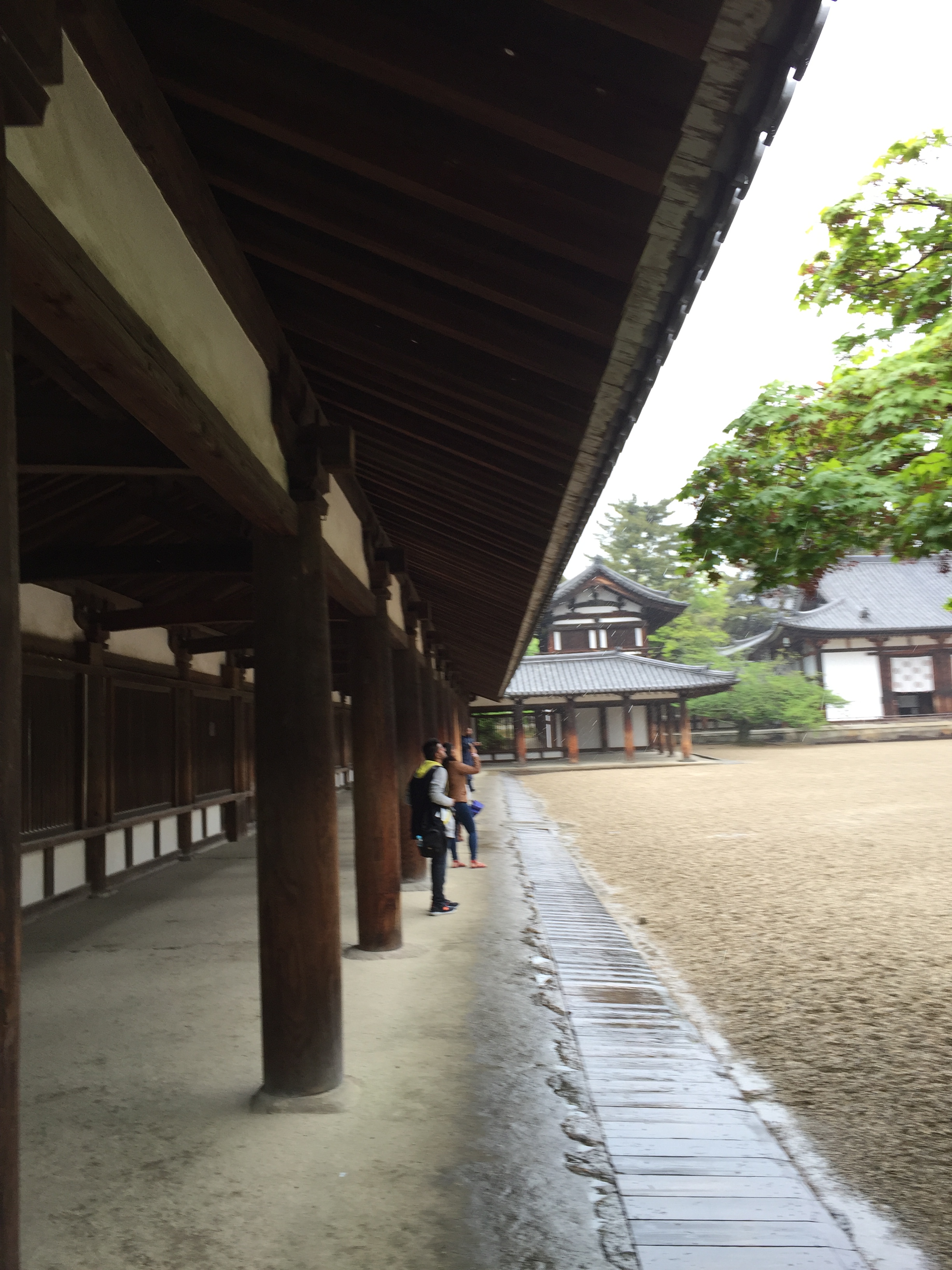
    While the prayer hall is filled with kiosks doling out fridge magnets and the like, a look up to the roof is also a worthy gesture. The old temple that houses the Great Buddha is a combination of the traditional Japanese woodwork. Though no major Buddhist ceremonies currently take place at Todai-ji, the Buddha here has held his importance in the historic context of Japan way before the capital was moved to Kamakura. The power of Buddha is unfathomable, and he has a history of granting the most unbelievable miracles. Today a smaller replica of the great God stands outside the temple and as the popular belief goes, rubbing the body part of Buddha brings healing to one’s own body. Must say I saw a few tourists try their luck with rubbing his back! With students, foreign tourists, local tourists and devout Buddhists thronging the site the hustle and bustle at the temple is admirable.

    IMG_1757

    The Daibutsu or Buddha of Todai-ji measures roughly 15 m in height and weighing about 550 tonnes. Gardens that host the temple have over time evolved with the temple complex to become an integral part of a unique organic living community. While the temple complex at Todai-ji hosts several performances mainly musicals, the original bronze bell chimes even today doing exactly what bells are supposed to do, ringing in the mind to the present! More recently x-rays have been used to discover a human tooth along with pearls, mirrors, swords and jewels in the knee of the Great Buddha, which are believed to belong to the Emperor Shomu who was the main facilitator who built the temple. During his reign he issued a law that commanded every person to be involved with a Buddhist temple, hoping that it would inspire piety in the people. Therefore money was collected from the citizens at large to donate for the building of Todai-ji. Such a collective fund for a temple he believed would generate God-fearing people and also prevent natural disasters that Japan has always been famous for!

    IMG_1661

  • IMG_0856

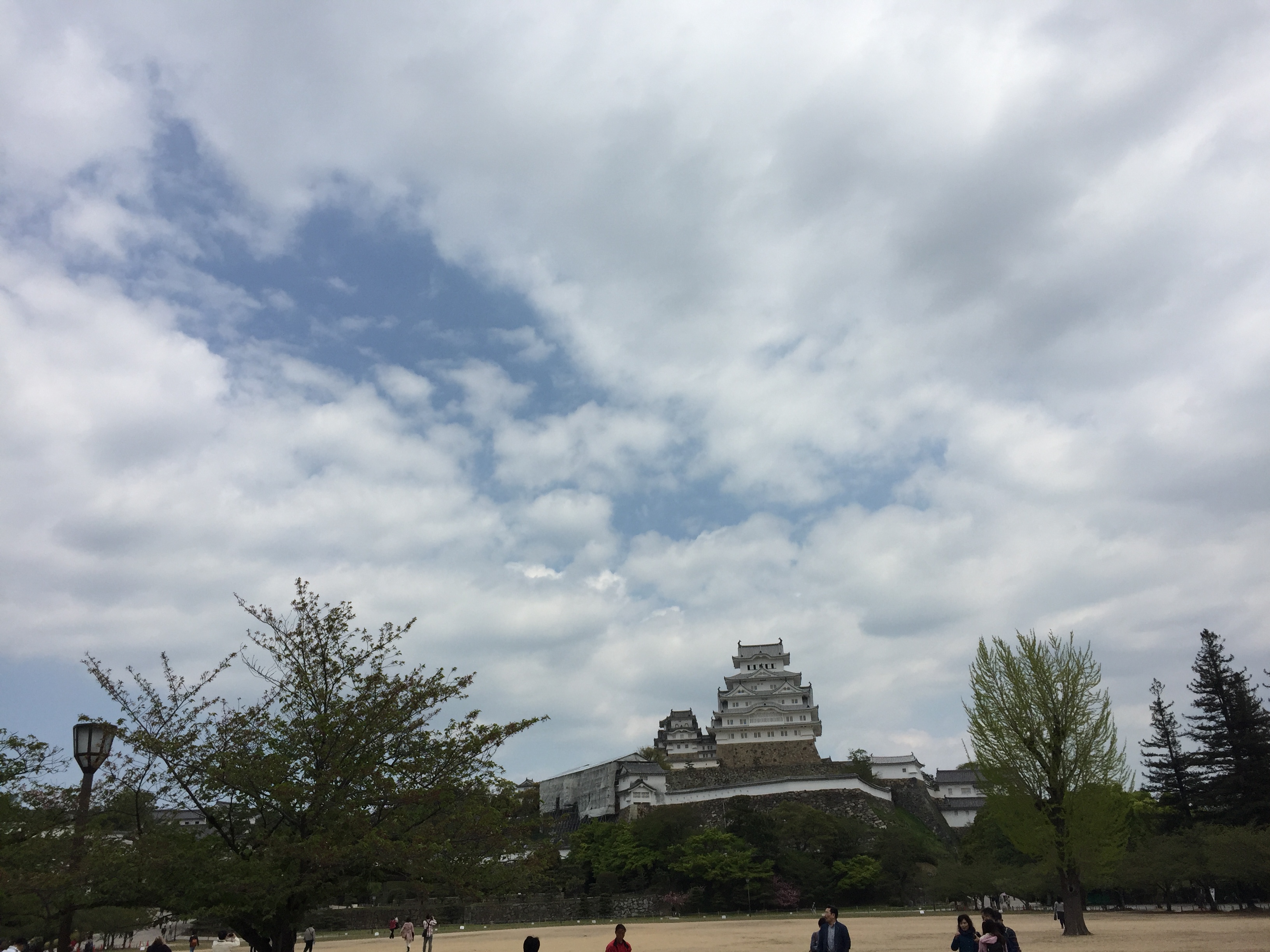
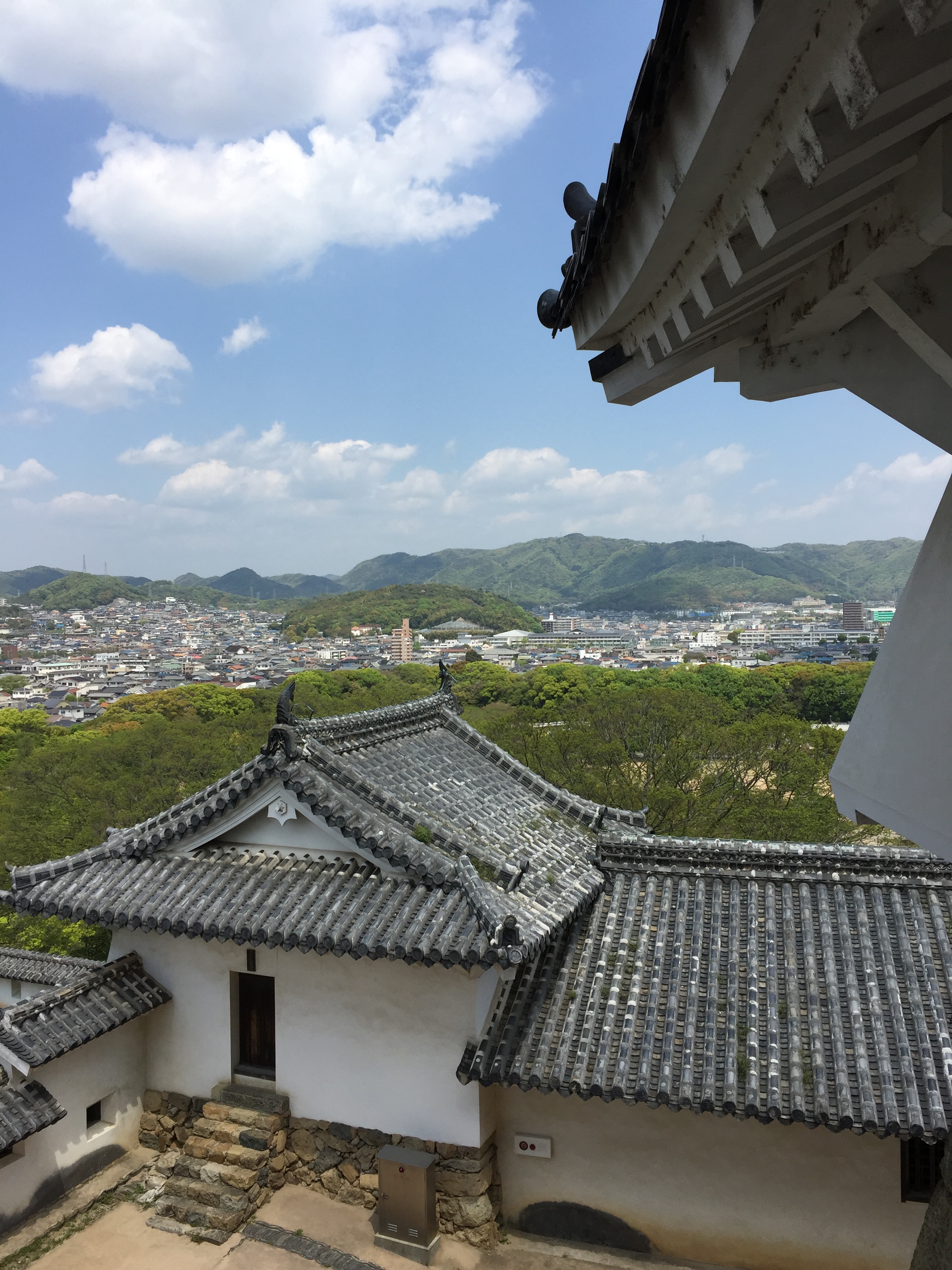
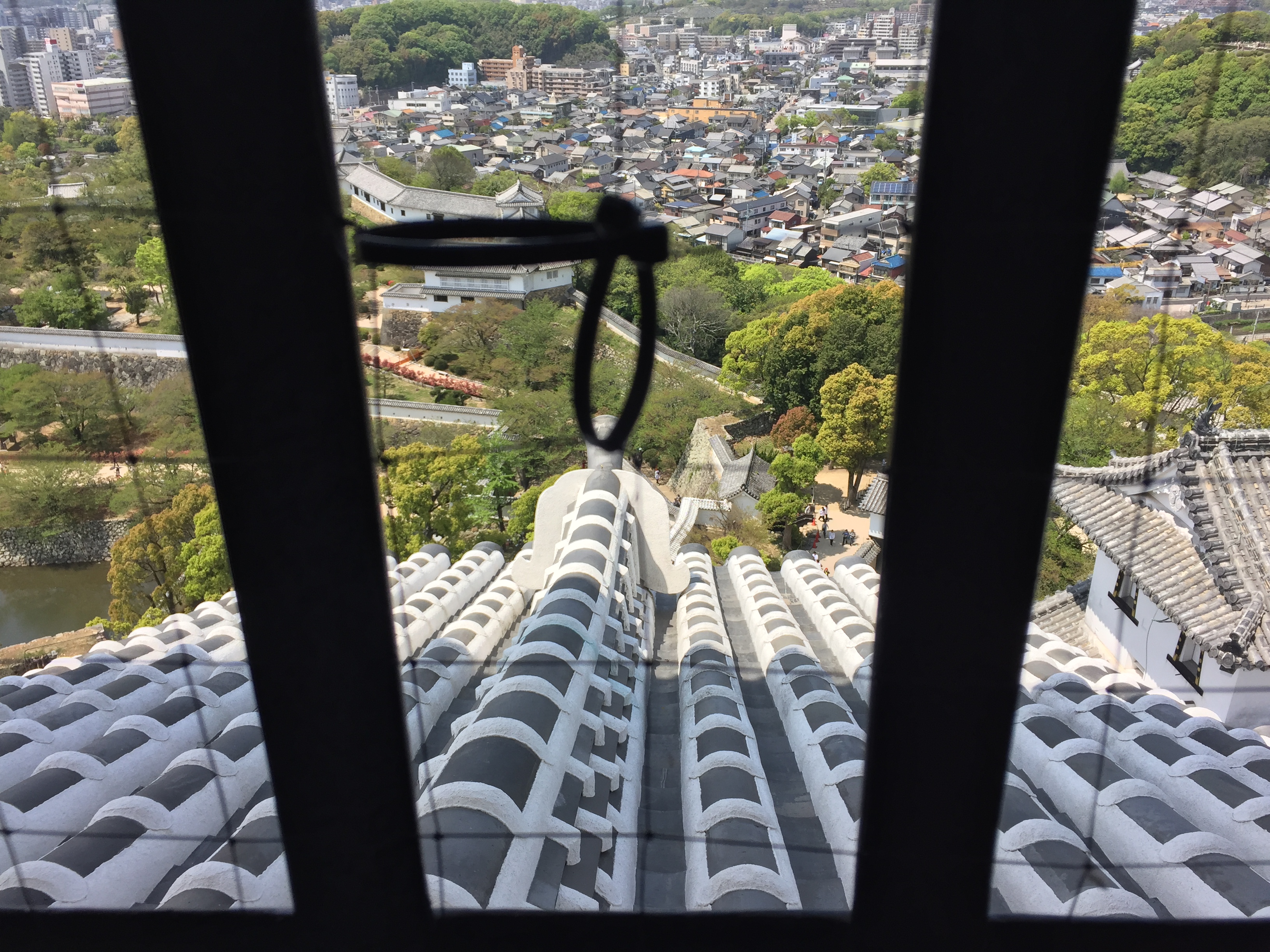
    Off the fashionable city of Kobe, a train-ride away is the Heron-like coloured in white Himeji Castle, perched on a hill likened to a white egret against the backdrop of the blue sky. Its remarkable history also holds tales of how it was covered in black during the Second World War to prevent it from being bombed by the Allies. It has survived even the deadly Great Hanshin Earthquake of 1995. Credit to the many safeguarding measures the castle is now one of the only surviving prototypical Japanese castle architecture. The castle complex consists of a network of 83 buildings with advanced defensive systems from the Feudal period. Its nicknames come from its brilliant white exterior that looks like a bird taking flight.


    IMG_0886

    The castle is very Japanese in regard to the extensive use of wood. In fact two large elm trunks are used as the main columns of the Castle that run all the way from the base to the top as the primary support system of the structure. The trunks and all the other wooden elements in the Castle structure including rafters, doors, windows are all fine wood, weathered to hold up against the elements. Though not surviving the termites, the Castle currently is undergoing a series of restorative measures. Climbing up the six floors of the castle is quite a hike with steep steps connecting the levels vertically, while every level has the soldier platform intended to be used to wage an attack on the offenders or enemies approaching the castle. The views from each of the level look out to the town of Himeji, the Koko-en gardens and a host of other natural landscape.

    IMG_0910

    The family crest of Ikeda Terumasa is emboldened on each of the roof tile endings. The castle holds the museum and each of the building material can be seen in close quarters. Once at the highest level of the castle one is greeted by the prayer chamber. The royalty too lived with the famous wooden screens and tatami mats much like the commoners. Unlike the gilded emperors of the west or even nearby China, Japan was ruled by several emperors who lived simple, mostly. The samurai clan were the warriors and their rule changed the built landscape of the country. The Koko-en garden next door is a typical surreal Japanese garden with the koi pond, fish, the genteel colours of the plants and a host of other features that are not Zen but traditionally Japanese. The Himeji town is simple and touristy with the castle being its main feature. A glimpse into the Japanese traditions, architecture and life shows one how deeply layered the Japanese people really are and how supremely culturally refined.


    IMG_0951

    Like all castles, the Himeji is also robed in folk-lore and stories of scorned women, brave men and a populace who worshipped their emperors. Though a spectacle set in a peaceful surround the Himeji castle has witnessed it’s own share of despair but emerged like a beautiful white Heron flying into the bright blue sky. Like a lotus that emerges spotless in murky muddy waters, the White Egret or lovingly called White Heron castle emerges from the pages of Japanese history spotless and unnerved. It is gorgeously beautiful. Ignorance may well be bliss!

    IMG_0944

    Ps. But of course!

  • The Zenness of Being!

    IMG_0672


    “Hi, am Zen”, she said. And she went on to be my bestest friend in the island country. She named herself she said, mainly to remind herself of the philosophy of lightness. Though largely believed to be Japanese, the Zen way of thinking finds its roots in the Mahayana Buddhism that originated in China during the rule of the Tang dynasty. The school of Buddhism asserts that enlightenment could be attained through meditation, self-contemplation and intuition rather than faith or devotion, celebrating clearly the self. When the Japanese began to embrace Buddhism hugely they did not completely shun the traditional Shintoism, moulding Buddhism into vastly their likely. The Zen philosophy too they took and built a phenomenon that popularly embraced the school of thought that encouraged deliberate action, thought and contemplation. To house the philosophy, and reflecting the times many a temples were built, that focussed on worship Zen-style, one that promoted reflection, mainly.

    IMG_0668


    The Ryoanji temple in Kyoto is one such example, a temple wherein the self is more lauded than a deity, where intuition trumps faith and refection trumps devotion. Zenness therefore is also being one-hundred percent in the moment. When the mind does not wander and is not clearly lost. It belongs to the Myoshinji school of the Rinzai branch of Zen Buddhism. It also is by far the finest example of kare-sansui or dry landscape, the finest surviving example of the refined type of the Japanese style Zen Garden. After a quick look at the golden shrine of Kinkakuji, the Ryoanji temple is a short bus ride away. From the entrance one is guided by landscaped pathways into the main temple building. The hike up is a reflective prelude of what lays ahead, as an old structure, the weathered wood of the temple is warm and welcoming. Taking off shoes as a mark of respect and also to facilitate clean and noiseless interiors one is welcomed to witness the most beautiful dry-landscape that also challenges one to meditate and contemplate.

    IMG_0644


    Subjected to a vast array of tiny pebbles laid our in a rectangular base, the Ryoanji temple has 15 boulders arranged such that one can only see the 15th one from any angle only after immense concentration and therein lies the challenge. If architecture can persuade deep meditation, then the Ryoanji temple is one such temple. The main temple next to the dry landscape is furnished with bare tatami mats and sliding doors, without any of the fixtures and fittings, solely sliding on neatly crafted wood, light in weight and easily moving. Dressed in finely weathered wood, white and dull yellow mats, the Ryoanji is located in lush green gardens with trellised roofs and growing vines. Over time the stillness of the garden could be unnerving but strangely it is not, unnerving or startling, it is very soothing and the stillness is pleasantly calming. The temple is stark and quiet much like the traditional temples but here the landscape takes centre-stage, rightly so as after all, nature is God.

    IMG_0646