• 20131118-095226.jpg

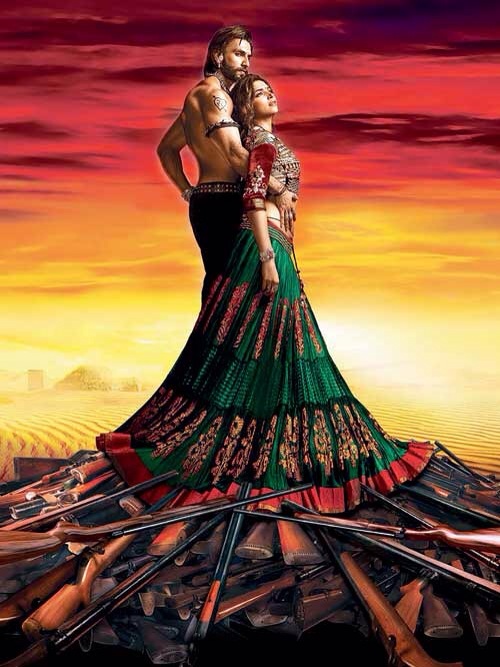
    Sanjay Leela Bhansali’s Ram-Leela is probably going to be getting a lot of flak on its story, for its portrayal of Shakespeare’s hopelessly romantic, Romeo and Juliet. Much to Bhansali’s credit R&J is not mostly about a brilliant story but it’s about love, that is mostly mindless and arbitrary.

    Ram-Leelas biggest strength much like Romeo and Juliet are it’s protagonists, the very much in love Ram and Leela. The actors Ranveer Singh and Deepika Padukone do a brilliant job at the helm of affairs. While Ranveer shocks with his easy charm and unapologetic demeanor, Deepika wins the audience with her doe-eyed look and her stunningly beautiful persona. While he makes a great Ram she makes an even more brilliant Leela.

    Now apart from the leads, Supriya Pathak as Baa and the Rann of Kutch are other delights in this romance. The songs unfortunately are quite a dud, with just one, the last one launching an electrifying tune in your head that probably won’t wear off for a while.

    I personally loved all of Deepikas outfits, she gloriously looks like a doll all through, and the art direction. The use of guns at every instance is a bit annoying, but it sure is much less than those of the loud South Indian movies!

    The convincing duo had me sitting through the entire film and I couldn’t resist but draw parallels to our literature class in school, when we studied Romeo and Juliet. The winter romance, in spite of all it’s flaws sure won over the hopeless romantic in me, just like R&J did to the 14 year old me!

    P.S *spoiler ahead* such a pity they had to die. I mean Romeo and Juliet, of course! 😛

  • imagesCARBJW2F

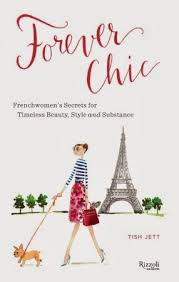
    When you actually live with someone is when you truly know them. I am assuming some wise soul said that cause it sounds familiar. So what better way to knowing the fairer sex of the French Nation than to actually living with one. And while I gathered my wits on doing all the knowing I realized a lot of things that surprised me. A lot of myths that I had were broken and a lot of surprises came forward. Here are a few that caught my fancy.

    1. French women are smart. Period.
    The stylish fashion loving belles are more than what meets the eye. Apart from having an immaculate knowledge on what will suit them in terms of cut, color and material they are wordly wise too.

    2. They believe they deserve.
    Yes and that takes a lot of believing. They believe enough to live, to put it in the mildest terms, unapologetically. They do as they fancy and much as they wish.

    3. They dress well.
    Now that would hardly be an understatement. But apart from all the dressing they even carry themselves off with such aplomb. Whether it comes down to the right shade of pink, just the enough touch of gold or the right number of rivets driven into their boots. It’s all there in the right measure of scale and proportions.

    4. They read, a lot.
    On the bus, on the train, in a cafe, in bed, and practically everywhere. Unlike Asians they are hardly glued to their phones, playing candy crush or not. The cellphone is just that, a phone! With sensible government policies, books and bookshops are all encouraged. And besides here is where the lovely ‘Shakespeare and Company’ bookstore is located.

    5. Products, products and products.
    When it comes to skin care and beauty products, they indulge. It’s like they know the importance of pristine skin. Or maybe because they smoke so much, they somehow find the need to fork out on large doses of skin care products.

    6. They love living the life.
    Not firm believers in fast lives they actually are those rare kind of people who take time to stop and smell the flowers. From having 35 working hours in a week to bumming around in cafés they seem to get a grasp of finer things in life.

    7. They bring up well behaved children.
    And when children do end up throwing a tantrum the french woman calmly waits and absorbs, speaking ever so politely all through. There are no screaming and yelling sessions by the french mothers! Might I say how classy it is!!

    8. They take an interest in the arts.
    Whether it’s painting, theatre or simply a soprano, french women make sure they feed their souls with art, almost every now and then. And besides no one house is devoid of an easel. The focus may not well be on being a Vinci, but its all about a brush with art!

    9. They eat flavorful food.
    All french food is bland one may think, but let me warn you it’s bland if you are the types looking for a fistful of chilli in all your food, but even without the chilli it is terrifically flavorful. And moreover they eat with such respect for food, even in front of the television its with all the settings of a fine dining restaurant. Binge eating is probably unheard of.

    10. They do and will warm up to French.
    And that is the ultimate way of getting through to them. Even if they see you trying your ‘Bon jours’ and your ‘merci’ they will immediately flash you a lovely francophilic smile and will immediately switch to english! By Jove, yes!

    11. They look for love.
    Ardently, feverishly and passionately. It’s so much about looking for and finding love and fondness that we all hope we will find. And well if not for anything, to love, there always will be Paris!

    12. They smoke. Oops chain smoke.

    Tch Tch. For all the non-smokers here’s a thing or two to be wary about. Apart from all the healthy food the French eat and the pounds of lipstick they probably use through a lifetime, another alarming fact is the amount that they can smoke!! Its not so unusual to find the pavement covered in cigarette butts at popular spots within the town. Well it must be quite stressful to live in such a picture perfect place I guess!

    13. They can truly be snobs.

    But here’s the good thing, its more like they can be snobs only if they truly wish to be.

    14. They are truly franc!

    There’s a good reason why France is called ‘le franc’. Its mostly and largely because the French are really frank, honest and largely very forthcoming. There are no false tones. When things can be done they nod, “its possible” and when things cant be done they nod, “not possible”! So simple.

    One week may have been a tad too little to fully grow a French skin, but hey, a lifetime may not even do the trick. Just like one can only be born a Hindu, one can only be born a Frenchwoman! Ooh la la doesn’t even sound the same otherwise 😀

    P.s and the most wondrous of them all, they are not shopoholics and they do not have a closet full of stuff. Now that is because the average French woman buys only quality stuff that ends up staying perfect for ages, allowing them to have airy and light wardrobes, with enough clothes for every occasion. Besides most of them make it a point to fit into the same sizes all through life!

    imagesCA7N4VHFsome recommended reading as under: imagesCA8BOE7Z

  • Right in the middle of Europe is a country so nice

    That is hardly ever does believe in fights

    But when the neutral arm does pick up a gun

    Its hardly because of a reason of fun

    Historically they stopped and stood and waited

    But when the time came they were unabated

    Even as David they defeated Goliath

    without a scare or fear of a Sabbath

    Over time they kept what mattered

    without changing their fries or their waffles

    While melting with chocolate each and every heart

    so much that you are hardly left without a start

    adding strawberry wonder to the charm

    they just about mean to get your palate warm

    The gorgeous sights are truly a wonder

    so much that they will even pervade your slumber

    the pissing boy is the star attraction

    even though there is a grave subtraction

    On football nights the town gets louder

    as they yell with a lot of personal yonder

    Dancing all night on a private bus

    is the teenagers idea of creating ruckus

    Its tiny, its small and its a wonder

    with houses so nice and effortless splendour

    Living a life on a delightful high

    with all the whipped cream and absolutely no sigh

    Ushering the world into a new millennium

    sits pretty the capital of the European union

    All hail to the country half French and half German

    All hail the country of courage and grace, Belgium.

  • Singapore’s very own architecture festival that seeks to celebrate architectural and ID works produced from the island country’s stables kicked off last week and runs all the way to mid-October. It coincides with the more ambitious World Architecture festival, that is today on its Day 3. The Archifest consists of awards, a conference, a pavilion that acts as a base of the festival and of course tours organised to recently completed or good works across the tiny country.

    SIA, the Singapore Institute of Architects, organises the festival to promote architectural bonhomie, give away a few awards and work on its ambitions of making Singapore an architecture capital of the world!

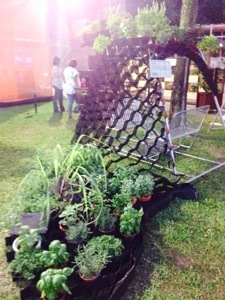
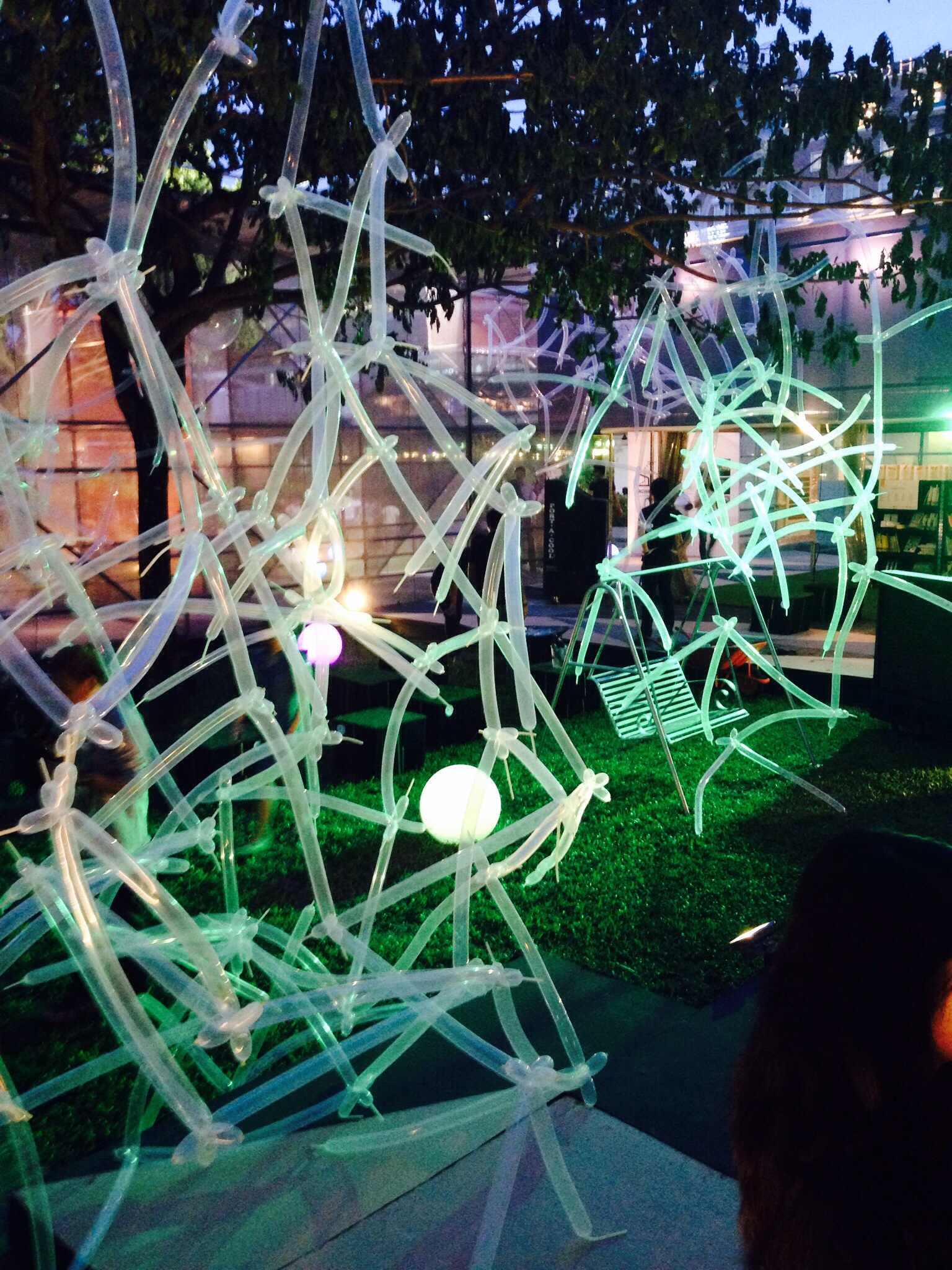
    The theme of the festival this year is “Small is beautiful”, and indeed it is. The pavilion, a product of a design competition, won by RSP btw, focussed on small or minimum wastage by using the often overlooked elements of the construction process like scaffolding, as its main theme. The light and airy pavilion treads softly on the Dhoby Ghaut green, celebrating the various nuts and bolts that go into building, well a building. For landscape, the obvious bonsai that are small went on display. Am not a big fan on bonsai but for those who are, here are a few images of the spectacle.

    Art work used in the pavilion too commemorated the act of construction, the act of putting together, joinery!

    What I found extremely interesting as an idea was the ‘pop-up library’ in the pavilion that housed books recommended by creative professionals in Singapore that inspire them. The books procured by the National library are free for browsing. It was interesting for me to see how books on fiction, travel, fashion, art and even business(!) inspire architects. Some titles I found were fantastic as I browsed through while hanging around at the pavilion.

    Winning competition entries of recent projects commissioned by SIA were on display as were tidbits of the newest sensation on the block, 3d printing! The Wisma Geylang Serai Competition winning entry, a communal building for the Malays caught my interest among the others. I liked how they propagated the traditional sense of Malay construction with a more inherently modern design. As for the 3d printing, it is definitely a phenomenon to watch out for!

    On the cons, what would have been good is if the pavilion somehow mitigated the unforgiving tropical heat. One really begins to melt if sitting around the pavilion during the day, the evenings though are a different story and are possibly the better time to visit.

    20131004-100823.jpg

    20131004-100904.jpg

    20131004-100951.jpg

    20131004-101019.jpg

    20131004-100930.jpg

    20131004-100849.jpg

  • On my mind: Ravioli

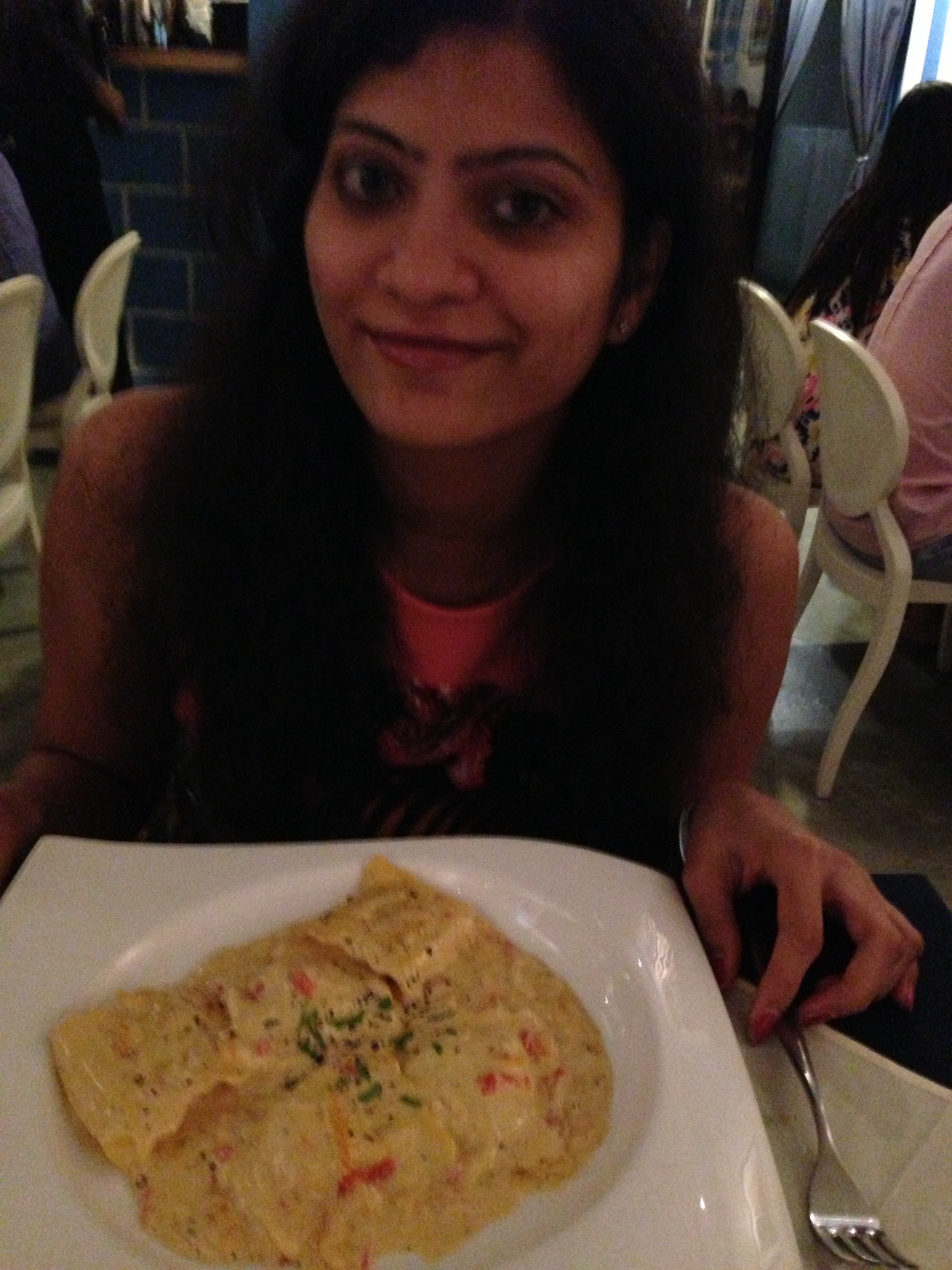
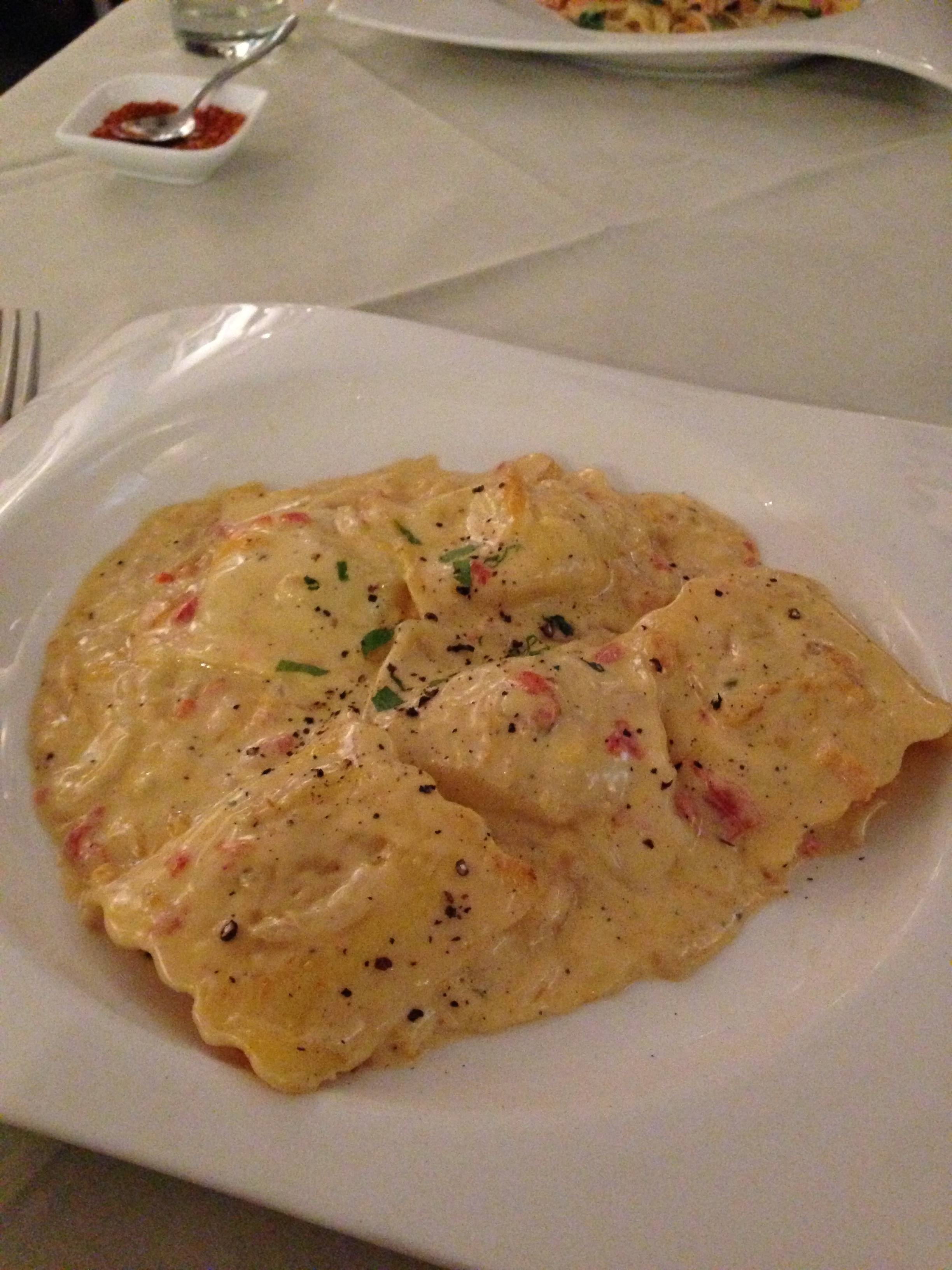
    The last month I have been having a major food haunt. And yes, its Ravioli. The Italian master blaster of all delicacy. After a whole lot of hob-nobbing I must say I did find the perfect Ravioli right under my nose. Well not in my kitchen, but at a stunningly simple and elegant restaurant called ‘trattoria bonissima’ that is literally down the road.

    So what about Ravioli? It is a pasta type that is traditionally made at home and stuffed with a filling, usually with ricotta cheese. The vegetarian filling is usually spinach (yay!) or mushroom (another yay!). The pasta is then served in a Cream sauce usually folded over the ravioli. It does have an overload of cheese and a haven for cheese lovers, but hey its not fried 😀

    Ravioli_di_lattuga

    800px-Ravioli_2the ravioli sold in an Italian marketplace

    20130823-170641.jpg

    with a plate full of heaven!

    So what has been your food haunt?!

    P.s the cream sauce in this case was made with yellow and red capsicum..err bell pepper…alias sweet pepper.

    20130824-132010.jpg

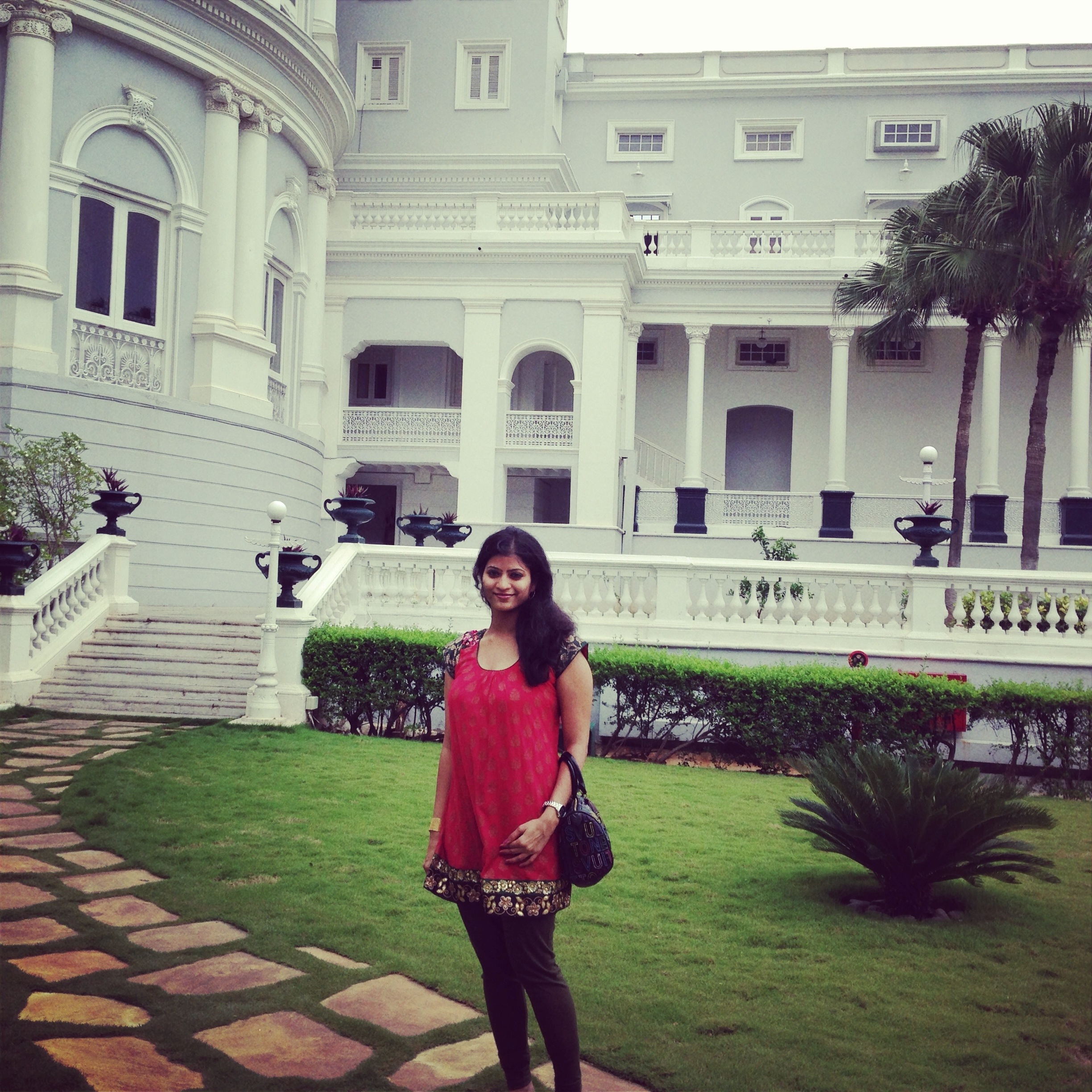
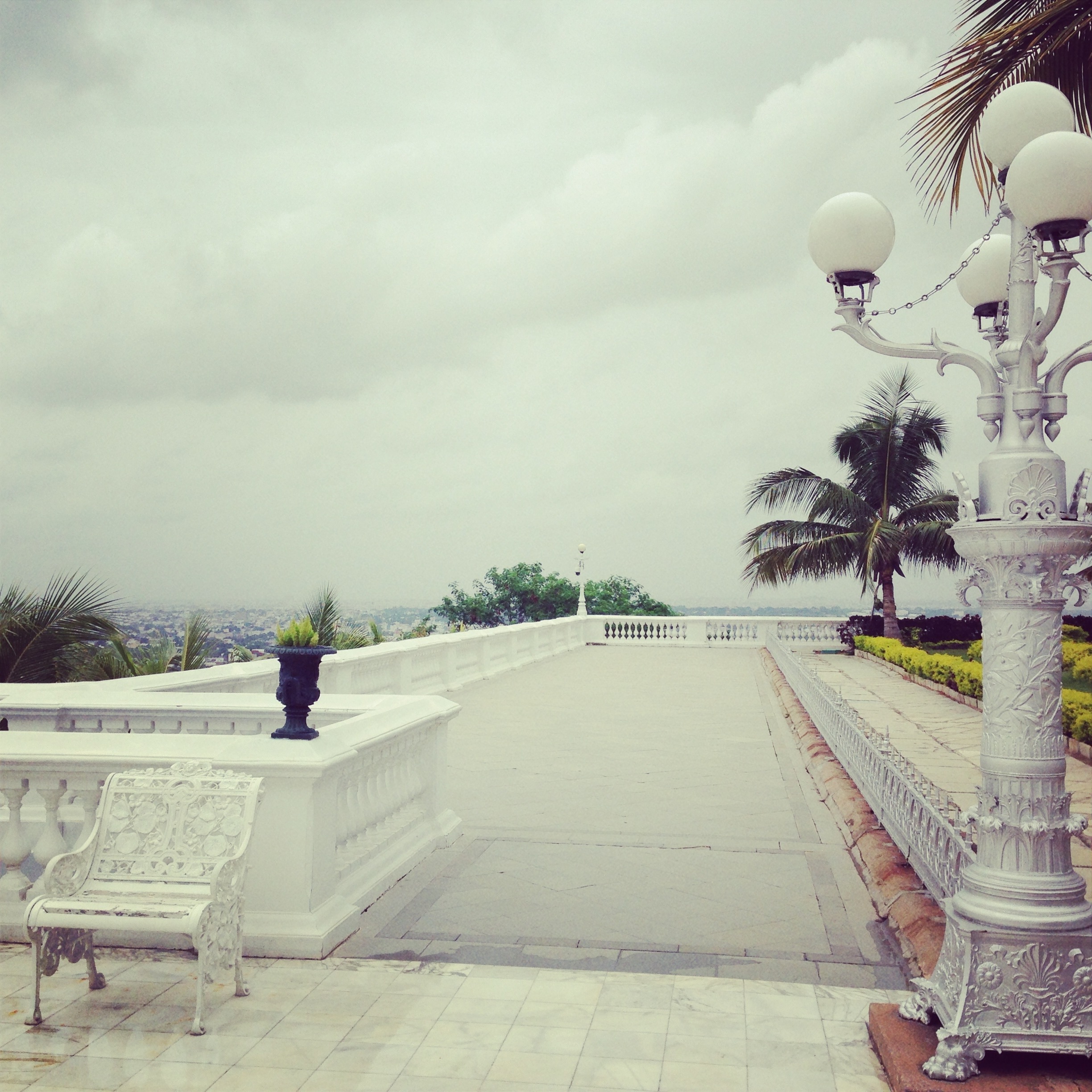
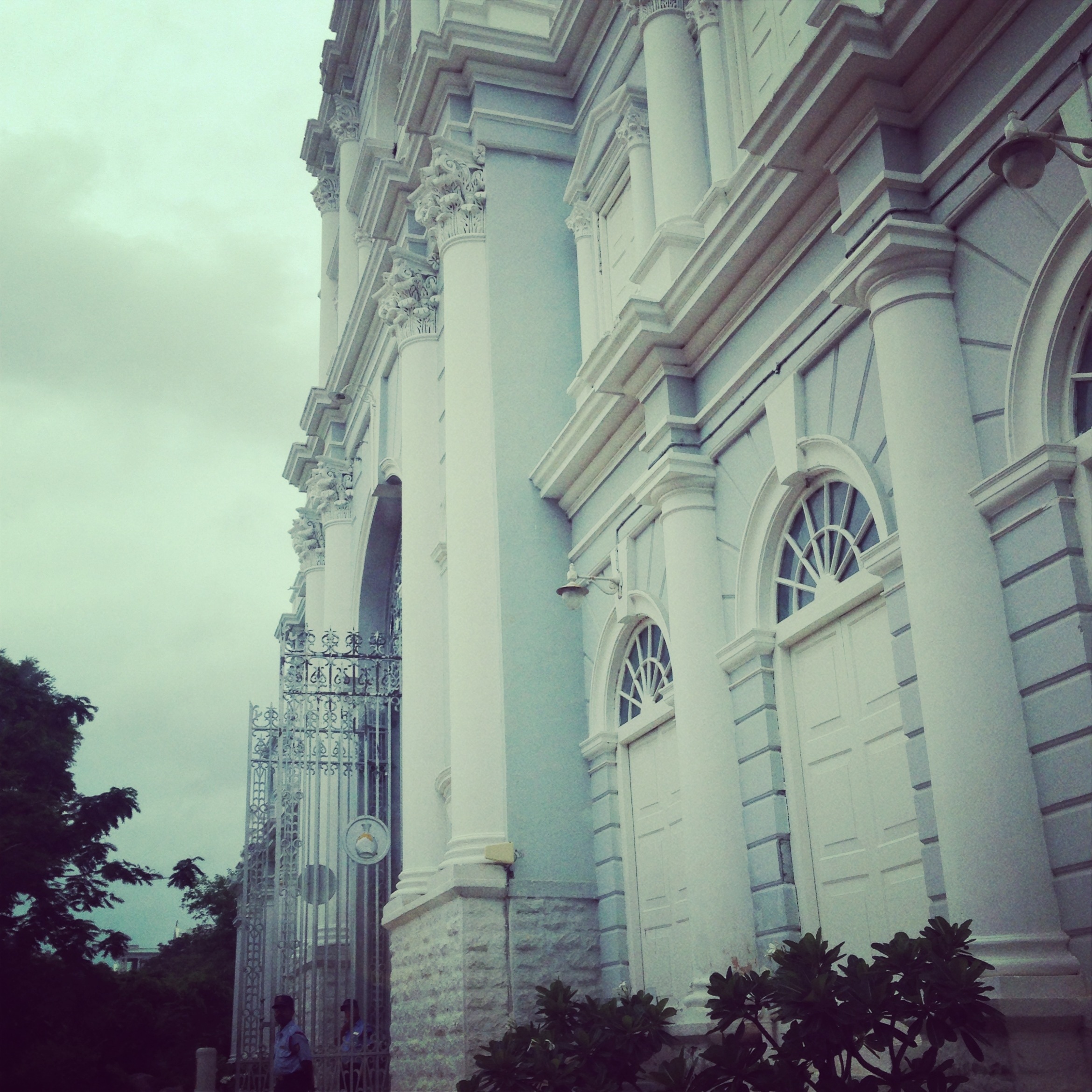
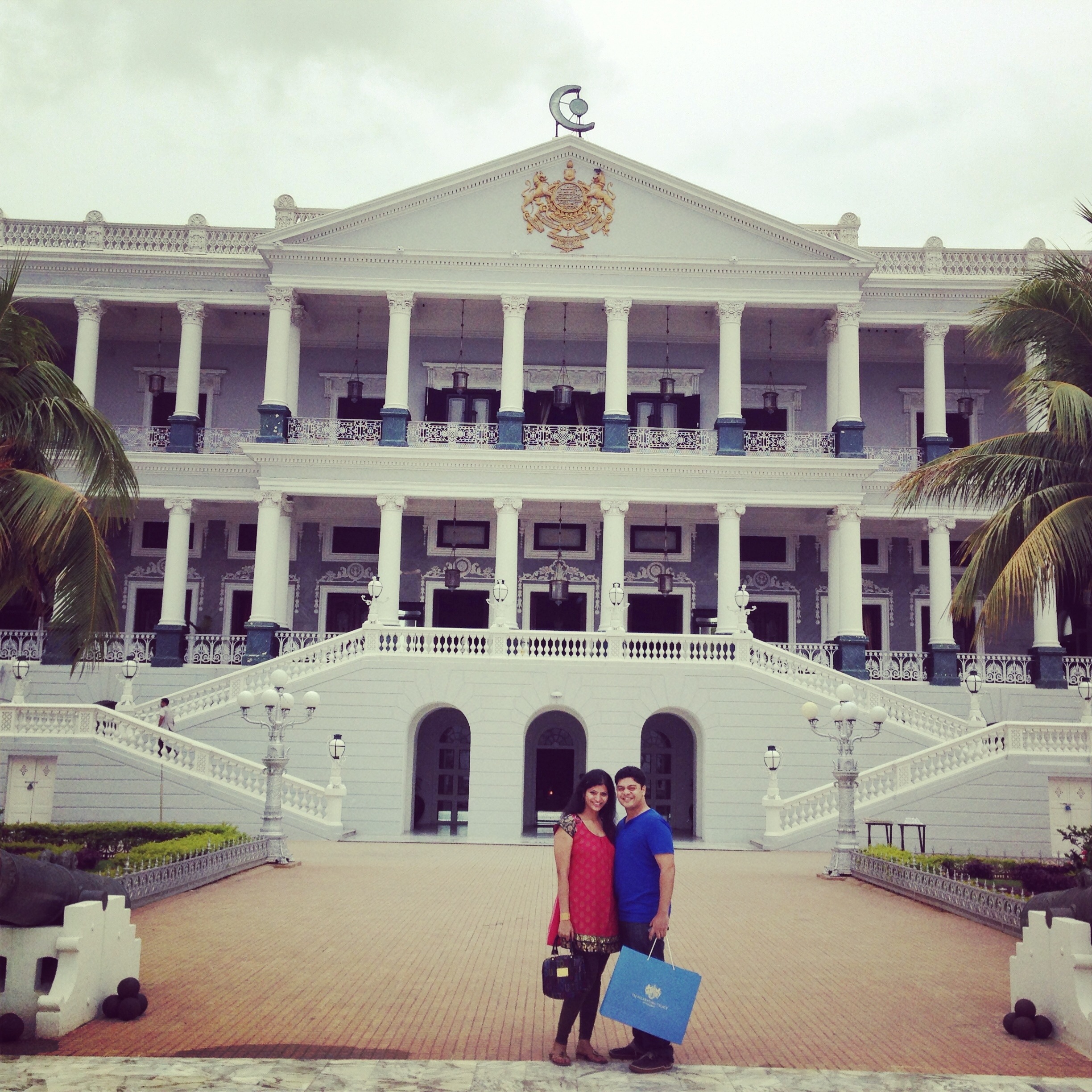
  • Literally meaning the mirror of the sky, Falak-numa is a palace built by the Prime Minister of Hyderabad, Amir e Paigah Sir Vicar Ul Umra, and later financed by the 6th Nizam of Hyderabad. Located about 5km from the famous Charminar, on a hillock, the beautifully crafted palace overlooks a huge portion of the city. This royal guest house, had several important guests, the last one being India’s first President, Dr Rajendra Prasad. The plan resembles a scorpion, and apparently stung the good fortune of the Nizam!

    The palace boasts among many things, the 101 seater-dining table, a 3000 book library, my favorite, spectacular views, and a grand staircase. The many treasures of falaknuma in the form of paintings, wood-work, furniture are all splendid just as they all were some hundred odd years ago.

    Today the palace is opened as a hotel, restored to its glory by Taj and a personal interest from the Nizami princess Ezra herself, and is an absolute delight, at least for those who love to lose themselves in vintage architecture, every once in a while.

    After lunch at Adaa that comprised mainly of dahi kebabs, ‘baingan’, a very Hyderabadi thing and the amazing dessert of ‘Lab Lazeez’, something you musn’t miss, the strawberry ‘curry’ entices even a non-sweet toothed soul, we headed for a quick tour of the Palace. The Palace, I remembered faintly when we toured the place as a kid, when it wasn’t restored then, but there was hardly a major difference. The Taj group apparently retained most of it, and all the historical interiors are for use.

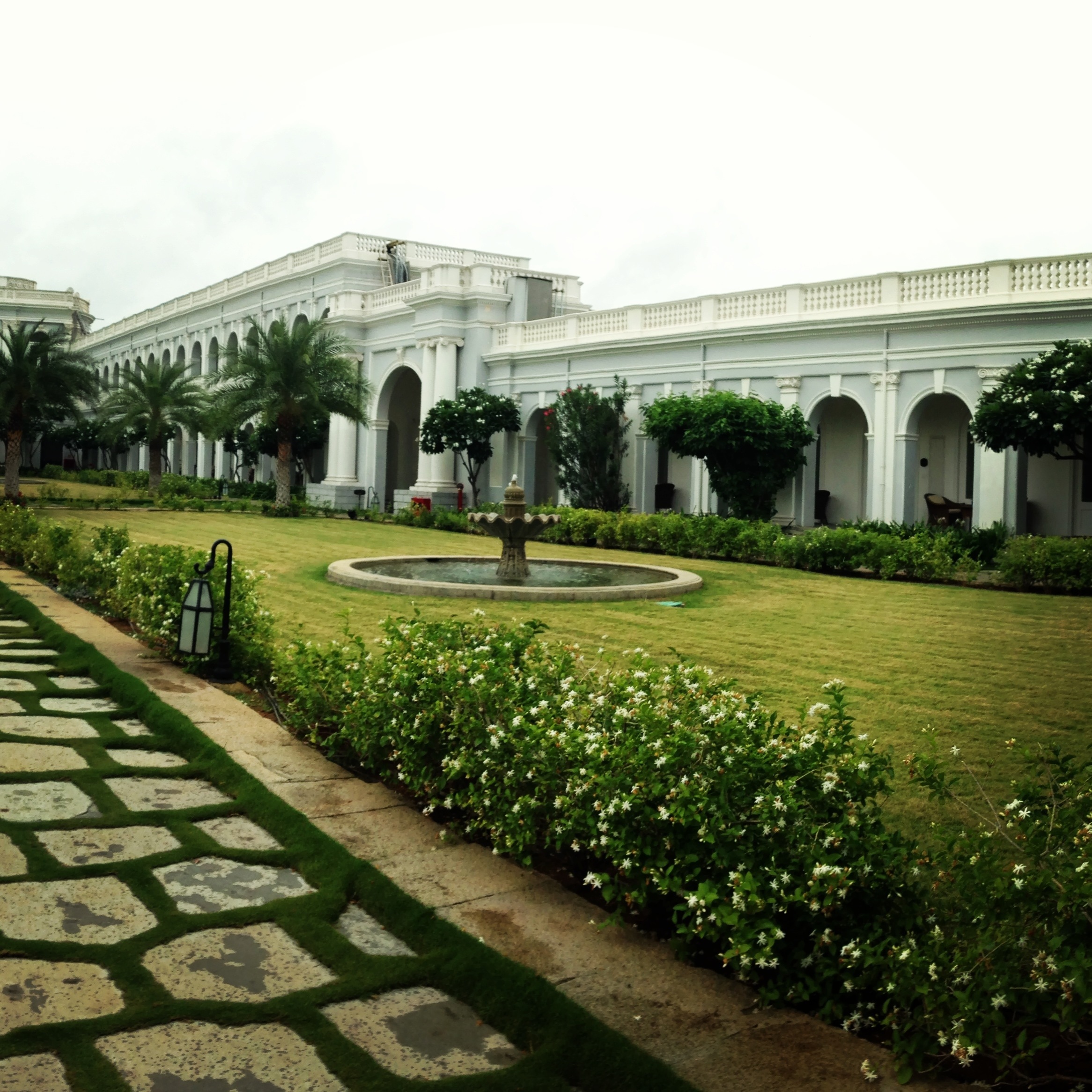
    The Nizam really had great taste, for the much famed jewelry ofcourse, but traces of that fabled taste is visible even in the make and furnishings of the palace. The entrance is the grandest aspect, that comes after a quick drive through winding paths. The entrance holds basically the durbar room, the dance hall, the Nizam’s quarters, drawing rooms, the famous dining hall, dens, library, ladies gossip room and all else. All of which is preserved excessively well. Beyond this portion is a garden flanked by hotel rooms, ending at the windy portico, capturing breezes and flanked by two restaurants, Adaa, offering Hyderabadi fanfare and Celeste, offering Italian.

    Behind one side of the hotel rooms is the grand suite, with its own swimming pool and the spa.

    A quick tour with a Taj executive had him giving us some tidbits of information. The palace when being restored was painted a shade of grey to mirror the Monsoon clouds. Visiting the palace in the monsoons with a cloudy upper sphere really displays the intention thoroughly. Falaknuma in beautiful weather looks more stunning than ever, as does all of Hyderabad!

    20130701-092722.jpg

    20130701-092715.jpg

    20130701-092709.jpg

    20130701-092701.jpg

    20130701-092648.jpg

  • Its Father’s Day, a day to celebrate the person who is my constant source of inspiration and from whom I get my daily dose of wisdom, every now and then! Here I give you a slice of it :). This recommended feature is a speech delivered to the class of 2006 at the IIM, Bangalore on defining success by Subroto Bagchi CEO Mind Tree.

    I was the last child of a small time government servant in a family of five brothers. My earliest memory of my father is as that of District Employment Officer in Koraput, Orissa. It was, and remains as back of beyond as you can imagine. There was no electricity; no primary school nearby and water did not flow out of a tap . As a result, I did not go to school until the age of eight; I was home schooled. My father used to get transferred every year. The family belongings fit into the back of a jeep – so the family moved from place to place and without any trouble, my Mother would set up an establishment and get us going. Raised by a widow who had come as a refugee from the then East Bengal, she was a matriculate when she married my Father. My parents set the foundation of my life and the value system, which makes me what I am today and largely, defines what success means to me today. As District Employment Officer, my father was given a jeep by the government. There was no garage in the Office, so the jeep was parked in our house. My father refused to use it to commute to the office. He told us that the jeep is an expensive resource given by the government, he reiterated to us that it was not “his jeep” but the government’s jeep. Insisting that he would use it only to tour the interiors, he would walk to his office on normal days. He also made sure that we never sat in the government jeep – we could sit in it only when it was stationary. This was our early childhood lesson in governance – a lesson that corporate managers learn the hard way, some never do.

    The driver of the jeep was treated with respect due to any other member of my Father’s office. As small children, we were taught not to call him by his name. We had to use the suffix ‘dada’ whenever we were to refer to him in public or private. When I grew up to own a car and a driver by the name of Raju was appointed. I repeated the lesson to my two small daughters. They have, as a result, grown up to call Raju, ‘Raju Uncle’ – very different from many of their friends who refer to their family driver, as ‘my driver’. When I hear that term from a school or college going person, I cringe. To me, the lesson was significant – you treat small people with more respect than how you treat big people. It is more important to respect your subordinates that you superiors.

    Our day used to start with the family huddling around my Mother’s chulla – an earthern fire place she would build at each place of posting where she would cook for the family. There was neither gas, nor electrical stoves. The morning routine started with tea. As the brew was served, Father would ask us to read aloud the editorial page of The Statesman’s ‘muffosil’ edition – delivered one day late. We did not understand much of what we were reading. But the ritual was meant for us to know that the world was larger than Koraput district and the English I speak today, despite having studied in an Oriya medium school has to do with that routine. After reading the newspaper aloud, we were told to fold it neatly. Father taught us a simple lesson. He used to say, “You should leave your newspaper and your toilet, the way you expect to find it”. That lesson was about showing consideration to others,. Business begins and ends with that simple precept.

    Being small children, were always enamoured with advertisments in the newspaper for transistor radios – we did not have one. We saw other people having radios in their homes and each time there was an advertisement of Philips, Murphy or Bush radios, we would ask Father when we could get one. Each time, my Father would reply that we did not need one because he already had five radios – alluding to his five sons. We also did not have a house of our own and would occasionally ask Father as to when, like others, we would live in our own house. He would give a similar reply, “We do not need a house of our own, I already own five houses”. His replies did not gladden our hearts in that instant. Nonetheless we; learnt that it is important not to measure personal success and sense of well being through material possessions.

    Government houses seldom came with fences. Mother and I collected twigs and built a small fence. After lunch, my other would never sleep. She would take her kitchen utensils and with those she and I would dig the rocky, white ant infested surrounding. We planted flowering bushes. The white ants destroyed them. My mother brought ash from her chulha and mixed it in the earth and we planted the seedlings all over again. This time they bloomed. At that time, my father’s transfer order came. A few neighbours told my mother why she was taking so much pain to beautify a government house, why she was planting seeds that would only benefit the next occupant. My mother replied that it did not matter to her that she would not see the flowers in full bloom. She said “I have to create a bloom in a desert and whenever I am given a new place, I must leave it more beautiful than what I had inherited.” That was my first lesson in Success.

    It is not about what you create for yourself, it is what you leave behind that defines Success. My mother began developing a cataract in her eyes when I was very small. At that time, the eldest among my brothers got a teaching job at the University in Bhubaneswar and had to prepare for the cvil services examination. So, it was decided that my Mother would move to cook for him and, as her appendage, I had to move too. For the first time in my life I saw electricity in homes and water coming out of a tap. It was around 1965 and the country was going to war with Pakistan. My mother was having problems reading and in anycase, being Bengali, she did not know the Oriya script. So in addition to my daily chores, my job was to read her the local newspaper – end to end. That created in me a sense of connectedness with a larger world. I began taking interest in many different things. While reading out new about the war, I felt that I was fighting the war myself. She and I discussed the daily news and built a bond the the larger universe. In it, we became part of a larger reality. Till date, I measure my success in terms of that sense of larger connectedness. Meanwhile, the war raged and India was fighting on both fronts. Lal Bahadur Shastri, the then Primer Minister, coined the term “Jai Jawan, Jai Kishan” and galvanized the nation in to patriotic fervour. Other than reading out the newspaper to my mother, I had no clue about how I could be part of the action. So, after reading her the newspaper, every day I would land up near the University water tank, which served the community. I would spend hours under it, imagining that there could be spied would come to poison the water and I had to watch for them. I would daydream about catching one and how the next day. I would be featured in the newspaper. Unfortunately for me, the spied at war ignored the sleepy town of Bhubaneswar and I never got a chance to catch one in action. Yet, that act unlocked my imagination. Imagination is everything. If we can imagine a future, we can create it, if we can create that future, others will lie in it. That is the essence of success.

    Over the next few years, my mother’s eyesight dimmed but in me she created a larger vision, a vision with which I continue to see the world and, I sense, though my eyes, she was seeing too. As the next few years unfolded, her vision deteriorated and she was operated for cataract. I remember, when she returned after her operation and she saw may face clearly for the first time, she was astonished. She said, “Oh my God, I did not know you were so fair:. I remain mighty pleased with that adulation even till date. Within weeks of getting her sight back, she developed a corneal ulcer and, overnight, became blind in both eyes. That was 1969. She died in 2002. In all those 32 years of Living with blindness, she never complained about her fate even once. Curious to know what she saw with blind eyes, I asked her once if she sees darkness. She replied, “No, I do not see darkness. I only see light ever with my eyes closed. Until she was eighty years of age, she did her morning yoga everyday, swept her own room and washed her own clothes. To me, success is about the sense of independence; it is about not seeing the world but seeing the light. Over the many intervening years, I grew up, studied, joined the industry and began to carve my life’s own journey. I began my life as a clerk in a government office, went on to become a Management Trainee with the DCM group and eventually found my life’s calling with the IT industry when fourth generation computers came to India in 1981.

    Life took me places – I worked with outstanding people, challenging assignments and travelled all over the world. In 1992, while I was posted in the US, I learnt that my father, living a retired life with my eldest brother, had suffered a third degree burn injury and was admitted in the Safderjung Hospital in Delhi. I flew back to attend to him – he remained for a few days in critical, stage, bandaged form neck to toe. The Safderjung Hospital is a cockroach infested, dirty inhuman place. The overworked, under resourced sisters in the burn ward are both victims and perpetrators of dehumanized life at its worst. One morning, while attending to my Father, I realised that the blood bottle was empty and fearing that air would go into his vein, I asked the attending nurse to change it. She bluntly told me do it myself. In that horrible theatre of death, I was in pain and frustration and anger. Finally when she relented and came, my Father opened his eyes and murmured to he, “Why have you not gone home yet?” Here was a man on his deathbed but more concerned about the overworked nurse than his own state. I was stunned at his stoic self. There I learnt that there is no limit to how concerned you can be for another human being and what the limit of inclusion is you can create. My father did the next day. He was a man whose success was defined by his principles, the frugality, his inversalism and his sense of inclusion.

    Above all, he taught me that success is your ability to rise above your discomfort, whatever may be your current state, You can, if you want, raise your consciousness above your immediate surroundings. Success is not about building material comforts – the transistor that never could buy or the house that never owned his success was about the legacy he felt, the memetic continuity of his ideals that grew beyond the smallness of a ill paid, unrecognised government servants’s world. My father was a fervent believer in the British Raj. He sincerely doubted the capability of the post independence Indian political parties to govern the country. To him, the lowering of the Jnion Jack was a sad event. My Mother was the exact opposite. When Subhash Chandra Bose quit the Indian National Congress, and came to Dacca, my mother, then a school girl garlanded him. She leant to spin khadi and joined an underground movement that trained her in using daggers and swords. Consequently, our household saw diversity in the political outlook of the two. On major issues concerning the world, the Old Man and the Old Lady had differing opinions. In them, we learnt the pwer of disagreements, of dialogue and the essence of living with diversity in thinking. Success is not about the ability to create a definitive dogmatic end state; it is about the unfolding of thought processes, of dialogue and continuum.

    Two years back, at the age of eighty two Mother had a paralytic stroke and was lying in a government hospital in Bhubaneswar. I flew down from the US where I was serving my second stint, to see her. I spent two weeks with her in the hospital as she remained in a paralytic state. She was neither getting better nor moving on. Eventually I had to return to work. While leaving her behind, I kissed her face. In that paralytic state and a garbled voice, she said “Why are you kissing me, go kiss the world.” Her river was nearing its journey, at the confluence of life and death, this woman who came to India as a refugee, raised by a widowed Mother, no more educated that high school, married to an anonymous government servant whose last salary was Rupees Three Hundred, robbed of her eyesight by fate and crowned by adversity was telling me to go and kiss the world!

    Success to me is about Vision. It is the ability to rise above the immediacy of pain. It is about imagination. It is about sensitivity to small people. It is about building inclusion. It is about connectedness to a larger world existence. It is about personal tenacity. It is about giving back more to life that you take out of it. It is about creating extra ordinary success with ordinary lives. Go ! Kiss the world!!!
  • Guest Diary #1

    On the occasion of doing 100 posts and 100 comments on my blog am very happy to introduce to you all my super talented friend Tanvi Sanghani who’s sharing some amazing pictures from Italy and Greece.

    photo

    Tanvi is a globe-trotter who travels with her lens and a firm hand. Her pictures are stunning, as you will see, and her love for landscapes, immense. In this one special post, the pictures, and well, Tanvi do all the talking!
    Starting off with Tanvi’s travel map..

    Screen Shot 2013-06-09 at 11.34.10 AM

    This slideshow requires JavaScript.

    1. Rome

    “Carpe Diem” ~ Horace

    As Horace so wisely said “carpe diem”, when one has only half a day in Rome, to re-explore the Flavian Amphitheater is indeed seizing the day.

    The Colosseum is rightly coined as one of the Seven Wonders of the World. Built with stone and concrete, this elliptical amphitheater was the largest one of the Roman Empire and could accommodate between 50,000 to 80,000 spectators. Gladiatorial contests and public spectacles such as animal hunts and executions were held here.

    2. Vasto

    “A well balanced equation”

    According to tradition, Diomedes, the Greek hero founded this town of Vasto, a town and comune on the Adriatic coast in southern Italy.

    A must visit for all those who crave an unspoiled Mediterranean experience – Refreshingly quiet beaches and the blue Adriatic Sea in the East, with mountains tucked away in the west.

    3. Grotte di Castellana

    “Water! Every drop counts”

    The magnificent Stalactite and Stalagmite formations of this limestone grotto (cave) that goes 70 meters below ground are witness to this! The finest formations can be viewed in Grotta Bianca (The White Cave), where everything is sparkling white! Not advisable to people who suffer from claustrophobia – but otherwise, another must see!

    4. Gargano’s Coast

    “The cure for anything is salt water: sweat, tears or the sea.” ~ Isak Dinesen

    Driving along this coast, you will be amazed at how vivid the blue waters and how white the beaches are! This peninsular region is still partly covered by an ancient Foresta Umbra.

    We spent a day driving along the coast, and stopped at an organic farm deep within the forest to feast on homemade delicacies and brewed wine. The spread was so elaborate that we took almost three hours to do justice to the fine Italian cooking. And as per the Italian tradition, we polished our meal, with a few shots of the bright yellow Limoncello Liqueur – an immensely popular Sothern Italian digestif.

    5. Florence

    “Life offers you a thousand chances. All you have to do is take one.” ~ Under The Tuscan Sun.

    Ranked by Forbes as one of the most beautiful cities in the world, Florence can indeed take your heart away! Florence is the capital and the most populous city in the region of Tuscany, Italy.

    Three of my favorite spots in Florence were –

    The Santa Maria del Fiore aka the Duomo di Firenze – one of the most beautiful cathedrals I’ve seen and the symbol of the city.

    Giotto’s Tower adjacent to the Duomo, that gives you a magnificent 360-degree view of the Duomo once you climb the 414 steps!

    Ponte Vecchio – the oldest and the most famous bridge on Arno – the only Florentine bridge to survive the WW2. Viewing the sun set from this bridge is quite a magical experience!

    6. Venice

    “Words can’t express what you mean to me” ~ Puff Daddy

    118 little islands in the Venetian Lagoon, separated by canals and yet connected by bridges form the city of Venice. The only way to get around this pedestrian-one of a kind-city is by using water taxis or walking.

    No words can do justice to describe the romantic charm of this city, so I’ll just let my pictures do the talking!

    7. Athens

    One of the oldest cities in the world. The cradle for western civilization. The birthplace of democracy.

    It is known for the Parthenon (the Temple of Goddess Athina) in the Acropolis (Upper City), The Temple of Zeus, Hadrian’s Arch, Hadrian’s Library and so much more!

    Out of all these places, my favorites were:

    The Acropolis – because it stands at a height of 512 feet and gives you a splendid 360 degree view of the Attica region and the Aegean Sea (on a clear sunny day).

    The Monastiraki Square – that gets its name from few remains of the ‘Great Monastery’. This square is extremely vibrant and has a perfect blend of the old and the new – the ruins of ancient monuments, the Tzistarakis Mosque as well as the upbeat flea market!

    The Plaka – aka the “Neighborhood of the Gods” due to its proximity to the Acropolis. It’s known for its labyrinthine streets filled with souvenir shops and little eateries that serve authentic Greek delicacies, and neoclassical architecture.

    8. Idra (Hydra)

    “The sea is emotion incarnate. It loves, hates, and weeps. It defies all attempts to capture it with words and rejects all shackles. No matter what you say about it, there is always that which you can’t.” ― Christopher Paolini, Eragon

    When you say Greece, one of the first things that come to one’s mind is Santorini. By all means, Santorini is gorgeous, but the Saronic Island of Idra is just as beautiful. It has a crescent-shaped harbor, around which is centered a strand of restaurants, shops, markets, and galleries. Steep stone streets lead up and outwards to the gentle slopes of the island from the harbor area, and are filled with little white houses, blue doors and windows!

    9. Corinth

    The ancient city Corinth, or Korinth (Greek: Kórinthos) was a city-state (polis) on the Isthmus of Corinth and was occupied from at least as early as 6500 BC. The highlights of these ruins are the Temple of Apollo and the Fountain of Pierene.

    In present day, Corinth has become an island as the Corinth Canal cuts through the narrow Isthmus of Corinth and separates the Peloponnesian peninsula from the Greek mainland. It connects the Gulf of Corinth with the Saronic (Aegean) Gulf.

    The pictures are art (sigh!) and Tanvi, can be reached at tanvisanghani@gmail.com!

  • “Do you know a cure for me?”

    Why yes,” he said, “I know a cure for everything. Salt water.”

    Salt water?” I asked him.

    Yes,” he said, “in one way or the other. Sweat, or tears, or the salt sea.” 
    ―    Karen Blixen,    Seven Gothic Tales

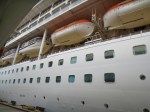
    Finally a trip on a ship. The nautical wonders have always caught my fancy. The sailor stripes, the navy tweaked with white, the ocean balm, Jack Sparrow and need I say more!

    There is something amazing about a vessel that holds good Archimedes principle of Buoyancy that too with an large dose of luxury. The Royal Carribean Legend of the Seas has all the makes of a rather 5-star property and an added advantage of taking you places. In our case, the sleepy (at the risk of sounding obnoxious) town of Penang and the bustling capital city of Malyasia, KL.

    Ofcourse, the ship caters to all kinds of activities, of which I’d rather warn about the food spread. From the unlimited buffet to the sit-down dining experience. The formality of the daily dining is so different from the laisser faire attitude everywhere else. But importantly the waistline certainly does take a huge beating, what with all the yummmy spreads, even the salads seem highly calorific!

    Nevertheless by enagaging in all things else on board, the rock-climing, the running on the deck, spa sessions, not to forget, swimming and a dip in the Roman Baths that one issue can be dealt with. The casino I steered clear of but otherwise the shows and the dancing offer a good respite too! A show of Russian ballet had most of us keeping our eyes peeled the stage. The flexibility of the Olympic performers was simply spectacular. I must mention that the ship also had a well-stocked library! But my favorite activity on board was to sit on the top most deck engulfed by the balmy ocean air. Add to that chilling under the moonlight, even better!

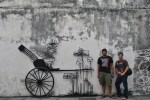
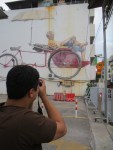
    Destination 1 – Penang is rather charming. Actually the city’s bestest show is the artworks trail done casually on walls. With temperatures melting and wearing out the travellers, the art works provide some comic relief. Must say 8 hours are a lot to cover the city, from the near extinct fort to the well-preserved shop houses, leaving enough time for a coffee break at Old Town Coffee place. Relaxing!

    Destination 2 – KL’s charm for me lies in Petrona’s twin towers, the Shopping Centre and ofcourse the Old Market Square. The rosy brick building is a favorite. Since the ship takes a halt at Port Klang, KL is a while away. The drive gives one an impression of how spread out the city is, but its really from the KL tower that one can really see how green the city also is. The King of Malaysia (a rotatory post) has a sprawling new residential estate that could well remind one of the Raisina Hill, giving him a spectacular view of the city. Lesser mortals can only get a glimpse of the gate, the guards and the horses!

    The beauty of the Ocean is clearly felt, how it changes at different times and all, besides one is treated to all the shades of blue. I could stand on the deck all day and thankfully not get hit by flying fish or have any encounters with one Mr Richard Parker! 😉

    P.s. thats a quote by the author of the book am currently reading, “Out of AFrica”. A book that I read so slowly cause I do not want it to end! 😉

  • This slideshow requires JavaScript.

    With a detoured landing in Malaga from Barca, the journey to Granada was elongated by a while. But the drive through the Spanish countryside was an added bonus. Huge estates lined with farms and flat plains, yes yes where it mainly rains, well to thank one Ms Hepburn.

    Granada was the coldest in the season, the information board said 8 degrees. Getting out and hitting the streets we first made our way to the beautiful Moorish Palace of Alhambra. The text Alhambra is inscribed all over the intricate molding work of the entire palace. The palace was built by the moors then conquered by the Catholic Church and then again re-used. There is a striking likeness to the Palaces we see in India. From intricate patterns to elaborate workings and a beautiful setting in rolling hills it has all the ingredients that make is striking.I for one became a big fan of the geometric pattern that adorns the main palace and ofcourse the lions court. The court has a fountain of lions in the centre. Several courtyards and gardens make up the conglomerates palace. Orange trees and rose bushes that were in full bloom at the time in the misty air create a quality of wonder. What ultimately made the visit and palace a special is the sudden and unexpected snowfall in the mid-afternoon. Within the circular drum-like courtyard the lovely snow twirled much like a snow-globe.

    As it was my first snow-fall its an experience I would not forget and just completely understand why snow-fall is rated so magical. Cause it really is magical, and nothing short of that. The twirling snow was a sight and though repeatedly warned about being careful on the wet cobble-stone path I couldn’t care less and flit around! With snow-flakes resting on my nose and eye-lashes, yes it’s one of my favorite things too Miss Andrew, I took in the breathtaking beauty of Alhambra.

    The sweeping views of Granada from the Palace is completely worthy of an emperor. The gardens or jar dins
    as the moors called it are quintessentially Spanish with a brush of the brilliant French elements. Parts are well-groomed and parts are au natural.

    Lunch at Alhambra, served up really good fare, from the French onion soup to the delicious mocha mousse.

    The city is equally enthralling and very focused on retaining the right human scale. The street lights for one set a very modern tone on a very antique background. The whole city seemed much like that, an equal measure of the old and the new. Ale-hop caught my interest first in Granada and consequentially in all of Spain.

    The day at Granada was well-spent and armed with a digital documentation of the palace, the architecture of which I plan to write more about and share, we headed out of Spain.

  • This slideshow requires JavaScript.

    This post is very special. Not just because it is the 100th but because its about my favouritest (so far!) European city of Lisbon.

    The capital city of Portugal is simply a perfect blend of all that is Portuguese and is the only European capital city on the Atlantic. In addition it is city that offers so many surprises from its very urban fabric to the people who fill in the stage. Renting out an apartment on Rua Janeles Verdes means that one is at literally a walking distance into the various quarters of Lisbon. Becoming a Lisboeta has one zipping up the knee length boots, wearing an easy smile and a working up a huge appetite for egg tarts. Hitting the streets late evening we were sure glad that the city stays open quite late. As pubs and restaurants overflowed onto the pavements, an atmosphere of cheer encouraged us to walk (quite fearlessly) all about town. Statistical evidence rates Lisbon as one of the safest cities in Europe.

    On the first evening we found our way to the Rua de Prata, which quite conveniently locates the major banks and the chic shops. The Sighting of the Santa-Juxta elevator off this Rua, is exciting, an urban elevator that is ancient, built by a protege of Gustav Eiffel, it looked fantastic but didnt dwell on us the great truth yet. Then taking the famous Tram 28 into the older Alfama quarter. The tram ride was wholly entertaining, the tram driver sits in the centre, and ours seemed factiously wicked. Marking terse breaks, sounding the shrill alarm and driving with spite. Finally as the final stop of Martim Moniz presented itself, our man dramatically stopped the tram, got up, turned around and screamed ‘This is the last stop. Get Out’. Any other place I wouldve expected a fist-fight, but hey this was Lisbon. As I was just thinking that ‘can he do that’, everyone else on the tram burst into laughs and alighted all in good faith.  Acceptance, thats the first key to happiness. Just like that.

    On the tram, the narrowness of the streets and the fact that the trams share space with the automobiles creates an utter chaos. Actually endearing chaos. Later sharing laughs on the eccentric tram driver, there there he’s going to be unforgettable already, we met a Danish-Argentinian, farmer-writer, couple and walked together to Baixa, the bestest and funnest district. Late already, but a quick dinner at the Baixa Chiado, the mall is killer, got us to get home. Walking back we realised, solely relying on us instincts and directional sense, the way back didnt seem the same, we were on an elevation, but the roads led all the way down to the shore and suddenly thats when the great urban revelation dawned on us. The city is built in levels, but so intelligently that it doesnt feel so, the upper levels dont dwarf the lower ones, in fact they are all so unassuming. So excited were we, that we simply had to unravel the city as we kept coming back the next few days.

    Baixa-Chiado though is full of activity, from street-performers, to tourists, to cafes, and shops. Shopping, ice-cream in winter, and long walks are up on offer here, and entertainment galore while you are playing your part on the stage. A Fado performance was one of the treats we lapped up at Baixa. The Fado is a traditional singing style mostly tragic and sometimes happy, that captures a mood. Personally I loved the happy ones, the tragic ones have their own merit. The Fado evolves from a deep throaty singing style, its a popular pastime in the evenings taken in conjunction with the balmy ocean breeze. Though we had to cover a lot around Lisbon, we found ourselves coming back here at every instance we got. It simply was irresisitable.

    At this point I need to mention a tiny restaurant in Lisbon, called Taverna Portuguesa. Run by young chaps with much passion. As we entered the homely and lovely ambience we were greeted by the owner/chef/waitor who set us onto a table and promptly served us with olive (I heart), cheese, bread and orange marmalade. Cheese was to be eaten with marmalade. A great combination. Later when I complemented him on the marmalade he says, ‘its easy, you can make it at home’ before sharing the recipe. Just like that! These people never ceased to surprise me.

    Another thing to mention is that they use the Century gothic font in all the train sign ages! The graphics are cool and the Baixa-Chiado station looks like a disco 😀

    Of all the day-trips Lisbon offers, the one to Sintra is the best. The dreamy Sintra Palace and the Castle are unparalleled in terms of beauty and fantasy on a roll. And Lisbon prides itself with various modes of transport, the modes to getting about are taxis, bus, tram, train or the metro.

    After reading much about the fairytale palace of Sintra I couldn’t hold my excitement as the train pulled in. Quickly downing egg tarts and coffee, we made our way to the castle and Pena Palace of Sintra. The palace is beautiful, much because of its location and much because of its make. Its compact and unlike grand palaces we Indians are so used to. This one atop a hill and is very much like what one would imagine as a tale of beauty. Misty weather added to the dreamy quality of the palace. Yes dreamy, thats probably the best description of the palace. The queens quarters in a combination of scarlet, fuchsia and rose pink and the ‘India’ room filled with gifts from the Indian Emperor are startling features of the Interiors. On the outside the palace is designed with elaborate classic features. The style of the palace can be described as Romantic Classicism. The rose trees (!) had pretty flowers in bloom, and such tall rose shrubs are beautiful. Settling down to capture the imagery on paper I drew out a version of the dreamy palace. At the palace, upon strong recommendations we got the Queijadas, a cinnamon spiced sweet bake traditional to Sintra.

    Spreading cheer on Valentines, we bought charity paper hearts and did our bit to help school children to add to their charity fund for Africa. Lunch at Sintra, for vegetarians is again, freshly boiled veggies in Pasta, the broccoli is my recommendation. Beware though the Portuguese are very generous with everything, including their helpings! Just like us Indian 😀

    Next up is the Castle, and a long long walk up to the summit. More of the Husband’s domain I would say, his love for mossy/green stone walls got us hiking all the way up the Castle. The sight of Sintra below was very well worth the hike. At the Sintra town, cute little art shops offer interesting pieces.

    And very very reluctantly we made our way out of Sintra, feeling dreamy of course.

    Off the city centre in Lisbon is the Tower of Belem, the watch-tower and symbolic stance that saw-off and received the brave and talented Portuguese nautical personnel who set off on far off adventures. Getting off at the Belem stop we stumbled into the Belem Cultural Centre by Portugal’s celebrated architect Eduardo Souto de Moura. It was stunning. With block of commanding proportion and ratios it was a starkly resplendent example of contemporary Portuguese architecture. The kind of my liking. Art on display made my day! Then to fill in at a breakfast place by the tower.

    The tower of Belem is poetry in Marble. The 4-5 storey tower is mostly illustrated as a saving messiah during rough seas. Something that offers bountiful blessings to the sailors. It is in fact also a prison for political prisoners brought from plunders of the sailors. A short walk from here is the Praca Imperio, and a constellations of ‘museos’. A church and an attached monastery complete the complex. The Italian influences are hugely visible here, ofcourse with a Portuguese twist. Perfect light quality makes the architecture extremely dramatic. The Museums held Portuguese archaeologic collections.

    Another thing amazing area in Lisbon is the Oriente Station of Calatrava, the Parque das Nacoes, the Vasco de Gama mall. Interestingly the malls in Portugal seem to have a tad bit of regionalism without completely bowing down to the American mall culture blindly. The Portuguese Pavilion is another personal favourite. The Ponte Vasco de Gama looks stunning over a cable car ride in the area, while the Lisbon Science centre is very engaging.

    Needless to say after all that we went back to Chiado. One last time before heading out of Portugal. Hopefully not for good. 😀

    P.s A great country to let down presumptions, assumptions, prejudices and all else one may have. Architecture is stark but friendly, much in sync with my beliefs of good architecture. At Belem we sighted a yachting centre that I might have quite easily been inspired by, for my thesis of well, a yachting centre. Portugal is very endearing, everyone seems to be encouraged to set their own pace. They understand quite well that no two souls are the same. They seem to more than tolerate, celebrate that. One can hardly be another brick in the wall here. Lisbon is simply unforgettable and a definite favourite.

    This slideshow requires JavaScript.

  • If Portugal gets an ample hold on the Atlantic and the Mediterranean, it bestows all its grandeur on the coastline of Algarve and dotting the southern-most region are the picturesque towns of Sagrez, Loule, Faro, Tavira and Lagos. And the famed Carnival of the country is traditionally celebrated in the month of February at most of the towns. Loule’s carnival being a highlight.

    Driving across the region is the best way to see the destination and allows one to go on their own path of discovery in theh vastly untouched terrain. One place where man-made loses its meaning, its nature reigning all the way. In winters, the temperature is mild, clear blue skies envelope even bluer waters. There is no way of not losing heart to the clear blue enclosing the orange-red rocky formations.

    While Sagrez as the southern most point of the country offers brilliant horizon sighting, Lagos is the laid-back yachting town where every house has parked in a sail-boat as against the usual car. Imagine towing down your sail-boat down to the jetty and sailing away. Without the toils in sight it certainly is an enticing picture. Stopping-by for a dialect of Brie, Lagos cuts the mark.

    With Faro as the centre-point all the other towns can be driven into at a maximum of two hours. Loule hosted its annual Carnival with much pomp and gusto. The whole town literally comes onto the street to parade in a theme wearing costumes and jiving. Its a day to let down your hair and dress up like a fantasy character amidst music and familiars, tourists like us were rare. It felt like we crashed on a house party, but the Portuguese being Portuguese, one feels most welcome. Children seem to have the best time, running into the party fervour and wearing out an active imagination.

    Tavira on the other hand holds onto a relative degree of stiffness, of quaintness held together by generous classic helpings. Cobble-stone streets pave the entire town as time seems to stand very still in the white-washed homes flanking the narrow lanes.

    The best part of Algarve though are not the towns, its the untouched or rather unharmed trove of nature that is nothing short of beautiful, stunning or spectacular. Everything else seems tertiary, not even secondary.

    This slideshow requires JavaScript.