Don’t grieve, for what you lose comes around in another form.
Now this was the first quote that I came across by Rumi, after all I suppose what I was seeking was seeking me, another quote by the master. Rumi found me when I was 26 years old, its astonishing that I had never heard of him considering all the time I spent with books! According to the Times magazine, Rumi is the most published poet in the world, across all ages and all genres. And then upon reading his wise words, I know why, the King of Hearts as he is fondly called deserves all of his titles, while his city Konya where he published most of his works is aptly titled The City of Hearts. As we ventured into Konya, a city on the Silk Route, almost at the end of the great route, the beautiful Caravan Serais offer a welcome even today to the tourists and all along the presence of Jalauddin Rumi is keenly felt. The Caravan Serais today have been restored and are used as art galleries curating both traditional and modern art. In the past they were used as melting pots that merchants and travelers would stay in intermittently during their journeys. All Caravan Serais had a similar orientation with an outer courtyard fringed with rooms on the sides used in Summers and inner halls with arched alleys used in winters, hammams usually were included in the serais as were storage spaces that the merchants would use. The Sultanhani Cravan Serai that we visited had a carpet exhibition in its main arched hall, while the courtyard played canvas to modern art.
As the founder of the Mevlana order of Sufism, Rumi enjoyed great popularity among the locals who would meet him every day, just as much as he enjoys all over the world today, and being on a crucial part of the silk route definitely helped shape his experience and hence expertise. Meeting people from all walks of life is a sure-shot way to know that no one way is absolutely the right way and wisdom is probably the basis of wit in life. His words have inspired many and much credit of that belongs to his son. His tomb was built by his son, who also ensured his legacy continued throughout his life. The Mevlana museum is the centre of the city that radially extends out. While Rumi sits at the confluence of traditional Islam and the Sufi order which with its whirling Dervishes and tangential philosophies embraces the avante-garde. His book Masnavi, also lauded as the Persian Koran, is about 50000 lines long and teaches the Sufis how to find love in God. Mystical and mythical, the reality of Rumi is keenly felt in the museum attached to the tomb. The museum of the Mevlana or the master of scholars as Rumi is referred to houses most daily objects that Rumi used including gargantuan prayer beads, beautiful Persian rugs, his clothes, furniture, and manuscripts giving the visitor an idea of how the great Sufi saint lived. On approaching the tomb we made acquantaince with a Persian dame, who whirls not as a dervish, but for its deeply meditative nature. Many of us, including me were so intrigued, as religion begins to detach from some practices all over the world, the modern seeks to imbibe gestures or actions from various practices, simply to elevate the soul!
The tomb itself is like Mecca, for it is the Mecca for the Rumi-fied people of world. And likely so, there were many people sitting in the tomb, praying, crying or dancing with wild abandon just like Rumi. The music and incense burning in the structure make for a certain mood, pensive or not. But the tomb of Rumi is decorated with all its gaiety. The head gear that Sufi saints wear, including Rumi’s is attached to the tomb stone and is stoically vast, to say the least. Shams was an early influence on Rumi, a great friend and in 4 years that they spent, Rumi is to have learnt a lot from Shams, in the way of living and letting live at a time when religion was meant to control and guide its followers. Though losing his master brought Rumi a lot of grief, like every creative person, he channeled his grief into building something magnificent, through poetry and prose, he had his way with words. Closer home, Imtiaz Ali, a noted filmmaker begins each of his movie with a quote of Rumi, and then the story builds on a premise of a line that Rumi probably recited after much deliberation. Rubbishing philosophies of any kind, here is what the Mevlana had to say about silence.
‘The life of this world is nothing but the harmony of opposites,’ he said. The way to find harmony is not to get bogged down in the chicanery of words or in the hair-splitting of philosophies. The way to achieve it is through the language of silence.
‘When the lips are silent, the heart has a hundred tongues,’ says Rumi, ‘Listen! Clam up your mouth and be silent like an oyster shell, for that tongue of yours is the enemy of the soul, my friend.’
There isnt much to Konya if not for Rumi, but his aura has ensured many madrasas or places of specialised study find their way all across the city. Today the medresses, as they are called, are used as museums but at one time were places of study for specialised scholars who made great progress in their craft. The madrasas themselves showcase a pinnacle in architecture, their most notable features being the beautiful blue glazed Iznik tiles apart from their domes and the octagonal forms. Some madrasas also house the tombs of the masters who ran the schools of study. Unlike today, in the past only learned scholars after a certain age were permitted into madrasas to implore the use of more knowledge. Modernised much, Konya too has grown beyond it’s past, but the lore of the past keeps the beauty of Konya very much alive. Turkey could well be the most instagrammed country on this planet. There are terrace cafes around monuments, even the tomb of Rumi, where one can sit an get selfied with the monument for company! The streets of Konya with pretty houses and colorful elevations do add to the spunk of life, reminding one to walk taller, smile wider and incorporate a spring in the step, bouncing along happily. From one monument to another as we walked, we passed by petty streets, building material stores that called wall paint, home cosmetics! Well what a poetic way to put it!! Nothing seems to be impervious to Rumi’s charm or poetry for that matter.
Edirne is a city located in the European part of Turkey (a country that is demographically located between Europe and Asia, approximately 15% of the landmass of Turkey is in Europe and 85% of it is in Asia) in a region known as Thrace. It was once the capital of the Ottoman Empire, called Adrianopole, or Hadrianopolis, located in close proximity to the neighbouring countries of Greece and Bulgaria, a mere 5 km from the Bulgarian border. Istanbul, then called Constantinople then eventually became the Ottomanian Capital where the empire flourished. It is about 230 km from the grandest capital city of the world, one that is laced with history and beauty alike, but Edirne is deeply endearing. From the name, the Roman Emperor Hadrian possibly refounded the city, but more recently the city and its precincts have been embroiled in controversies between Greece and Turkey, with border tensions plagueing the region ever since the treaty of Sevres in 1920. Today Edirne is filled with pretty houses, hearty courtyards full of peach trees, pomegranate trees and street facades with a unique architecture of its own, that mostly happens in border towns. We headed to Edirne soon after landing at Istanbul, absolutely mesmerised by the bird’s eye view of this ancient yet modern, religious yet secular, crowded yet clean, affluent yet rooted capital city of the world. Edirne though, is much smaller, in scale and in grandeur but makes up in affability and amiability, it was once a capital but now misses all the trappings of a big city.
Driving into the city, one is first amazed by the landscape and how close it really is to the neighbouring countries, and that is one of the reasons a lot of military can be spotted in Edirne, protecting Turkiye’s borders. Walking to the Grand Bazaar of Edirne we passed the Grand Synagogue and the Maarif Street seeing some of the houses being restored, observing a builder being hands-on with a panel of a house. The first Turkish architect I made my acquaintance with, also probably the grandest architect of the country, a peer of Michealangelo. Mimar Sinan, translating to architect Sinan was the Chief Ottoman architect and Civil Engineer, who was responsible for over 300 major structures and smaller schools. As a child he would imbibe a sense of architecture watching his father, a stone mason work, then later he worked as a military engineer, rising the ranks rapidly to finally be bestowed the honorific title of Sinan or architect. Of the 300 odd structures Sinan built or was responsible for the Selimiye Mosque completed in 1575 is touted as his greatest. The entire complex of the mosque is spread over a dimension of 190mX130m. His legacy continued beyond him through his buildings and through his apprentices including Mehmet Agha (architect of the Blue Mosque) in Istanbul.
Visiting a national monument, an ancient monument, has its own caveats though, heritage monuments are forever shrouded by a scaffolding of sorts, being under restoration, due to the age and the wear and tear! Buildings are meant to age, and keeping them going for years later takes a lot of work. This is what we found when we arrived at the Selimiye mosque, unfortunately covered in the restoration architect’s shroud of ladders and formwork as the UNESCO-listed site goes in for repair work to only be completed in 2025. The ambitious project will rework on the Iznik tiles of the mosque brought in and fixed from Bursa, an unsurpassable piece of the art work, work on the structural strength of the building. completely renewing the art work and the glass work inside the mosque. We got to however witness a portion of the mosque. With the mehrab and the mimbar and though the main dome was closed, a portion of the ancillary dome was kept open to the public. The details of the structure, it’s orientation and the domes that top it, are said to be quite unique which we missed due to the restoration process. The mosque itself finds a firm footing in the city, one who’s minarets we can see from every part of the town. For the architecture lovers, Khan academy has a beautiful rendition of the mosque, belting out technical and relevant details, it can be read here.
The Grand Bazaar of Edirne is a lot like the Grand Bazaars we would eventually see in all of Turkey, but it was here that I got to try a vegetarian version of the Cigofte Roll, made with Durum wheat. With a number of restaurants for tourists who end up going to Edirne, the city has a comfortable droll of a suburb wearing it’s history rather lightly on its head. There is a river that passes by Edirne called the Meric River and walking along the river bed if not on the cobbled stone streets of Edirne makes for a great evening. Edirne even makes a great day trip destination from Istanbul, and other places to visit in this University town are the Health Museum, the Karagaac of the fine Arts University, Eski Cami, the Karagac Train Station, the Serefeli Cami and the Margi Outlet.
Shortly after recording the Around the World in 83 hours, my humble podcast that takes one around the world through conversations, I had quite the chance to visit Turkey, the land of Suleiman, the Magnificient, and Mehmed, the Conqueror. Located at the end of the Spice Route, (surprisingly not using any of the spices themselves, the food makes use of just salt, pepper, and chili!), Turkey has quite lost its sheen as the center of the world, yet it dazzles with a careful quotient of the old and the new. While tourism is its largest industry, the Turks begin to embrace technology, make the most fabulous cloth, smoke like a chimney (they seem quite proud of their phrase ‘Smoke like a Turk’, worship Mustafa Kemal as Ataturk translating to the Father of the Nation, call their country Turkiye to not have a namesake of a bird, revere their architect Mimar Sinan, give their hearts to the King of Hearts Rumi, are ridiculously good-looking, make perfect canvasses for make-up, carry designer handbags, wear the most stylish clothes on their already lean frames and supply the world with a truckload of Baklava. Becoming a republic on the 29th of October 1923 under the leadership of Ataturk, Turkey morphed into a secular republic and has been widely modernized ever since. Before getting into this country, which boasts of brilliant natural beauty apart from architecture that connects to the Gods, I much heard of modern furniture and saw labels on my clothes, particularly from Zara that said, “Made in Turkey”. So with a rep of a manufacturing economy, I embarked with a group of 22 architects on a mega-study trip to the only country that marks its territory in two continents of the world, 15% of Turkiye is in Europe and 85% of the territory rests in Asia. Our journey of 2000 km touched upon the erstwhile Constantinople, Istanbul, the capital Ankara, smaller towns of Edirne, Goreme, Nevsehir, Konya, Eskisehir, the regions of Cappadocia, making a foray into the Anatolian lands of Turkiye. All those travels did make me think, and consolidated in me to be peaceful with oneself, for after studying years of history, the possible surmise remains, that peace and only peace is truly profitable!
The Istanbul international airport is extremely well-connected and if not Turkish Airlines a huge number of flights including the low-cost Indigo Airlines fly from Delhi to the city of dreams. Istanbul wears its title very lightly as the City of Dreams, yet it leaves one starry-eyed. It is massive, diverse, not as diverse as India, historically significant, and holds major keys to the past as it looks forward into the future. The older areas of Sultanahmet are the center of the world-famous Hagia Sophia, a church turned into a mosque to church to mosque to the museum to finally a mosque, Sinan’s wonders like the blue-mosque, the pasha mosque, the Basilica Cistern while the new areas of the city around the Taksim Square, close to the gentrified neighborhoods of Beyoglu, Karakoy, an ever elite Bebek, punctuated by parks that are literally to die for. It’s one of those cities whose River, the mighty Bosphorous flows through unabashedly, and green lungs add a few stars to the livable quality of the city. While the city is inundated by locals and tourists alike, the chance of their collision with agents, guides, sellers, or even pickpockets remains as high as ever! The best time to visit this rather friendly and walkable country is from March to September when the sun shines brightly and one can enjoy the Turkish Ice-cream nonchalantly. The parks of Istanbul too are their pleasant best, while I got to hang out at the Bebek Park mostly, I hear the other parks too in the city are just as fun.
Staying at first at the Taksim Square we were at close proximity to the high street of Iskitlal Caddesi, the bustling shopping district, the hip-upmarket area of Beyoglu, the Galata tower and the art neighbourhood of Karakoy, if not for the Taksim square itself. So thats the route I began my foray into the city of Istanbul. Following Google Maps I headed to the Museum of Innocence after reading the similarly titled book by Orhan Pamuk, what gumption to have a museum for a fictional world that one has created, but thats Pamuk being himself, the Nobel Laureate who is so sure of himself! Later I headed down to the Beyoglu precincts through Iskitlal, that I loved, and sat for a cuppa of Hot Chocolate and a salabrious dose of San Sebastian opposite the Galata Tower. The Kahvesi had a que that literally ran around the tower and after a 45-min wait I managed to secure a table with the best view of the Tower as I precariously charged my phone, Apple phones over 2 years of age have the worst battery ever! Fueled for the evening with dangerous levels of chocolate in the bloodstream I headed to Karakoy and flitted through art Galleries that housed Turkish artists and were a treat to the eyes. After some heady walking through the steep alleyways and streets I finished my walk at Iskitlal, exchanged Euro to Lira, the currency of Turkey, a country that still works on being a part of the EU and waltzed my way back to Taksim before retiring for the night.
Previously one day before, we set sail along the Bosphorous getting on a five-hour cruise that skittles along the Golden Horn all the up to the Rumeli fortress touching upon both the European and Asian sides of this big city. The cruise served up a resplendent four-course meal that started with the soft Turkish bread, salad, soup and ended with a hearty serving of Baklava. We did notice that every meal in Turkey is served with a colourful portion of salad, we did eat the rainbow at every single meal, the food was so healthy, even more so with the admirable lack of salt! Ayran or buttermilk is a common accompaniment to every meal, another healthy practice that I am sure keeps the Turkish people so fit and good-looking. The cruise gives one a faraway glimpse of the city including all their glorious monuments including the grand Hagia Sophia, the delicious Dolmabahce palace and the Asian side that is now dotted by a newly constructed telecom tower. Giving the ferry company were several other ferries, private yachts, pirate ships(!) and a few container ships. The main port of Istanbul is located a little away from the city to keep the Bosphorous for the tourists and the city-dwellers alike. The best part of Istanbul, the City of Dreams, is undoubtedly its history, and in its gilded history standing the test of time is the Hagia Sophia, once a church today it serves as a mosque, daily prayers are held here and between the prayer times the visitors ques seem utterly endless.
With a very wise and seasoned leader guiding our trip, we entered the Hagia Sophia at 6 AM catching the morning sunrise glisten off the pink and beige form of the Hagia Sophia, also called the Aya Sofaya, the experience of seeing this massive monument built during the Justinian times is truely incomparable. It is magnificent and commands the place around it like little else, one does wonder, a true merit to a beautiful building, and captivates its audience like nothing else. Inside the Hagia Sofia the remnants of the erstwhile stare at the average visitor while the inscriptions from the Quran hang tall and mighty driving home the point of the structure. So much has been said of the Hagia Sofia, books have even been written on the light quality of its indoors, that even more said would seem like less, it is indeed poetry in stationary, but ofcourse when I first thought such feelings were due to the hour, it wasnt really so, the building looks just as grand at every time of the day, though the early morning birds do indeed catch the worm! Ahead of the Hagia Sofia is a plaza that is beautifully adorned with a fountain, that is flanked by the Hurrem Sultana Hamam, it deserves a post of its own, but the story of the Hamam takes its root from the time of the Sultana, Roxelana who rose the ranks married the Sultan, ruled the Ottomans through the Sultan and then finally when she fell sick, the Sultan built her a Hamam! On the other side of the fountain is the Hippodrome where horses were made to race. The Hagia Sofia itself is sided by the Basilica Cistern on one side and the opulent Topkapi Palace on the other side. The Basilica Cistern is a surprise, it is a water storage tank built by the Romans that carries water from the Balkan mountains through the ever famous Roman aquaducts. Today the cistern serves as an art gallery, a wishing well and is very stunning on its own. The lighting design employed today adds to its mysterious quality and entrances the visitors who courageously step down into its cavernous path down to witness the column heads of Medusa, cursed as she was.
The Topkapi Palace on the other hand was built by the Ottomans and documents the pinnacle of the Tulip-era architecture. The Library in the Topkapi palace built by Ahmed the third caught my attention as did the verandahs of the palace overlooking the Bosphorous and the chimneys that arise from the Ottoman Kitchen. The Blue Mosque or the Sulemaniye mosque opposite the Hagia Sophia was designed by the Ottoman architect Mehmet Aga. But the more known Ottoman, Sinan, has a whole university by his name, he is vastly lauded for the mosque of Selimiye in Edirne, for the Shezaade mosque and so many structures across the Ottoman kingdom, but it is very interesting to note his beginnings as a soldier, raising the ranks to finally catch the attention of the Sultan, becoming not just enigmatic but a major influence on the skyline of Istanbul. He lies buried next to the Sulemaniye mosque in a tomb that he is supposedly have designed for himself. Sinan’s Sulemaniye mosque is greatly compared to the Hagia Sophia, being right opposite, it is essentially built as a mosque as against the Hagia Sophia that was built as a church and would have done well to remain so, it is much more nimble and is constructed almost skeletonly showing off its structure just as it balances its dome with great ease. The compound of the Blue Mosque offers one stunning views of the city at large, the Golden Horn and the perennial Bosphoros river.
Though we began our trip at Edirne to view the masterpiece of Sinan, the Selimiye mosque, we could not take in the best of Sinan’s masterpiece as the building was covered in scaffolding and the dome partially cut off from the inner side too. We however got to take in the best of the Selimiye through the parts that we were allowed to enter. Edirne by itself is a quaint town, having all the trappings of a small town. It was where we ate the vegetarian durum variant of the Cigofte roll, it was delicious indeed. Located in the Thrace region of the country, close to its border with its ever troubling neighbor- Greece, Edirne is vastly influenced by the neighbour with Greek elements in architecture, food and dialect! Sharing a very animosity ridden relationship with Greece, Turkey’s diplomatic policy with Greece ran into rough waters even when we were visiting in the Aegean Sea.
The day at Ankara that followed soon after had us visiting the Anatolian Museum of civilisation and the Mausoleum of Ataturk. Both the structures with museums attached provide a plethora of knowledge about the history of the country and in general the peninsula. Right from the Neanderthals to Homo Sapiens and then the Hittites and until the Ottomans, the Museum of Anatolian civilisation is very informative. It was adjudged the best museum in Europe for the year 2015, very well deserved I must say. After disastrous museums in India where half of the exhibits are either dilapidated or with descriptions torn it was a welcome experience. The Mausoleum of Ataturk is more focussed on the makings of a republic and the man of the hour himself. Designed as a competition project the mausoleum is perched on a hill and has the entirety of Ankara looking up at it, symbolically as its people look up to the progressive modern ruler who ushered Turkey into a new era. He abolished the Fez and had people take up surnames that was not a part of the Turkish culture. His liberal views brought the country out to great beginnings and they continue to laud his efforts and have a reminder of the ruler all over the country in parks and squares, why even on the currency note. Ataturk literally translates to the Father of Turkey. After a very mind refreshing dose of knowledge in Ankara we headed to the hills of Cappadocia for some soul refreshing experience! Cappadocia is insanely beautiful with its rocky landscape, that comprises of igneous rock that is solidified lava and this process bestows beautiful valleys in colors of red, pink and beige in various proportions while also played canvas to the Hittite populace who carved into the stone their homes, underground cities, caves, churches and every imaginable dwelling. They also used the underground cities to store grapes, make wine and are responsible for introducing wine to the world. Though the Hittites are widely credited for their underground cities, much of the earlier caves were dugout by the early Christian’s. Most of those dwellings are converted into cave hotels that are a sheer delight to be in, a claustrophobes nightmare for sure! Yet with their ventilation chambers and calming forms they are the most Instagrammed place on this planet at present.
On the way to Cappadocia we found the Tuz Golu, a lake that has evaporated leaving an endless bed of salt, much like the Rann of Kutch. Flamingoes were once found in droves at this lake. The Sanpanca Golu was a lake we saw from afar, but that was one with water. The most beautiful experience of Cappadocia, that is ridden with countless experiences including treks, horse-riding rides, atv rides and the gastronomical delight that it is (every tourists dream, Cedap and Haruna are gorgeous places to tuck into here) is undoubtedly the Hot Air Balloon ride. Essentially the baap of all rides! Catching the sunrise on a hot air balloon is a must do. It did make me so very happy, the rising of the balloon, the warm fire blowing air into the climes of the balloon and simply drifting over the landscape is unimaginably beautiful. The whole experience is so meditative, must I talk of the philosophical angle of the experience?
The pilot of the balloon can only control the altitude of the balloon and not the direction, the direction is set by the wind, and when he wants to find an appropriate place to land he had to keep working on the altitude till the wind sets the balloon over a plain! The 150 balloons that are allowed to ride in the morning are a sight to watch, the beauty is in the collection of balloons as against just one balloon flying across singularly. May we all rise together! With such noble thoughts we said goodbye to one of my happiest places, like I say, happiness is all over the world, just a little more on a hot air balloon in Cappadocia, we headed to the City of Hearts to meet the King of Hearts. Before we left Cappadocia we were treated to a very calming and lovely Sema ceremony acquainting ourselves with most famous whirling dervish, who inhabited a town just as lovable.
Yes it is Konya, the land of Rumi, whose poetry must have touched one in one form or the other. He is said to be a widely published poet, selling strongly even after decades of his demise. His words are heavy and light all at once, gravitating and levitating as one pleases. On the way we halted at a caravan serai building up our interest to see the surroundings of this great man. Rumi’s tomb built by his son is also ostentatiously done with an attached museum, inside the tomb visitors and followers of Rumi who bordered on religion and free-flowing Atheism, who was the Imam of a mosque and a sufi sait, a whirling dervish and an accomplished philosopher wore many hats, not just the fez that he is known with! At his tomb his followers wept keenly feeling a strong attachment with the thoughts of Rumi, I’d highly recommend one to read his quotes that are quite insightful. At the tomb we met some female whirlers who are not dervishes but certainly enjoy the meditative aspects of whirling learning through teachers for the betterment of their lives or their states of mind! Looks real fun though by itself. Ahead of the tomb in Konya, the city is also known for various medresses where specialized learning from scholars happened in the Islamic cultures. Needless to say the medresses were exquisite in form and decoration, the glazed blue tiles beautifully covered the mosque’s interiors. Bidding adieu to Konya we headed to Eskisehir, a business like town in today’s Turkey, close to Istanbul and even closer to the erstwhile capital of Bursa. In Bursa we again halted at the Umi Cami mosque and it was at this mosque that a cat refused to leave my lap. After the caravan serai and incessant walks through the city, we headed to the mosque that again, prettily done offered us some respite to wait, much on sugared chestnuts. Sitting on an ornate bench, deeply in conversation with a fellow traveller I was surprised to have a kitty come and sit on my lap and refuse to leave. She literally dug her paws to not be lifted off me! What can I say, perhaps some spirit animal!! Heading back to Istanbul from Bursa we finished off our trip with the Topkapi, the Hurrem Sultana Hamam following a morning at Bebek and a quick trip to the Grand Bazaar.
Set on a magnificent setting, along the River Bosporous, is a city so grand, housed in a country that has seen dynasties as diverse as ever from the Justians of Rome to the Seljuks, from the Ottomans to the Turks. Reinventing itself at every turn of the century Turkey or now Turkiye has amassed a wealth of memories and dazzles the average tourist with a flurry of domed mosques, whirling dervishes, underground cities chiseled from volcanic eruptions, beautiful art, mouth-watering delicacies and all the underpinnings of a tourist delight, ala the Turkish Delight!
And just as delightful as the country itself is our traveller Shirin Ashok, whose excitement and love for travel is not just efficacious but also extremely contagious. As a very fun and outgoing person her vivacious energy rubs off on all of us in equal measure. She is charming, happy-go-lucky and an enthusiast like no other. In short she has all the inklings of an intrepid traveler. Hear her on this episode sharing her tales through the country of Turkey taking the lesser taken path in Kusa Dasi, the touristy lures of Cappadocia and Pamukkhale, seeing the country by night, by day and achieving more day by travelling in July! The sun sets only after 9 pm in an average month of July. I for one loved chatting with her just on the eve of my very trip to this intriguing land!
Bhutan is a country steeped in values, with a beautiful cascade of mountains, this Himalayan kingdom displays ideals as lofty as the mighty mountains that they are envelopes by. Equally stoic, calm and composed is our travelista who slays it in the Indian courts as she does on this exquisite solo trip that presented to her experiences like no other and had her literally transformed. When the King of Bhutan introduced for its people the metric of gross national happiness that world noticed this beautiful country, it did turn a few heads, but did you know that the constitution of Bhutan mandates the country to maintain a green cover percentage of 75 percent. Imagine something so environmentally conscious listed in a national document that too stunning with its specific nature. The people of Bhutan are extremely friendly keeping people grounded with closeness to nature. Fast may be a word that isn’t listed in their dictionary but think of a daily soap that actually describes man’s reaction to nature than the usual nature of soaps that define interpersonal relationships! What I personally loved about Bhutan this lovely dame tried to bring back to India after an 8-day trip, pure clean delicious air! From trekking to the Tigers nest Monastery, to living like a local, from capturing the essence of the national dress, to spending time in the Bhutan courts, Sravya Katta does it all, an in true Bhutanese style, slowly without an underlying agenda!
The essence of stoicism is in being un-flustered irrespective of the turn of the wind. Sravya Katta, an advocate, adventurist and travel junkie does her travels in groups or solo but travel she does. In this episode she gives us a dekho into the delicate land of Bhutan where the environment is greater then the king and quite rightly so. She’s captured the essence of the country in being transformed by its simplicity and alacrity. Living like a local, taking the less taken path can sometimes make all the difference. Listen in before you take that trip to this Himalayan kingdom that is lofty and grounded at the same time or be inspired to set sail on a solo adventure just like Sravya!
Alright and the Queen dies so God Bless the King and in all its mighty history it’s time that King Charles does finally what ought to be done during India’s independence. Yes, return the Kohinoor and probably a mighty of the other loot that was taken from the country. It could be gesture of gaiety and wonder that could set diplomacy ties into a flurry. Britain was never India’s aide, from the east India company to the 200 year period of rule that followed India was looted at best and broken at worse. The partition may have not been necessary at all.
But coming back to the Kohinoor, a diamond mined from the Deccan Plateau during the Kakatiya dynasty between the 12-14th century is is about 793 carats uncut. From the Kakatiya dynasty it is said to have reached the hands of the Mughals, the Persians and the Afghans. The Sikh maharaja Ranjit Singh brought it back to the climes of India after having bought it. It was during the annexation of Punjab forcibly that it reached the hands of the East India company who snatched it from the 10-year old king Dunjeep Singh. The company then probably forcibly handed the diamond to the Queen, on whose Queen Mothers crown it sat on over the many years that followed.
While Elizabeth the II’s largest claim to fame may have been keeping the monarchy relevant, in turn the crown relevant, the royal family of England is today mostly a sentiment. And with that sentiment alone I believe it’s their imperative duty to return visible signs of plunder and loot rather than adorning them in the crown. As Britain ushers in new eras, modifying the roles of the royals, it’s time they modify the crown too. Why the palace rooms have been refurbished many times over just as the Crown Jewels have been rotated. The Church of England too has been quite lenient when it comes to the personal lives of the royals. Why even the Princes and Princesses are given privacy and allowed to wear jeans, the women aren’t corseted anymore.
While there have been different Kings and Queens in the past, all bringing their uncharacteristic doom or glory, it’s their vivacity to adapt that still has over a million viewers watching their personal events whether them be weddings or funerals. They could remain the heads of their states but nothing that belie the fact that the United Kingdom is a democracy. Wearing stolen jewels could only spring bad luck, one must never underestimate the power of gemstones, in India there is a whole industry based on altering one’s stars by the generous use of gemstones. As Liz Truss helms modern day England, King Charles and Queen-consort Camilla begin their crowned roles, Prince William and Princess Kate dote on their kids in a park, Harry and Meghan return to their chores, it’s time the Brexit star mends a few of their wrongs and that can start with a #returnthekohinoor among other things.
Designed with a keen eye for detail, this “Eccentric Minimalist” home for four, a couple and their two lovely daughters, captures the essence of beauty in its every nook and corner. Custom-made cabinetry swathe the walls while sculptural partitions make for a duality of space. The entrance to the home is flanked by a swanky wall-paper, in cheery welcome and opens up to the living room. The living room, with its concrete and metallic feature wall, is closely curated with elements of color and plants, to frame the cabinetry that is inspired by the gardens of yore. The metal frame cabinets in clear proportions play canvas to the families curio collection that comes down several decades. The living area opens into a green balcony that brings in perfect westward light all through the day. Designed circular light fixtures frame the ceiling and wash the wall with a medley of ambient and focused light. The Pooja cabinet looks into the eastern part of the living room. It is framed by a golden frame and is designed to hold the family Gods apart from the bells and the lamps that are lit everyday. The open kitchen is flanked by a utility area and the dining room. The dining table is a sculpture in its own right with a resin art and solid wood top and a metal brass bottom. The resin art table is an ode to the beauty of the universe. The commissioned art piece is designed to artistically interpret the universe.
The metal frame concept from the living room, is carried into the kitchen and then the dining as the open metal shelves punctuate the boxy cabinetry that is essential for storage in a home. The break in syntax is entirely flourished with a subtle interplay of color in the laminate. The dining area is further highlighted with a peppy yet subdued wall paper, some funky graphics that echo with the sentiment of the owner and a blast of accessories that are both calming and inspiring. The plant in the cabinet is then just absolutely earthing. The girls bedrooms pay special attention to the study area making the study units a place of wonder. In one of the initial briefs the client mentioned how his daughters, the girls would not study if they didn’t have to, and it would like to pack in book shelves or a study that would inspire study! With that brief in mind, and my love for studying in general, we worked on bringing in as much life into the study areas. While one room takes to the power of linearity, the other room leans into the power of symmetry. The color scheme of one room leans into the calming blues, purple and pink, the other hinges on the background of light turquoise and mauve against the grainy textures of wood. The master bedroom is both stylish and suave in its own right. With deep rich colors delighting the walls, the deep wooden smoked chestnut furniture crackles the space just as a golden line streaks across the headboard wall vertically. Every bed is designed to fit into the vocabulary of the room specifically. The master bedroom looks out to a terrific sunset as we hope the sun never sets in the home of these glorious people!
The language of this design in Interiors is Eccentric and is Minimalist to a large extent, doing away with the unnecessary but showcasing the essential very happily. It speaks a design language that is quite aspirational yet deeply rooted to the climes it is set in. The beauty of it keenly inspires in the dweller a feeling of joy, of sheer joy. Happiness is an important by-product of Eccentric Minimalism, the ratio and proportions of which mostly inspires. With a touch of class, a vibe that turns on the bass, accessories having a blast, the home hopes to play host to memories that last!
I didn’t know that I had it in me. I didn’t know it was possible. I didn’t know it could be life-changing. I didn’t know it could have far reaching consequences. No I did not yet win the Nobel prize. For my life to change I literally didn’t have to travel the world, or have certain beings out of my life, I just had to delete three social media giants and battery draining (both my phone and mine) super houses from my phone and my life – Instagram, Twitter and Facebook. And that was quite a revelation. Quite done with Insta filters I installed a couple of filters of my own!
And then, for a month or so I managed to yearn to know what everyone was up to. In the next month I still had some level of interest to know, for after all knowledge is power. Finally in the third month it’s not knowing that keeps me going, in fact when someone speaks these days I actually listen cause most of my information now comes literary from the word of the mouth, or newspapers and podcasts, again word of mouth. And my that one filter itself, a lot useless information stopped coming my way, those include irresistible offers and crazy products pedalled by influencers that now I know nothing of.
With that empty mind space, I have no clue about what my dear friends and dearer acquaintances have been up to, what they’ve been eating for breakfast, lunch and dinner, what they’ve been wearing as ootd and what milestones they or their kids have been crossing. That feels like I am a tad left out, in fact my Instagram page that I had happily been updating my recent work (as an architect, that was quite useful) has now halted, but I have moved my portfolio building offline and sometimes through a video on YouTube. I have begun doing a podcast on Spotify and would love for you to hear, but apart from that it has indeed been a lot of mindspace to get my stuff done in the day to day.
In all that going, I have terribly missed news from Insta but have found newspapers carrying stories, citing sources as Instagram! Looks like people have been simply become their own broadcasters and Instagram is the touted press conference. So easy then to build one’s own brand. While I have not been influenced by the gram lately I have been influenced by books, real people and events in and around the city. I haven’t yet gotten back to myself just yet I must say, though in this time I have discovered 3 grey hair on my head. Now I don’t know if it were always there and I hadn’t noticed or they sprung up now with the anxiety of not being on the gram and hence not knowing the happenings!!
Being the least informed person may have its ups, while we aren’t cramming the brain with information the brain gets a breather to make connections and hence get creative. Going by my painting output in the last three months, there have been creative juices flowing rather bountifully. In my six month challenge, given by my Dad, to stay off social media I am safely halfway through, and even with all the platinum blond flyaways quite comfortable and leaning towards keeping it this way for life!
Anti-social media = fully social personality ?
P.s this blog is still marketed by a tweet, just have not got to disabling the feature just yet. That is social media harakiri and would take a lot more of courage! Besides WordPress, YouTube and Spotify seem to have become my go-tos leaving images for my personal filing!
The most recent book I read by Shwetabh Gangwar, tries to articulate the insane benefits and affirming knowledge of knowing “How to think” rather than “What to think”.
The Rudest book ever is actually not a rude book, but rather an honest account of what actually works in life. “Know thyself” is the premise of the book and the author champions the reader to actually know themselves and thus do away with a host of unnecessary thoughts pertaining to ego, jealousy, comparisons, desires and complications entailed in keeping up with the Jonases. When one knows oneself and well that too, then what others do or how the world functions may not be of concern. In that Gangwar asks the reader to limit external influences and to understand and be intelligent about analysing the perceptions obtained in life. But the most important thing is to know what to make of life based on one’s own individuality.
And those thoughts quite echo with what the Buddhist students are taught at the end of their study of Buddhism. While different opinions or stances are good to know what is most crucial is to give up the crutch of a guru. A good master does not make the student dependent on him, a good master empowers the student to think for themselves and in that lies all the difference. All desire causes suffering and life is full of suffering so we might as well suffer for the things we’d actually like at the end of the day!
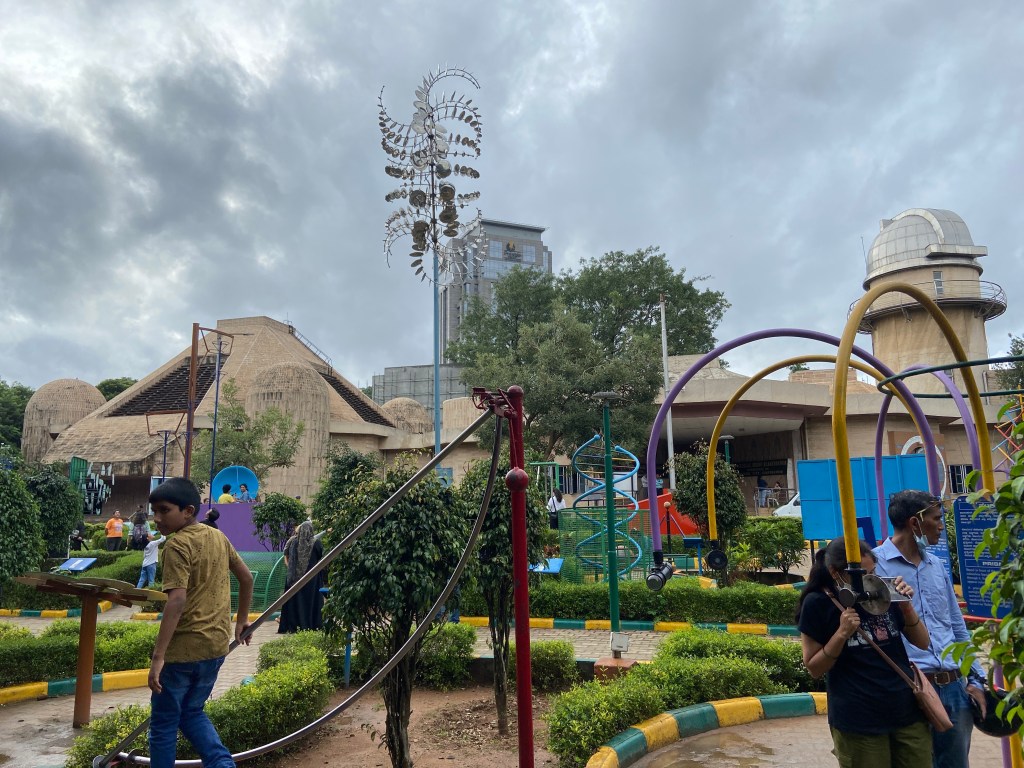
Do you believe in astrology? Do you agree that it’s all written in the stars? Do you feel that there is a divine connection to everything in the world? There probably is, but as mystifying astrology is, that much exhilarating astronomy is. And one just needs to take a trip to the planetarium, if not look up at the stars at night to feel not just how inconsequential we all actually are, but that puts astrology in perspective too.
The sky full of stars!
As celestial beings we are also filled of stellar matter, as physics goes, and that makes us stars too in our own right. With that knowledge and the know-how of how expansive the universe is, the stars are and how stars actually recycle themselves as stars making them beautiful in their own right. Life, as we know it came into existence over 4.5 billion years ago, and as the sun, our life-sustaining star slowly loses its might in another 5 billion years or so, burning out its presence, ceasing to be what it is, we may also not know of the universe or the multiple galaxies, losing out on being alive as a species, just as the dinosaurs did!
With that information there comes a whole lot of humility, the reason for everything is most probably nothing but what we make of it could most almost be everything. Little did I know that a trip to the planetarium would spark a philosopher in me, but the sheer sense of beauty of witnessing the stars, the beauty does make one very humble. Knowing my love for travel, space travel is my ultimate dream, the expanse of the universe is absolutely beguiling. In modern Indian cities the stars are hardly visible with all the light pollution but the best of the nights I have ever seen has been at the Rann of Kutch, with hardly any lights around the night sky does come alive in all its regalia.
While the scientists in our country, and NASA, are doing a splendid job bringing the stars and the know-how of the universe to us one day at a time, they are also doing a great job in bringing to our notice our very planet. It takes a satellite to be launched out of our space to pay heed to us, just as it takes an external perspective to understand ourselves better, mostly. The audacity of sending out satellites and trying to communicate with other alien specie has not come handy yet, nor do I think it is remotely likely even with all the sci-fi fiction and movies we make every year. But simply being able to witness the stars makes every figment of our imagination worth it. Tiny twinkling stars in the velvety night sky makes one realise a lot many things but the most significant one is probably the insignificance of it all. There is our solar system which we have over the years tried to make sense of, and then there are a multitude of galaxies in the world that we have only begun to discover. There are a host of factors that affect the future course of the earth which probably have nothing to do with us humans. Perhaps another reason to chill, and let the universe play its course out cause it definitely seems to have a plan!
An early morning walk is a blessing for the whole day said Henry David Thoreau, an American Naturalist. He probably walked all day but morning in a park are literally blessings, maybe at times for the whole week. This last week for four days in a row I headed to the Lalbagh Botanical garden that the government very charmingly keeps open for morning walkers, for free. Nature on it’s part puts on a spectacular show.
So last morning, in a super rainy Bangalore week when I was on a fifth day of the week walk in Lal Bagh, the first day of the Lal Bagh annual flower show we were super excited to be the first ones at the event. After a climb on the Lal Bagh rock, not steep at all, and saying a lovely good morning to Bangalore, we headed to the Glass Palace to see a special show put on by the gardeners of Bangalore’s famous garden.
As always, I’ve been visiting the flower show every year for the past 6 years, this years show displayed lilies, chrysanthemums, daisies, roses, dandelions, hibiscus and a spectacular bonsai arrangement among other flowers and greens. At the competition that they have every year the winning entry by HAL had on display beautiful and huge roses, worth winning the first place in. The butterflies surely looked happy!
The theme of this years flower show was wound around the legendary Kannada actors Dr Rajkumar and his son Puneet Rajkumar. Displaying in flowers sets from their famous movies, and putting on the story of their lives with quotes from Dr Rajkumar across the display connected one to the theme. Apart from the flowers on display the market place set up facilitates gardening enthusiasts to stock up on plants, gardening tools or even seeds.
The weather in Bangalore has always been renowned for providing the best atmosphere for a lot of specie of plants to thrive, and at Lal Bagh seeing the sheer collection and variety of plants just captures the essence of this once erstwhile Garden city.

 Vedasri Siddamsetty