• Geoffrey Bawa cuts a pretty picture, as do his buildings. Steeped in architectural merit his works are often lauded as the epitome of Tropical architecture. Using nature to stir up a shenanigan he builds in tune with landscape, that probably is the most important element in his architecture and in effect his architectural practice. Its not surprising then that Bawa’s interest in the field of architecture was piqued by a chanced encounter while building his private garden.

    Returning as a barrister from London Bawa sought to transform his Rubber and Cinnamon plantation into a fully revamped Italian garden, that he much loved during his travels abroad. With a copy of Michelangelo’s David and the famed Italian balustrades in place, overlooking the backwaters, the estate is resplendent with  Frangi Panis. A tree that utterly delighted Bawa. He even deliberated on the tree coaxing it into growing his way. The frangi-pani branches sometimes are made to come down low to the ground, hanging weights if necessary, before continuing ascent and rising aesthetically. The Lunuganga estate remained his muse throughout his life, where he tested his architectural ideas before injecting them into any of his projects. Literally born with the proverbial silver spoon Bawa began his architectural career at the age of 39 after additional educational years at the Architectural Association school in London. Like all great architects, the school was hardly agreeable to him nor him to the school!

    On a six day journey through the island country so charming we went hopping from one Bawa building to another. Stopping by to take in the beauty of proportion and pausing to imbibe the excellent locales. Architecture sometimes is just a frame of nature, while sometimes its just a sail that captures its context, modifies it and presents it largely more glorified or attuned. Shelter that is beautiful and serves its agenda of drawing in breezes, providing comfort is architecture. Bawa in his roughly 6-decade career stint built some extremely innovative and awe-inspiring structures all bound by the common thread of nature. I wouldn’t entirely be wrong in saying that nature and not architecture was Bawa’s muse. An assistant remembers Bawa in his 80s revisiting one of his projects keenly interested in and inspecting how the trees on the property were doing!

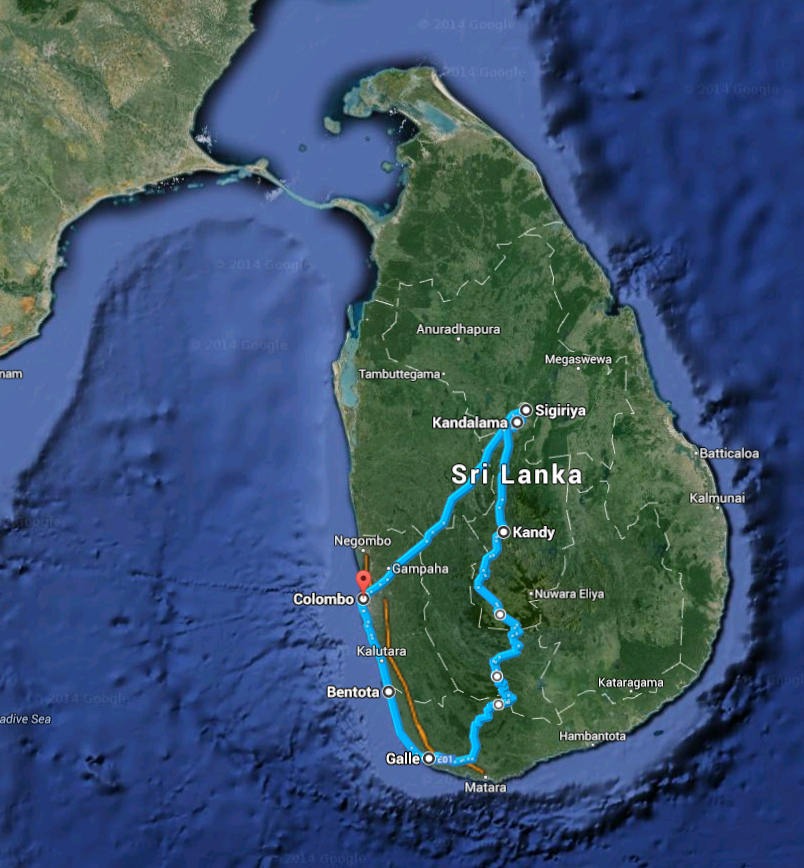
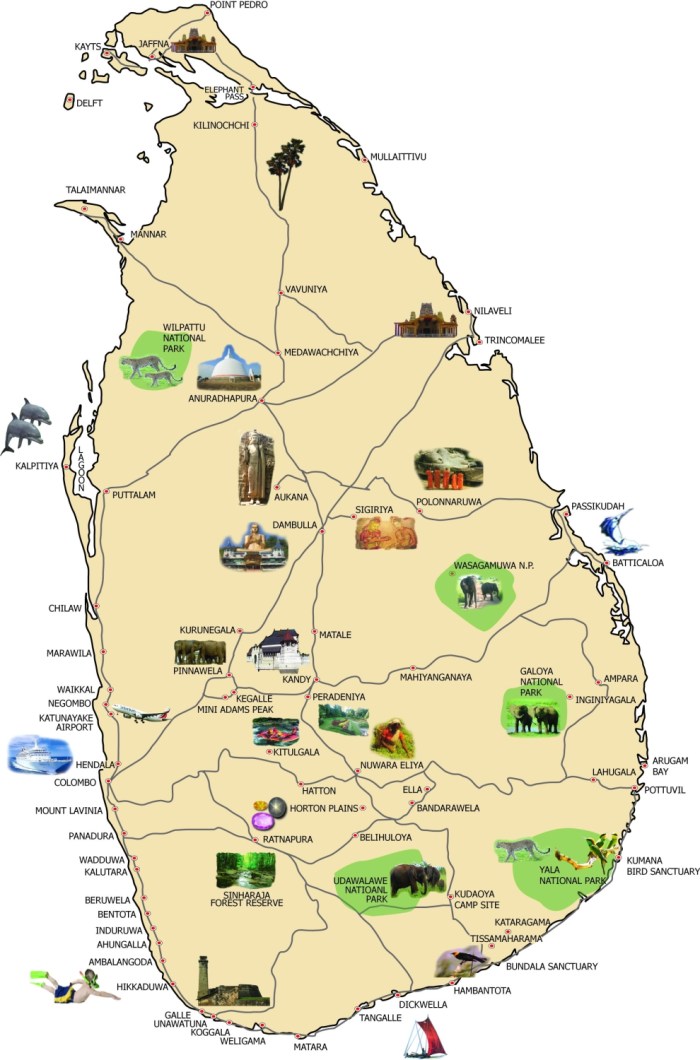
    A rough idea of our hopping chart before delving further into our conquests over the next couple of posts! Landing in Colombo we first went to the Heritance Kandaalama, a great place to start a Bawa Trail before heading to Sigriya, Kandy, Galle, Bentota, Lunuganga and then finally lapping up Bawa’s private residence, office in the capital city of Colombo.

    SSL

    The size of the island country hardly does any justice to the scale of diversity that it does provide! So much that after 6 days of a Bawaesque retreat when my roomie picked up an average book covering ‘things to see in Lanka’ she was puzzled, and rightly so, to not find Bawa’s legendary structures in there! But then we deduced that we had just probed into the tip of an ice-berg called Sri Lanka. For nature lovers whose souls are embalmed by tropical weather, with its cleanliness and pristine surrounds, the island is definitely a paradise.

    sl

    On that note, as a whole Sri Lanka is quite delightful, with a comfortable population, contended people, lush greenery, rolling plantations, rustic buses, balmy beaches perky autos, more importantly, clean air, avocados and king coconut! Avocado aficionados will seriously vouch for the delicious creamy treat but the king coconut is likely to charm everyone. Sri Lankan art is widely visible all across the island with colorful nay saying masks peeking out at every bend. Whether its the beach one digs, or the hills or simply the rainforest Sri Lanka has a commendable diversity and natural terrain for a country of its size. Appams, string hoppers and red rice form the bulk of their traditional cuisine, apart from the bountiful sea-food. But honestly, their food is not for the faint heart-ed. I would recommend applying caution. So calm and so serene, the country seems to be seriously blessed whether in resources or in the attitude of its people that its hard for an average Hindu, though well-versed with the Ramayana, to perceive it simply and only as Raavana’s Lanka!

    IMG_2001[1]

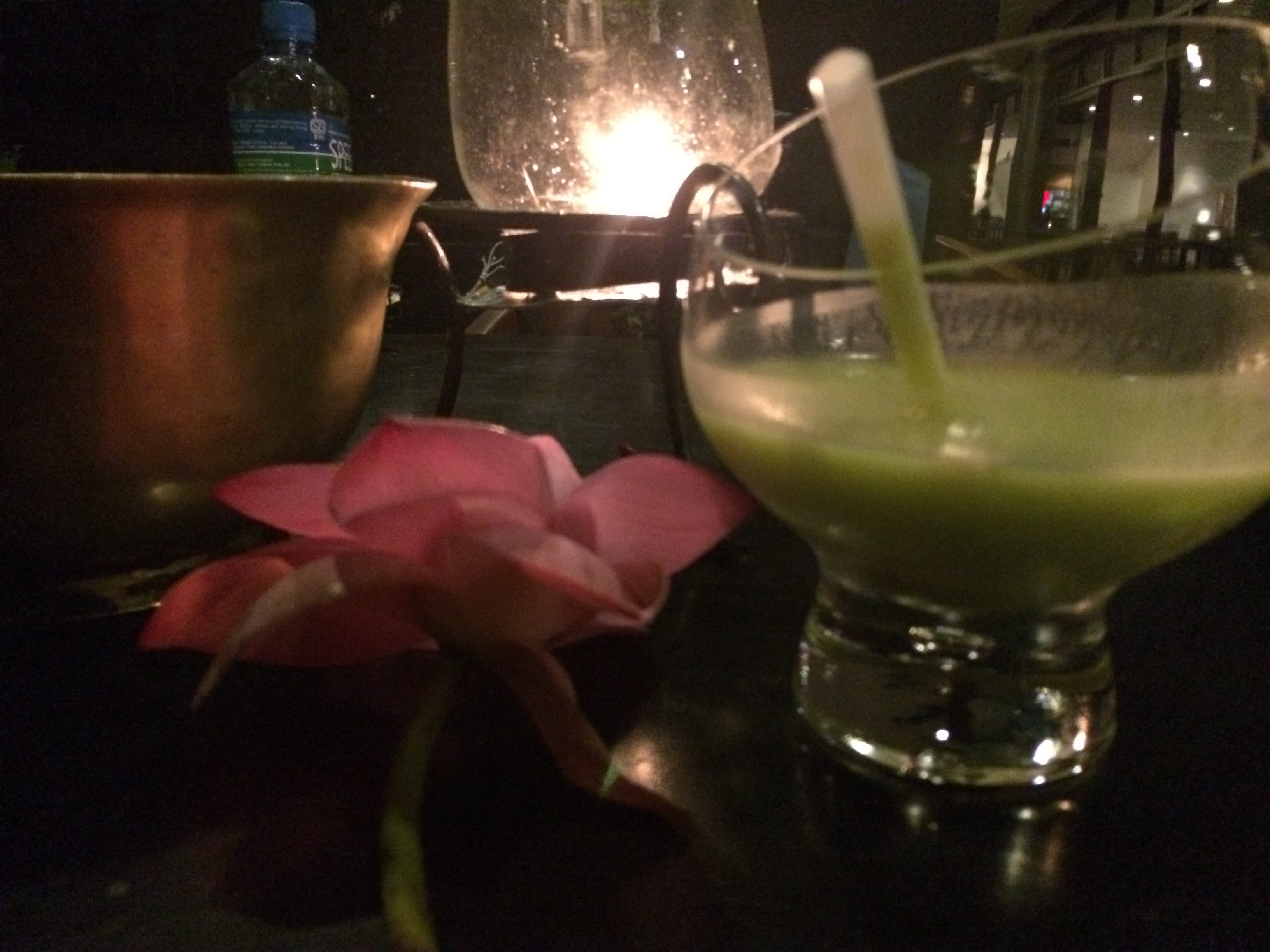
    It is after all where pretty lotuses bloom.


  • Looking down over a foot

    is the Bruder with a look

    Marking clearing the nice

    from all the wary disguise

    Smart and highly evolved

    he makes an easy crowd

    Intelligence made to order

    and passion by the larder

    Of thought that comes

    far vision is what it becomes

    Binding the all by a spell

    weakest link in the well

    Checking in knotty keels

    and at times locking heels

    Mr Dependable they said

    and that’s how he read

    Every i dotted Every t crossed

    never a dull moment trespassed

    There never is a surprise

    each time paying a full price

    What he does he does well

    often than not ringing the bell

    Of pride and joy that spans

    years of double dozen times

    With words beyond measure

    and jibes I still treasure

    He is the brother so fine

    that makes life sublime

    Literally evaporating

    all the gnawing rating

    For all there is one

    a sibling like none

    From growing up fighting

    to all the fiery sparking

    Before long transforming

    in to a teary enlightening

    Then doing minus whining

    all the fire-fighting

    There is always a multitude

    of truckloads of gratitude

    For a frere so kind

    one that wouldnt mind

    Sometimes no reason

    and other times a rhyme!

    IMG_2384[1]


  • DBP_1977_916_Schloss_Neuschwanstein

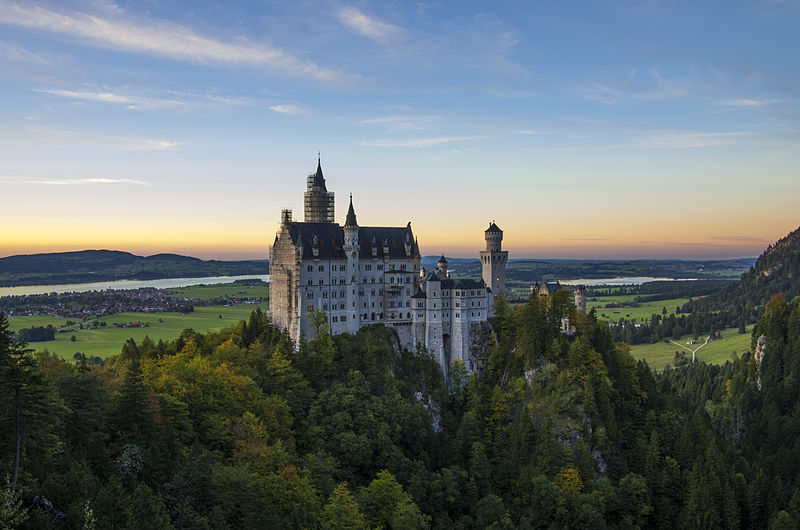
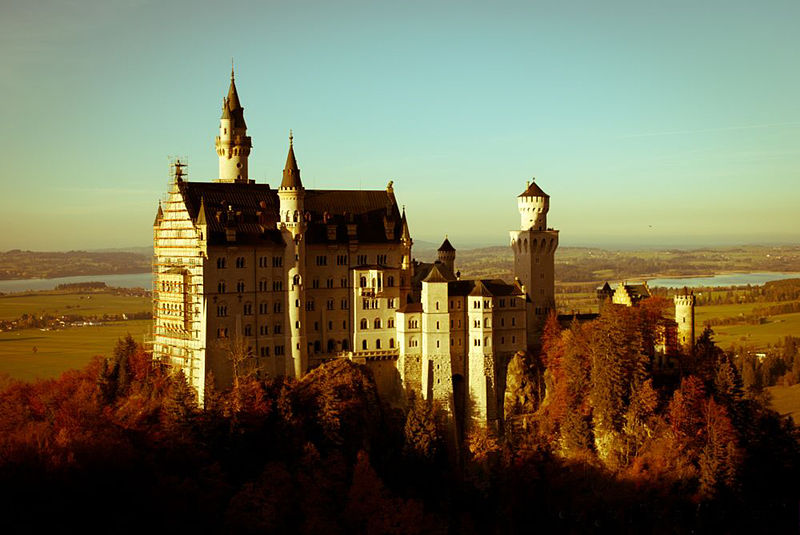
    Perched on the rugged Bavarian Hills in picturesque Southern Germany the Neuschwanstein Castle, a 19th century Romanesque Revival Palace plays ode to Wagner and his marvelous compositions. The castle was commissioned of Ludwig II of Bavaria and built largely out of a personal fund. Built on a steep hill and surrounded by other castles in the arena the Neuschwanstein castle looks down into the charming village of Hohenschwangau that is a long train journey out of Munich and is very proverbially, frozen music.

    665px-Hohenschwangau_-_Schloss_Neuschwanstein5


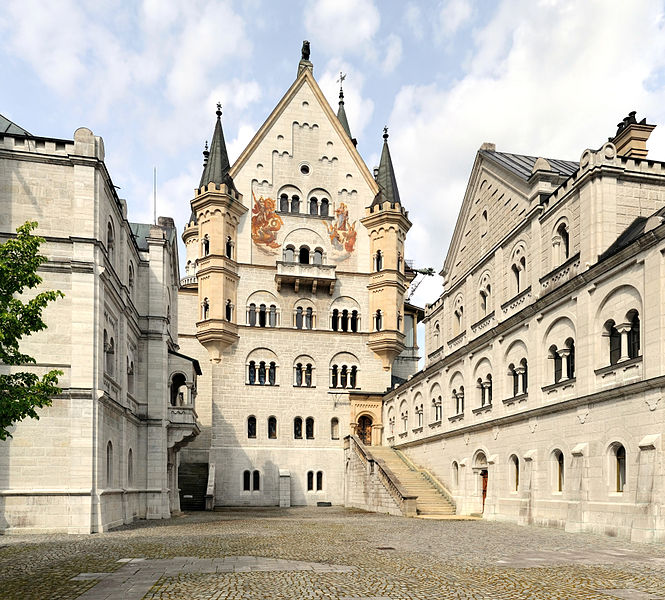
    Built in the the architectural style of castle Romanticism the palace takes enthusiastic ques from the operas of Richard Wagner, precisely the operas Tannhäuser and Lohengrin that had made a lasting impression on the mighty prince. The palace today strikes a might impression on the average tourists and the architecturally inclined alike. Photographed in different light the palace makes a pretty picture every time! Rain, show or shine. Like most great architecture the palace is not completely finished and is testimony to even grander plans.

    800px-Neuschwanstein_Castle,_Schwangau

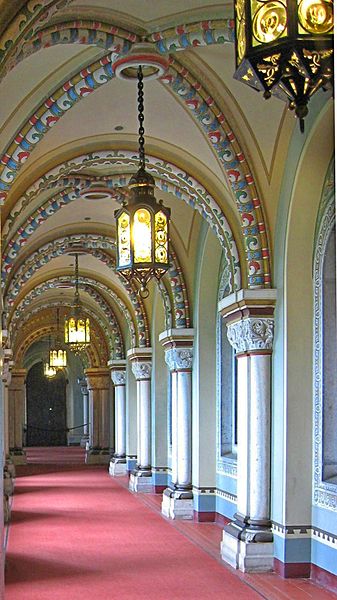
    Marking a highly stylistic effect, the Neuschwanstein castle was largely a labor of love, with deep and stubborn inputs by the king. Ludwig was extremely clear in his objectives having inscribed his words of wanting and having a medieval castle deeply encrypted on the palace walls. He was so charmed by Wagner’s compositions and had every room in the palace follow a Wagner theme. The art work, the composition, the litany, the punctuation, the injunctions, the spaces, the drama created in the palace are largely an ode to the musician. The palace is literally a Wagner recital structured and fashioned in red bricks and yellow limestone.

    337px-Neuschwanstein_Gang

    When Goethe said, ‘Music is liquid architecture and Architecture is frozen music’  he might as well have meant half a dozen architectural monuments across the world but most likely he meant this very one!

    Like a Wagner recital, the palace is best enjoyed with a nip in the air.


    800px-Neuschwanstein_Fernblick_pano2


  • Books, much like people can influence life by cajoling one into thinking, by offering a perspective, by simply entertaining or even at times offering for a change, much needed advice. In over a gazillion titles there are a whole wide range of books to delve into. From humor, to information, from recipes to hard-facts, from entertaining stories to heart-wrenching reality, books can transport one almost instantly. Like they say all you need in life is love, or a good book!

    Nominated to share the 10 books that changed my life, here is my list in a chronological order of my reading. They may not be the best pieces of fiction I have read but they have offered me a perspective  thereby fostering change.

    1. Beauty and the Beast – by Gabrielle-Suzanne Barbot de Villeneuve

    Possibly my favorite fairy-tale forever. Happy endings, exemplary courage, vivid imagination, chivalry and a charming Prince, absolutely lovely.

    2. The Adventures of Tom Sawyer – by Mark Twain

    The book assumes the power of imagination and of beating the odds through delightful characters in Huck Finn and Tom Sawyer. Every time I read it, I begin to cherish the smaller treasures of life. Of looking for and finding adventure and the joy of being curious. The sequel, Adventures of Huckleberry Finn is tremendous too.

    3. Little Women

    The courage of the March family, the wit and simplicity of values, Jo March and her resolve totally inspires. The novel follows the young women as they grow up and face life, each armed with a skill that takes them afar.

    4. Pride and Prejudice by Jane Austen

    By far my favorite book, my go-to book that never fails to charm. Apart from the well defined characters, intriguing dialogues is conversation marked by wit and intelligence that makes the story come alive. More importantly how Elizabeth and Darcy overcome all obstacles, including personal failings to find romantic happiness.

    5. The stories of Anton Chekhov – especially ‘The Bet’

    The trumping of knowledge and the power of reading is wonderfully illustrated by Chekhov in his story, the Bet. With patience, perseverance and knowledge the story elucidates that there is no solitude in life with the presence of books.

    6. The Fountainhead by Ayn Rand

    The power of original thought and why man must think for himself. Howard Roark in his steely ways and stubborn demeanor further is an extrapolation of personal integrity. Not giving in to peer pressure, having a genuine line of thought and most importantly celebrating the individual make Ayn Rand’s book extremely provoking.

    7. Love Story by Eric Segal

    The Romeo and Juliet reminiscent, heart-touching love story of two completely different people who are surmounted by conditions beyond their control. The Harvard boy and the Radcliffe girl, from two different worlds who fall in love and how. With tears streaming down my face I still remember wishing away the ending!

    8. Gone with the wind by Margaret Mitchell

    Scarlett O’hara and Rhett Butler, what a combination. Yes, tomorrow is another day. The complexity of the characters, the spirited protagonist and the bane of ruffled feathers sparked by temper. In spite of all the loss, completely exasperating the reader she says, tomorrow is another day.

    9. The Great Gatsby by Scott Fitzgerald

    The absolutely unparalleled love and devotion of Jay Gatsby told in Fitzgerald’s master-piece. Who wouldn’t want to be Daisy! Very charming and yet very tragic, the life of Gatsby is enriched by the love he displays. Modern fiction that enthrals!

    10. The Goldfinch by Donna Tartt

    Donna Tartt is my favorite modern day writer. And her master-piece, the Goldfinch is stunning. More so because of the ending again. There’s art, there’s literature and then there’s New York as the setting. Added to that is the refreshing ideology Tartt presents.

    and my favorite literary character of all time? Elizabeth Bennet. Her wit, lively and playful manner is simply so endearing. Besides rash decisions and a sharp tongue make her very real too.


  • Bursts of colour, impressive graphics and applied intelligence are striking elements in Architect Sandeep Khosla’s body of work that ranges between beautiful homes, snazzy clubs and institutions that are steeped in the highest realms of architectural values. As I headed down to attend his talk, I was very impressed by the alacrity of the design intent and more importantly the application of a process that we are taught in architecture college, something that is very easy to forget in practice. The process that includes a strong narrative in design and peppers spaces with objects of joie de vivre, in simpler terms, art. Donning the hat of a landscape consultant, a lighting designer or even a furniture designer when necessary Khosla reinstates the importance of intelligence in architecture and interior design producing a result that is quite marvellous.

    The man himself stresses repeatedly on the importance of “breezes”, as he terms wind circulation, light and shade, delving in materiality, in the simplicity of elements and paying attention to sustainable measures, many a times, even collaborating with India’s TERI, an energy research institute.

    Of a dozen projects that he shared, a few stayed in my mind for their stroke of genius. Am writing about three of them today, one the Library House, two the Roxy pub and three the DPS school.

    The Library house

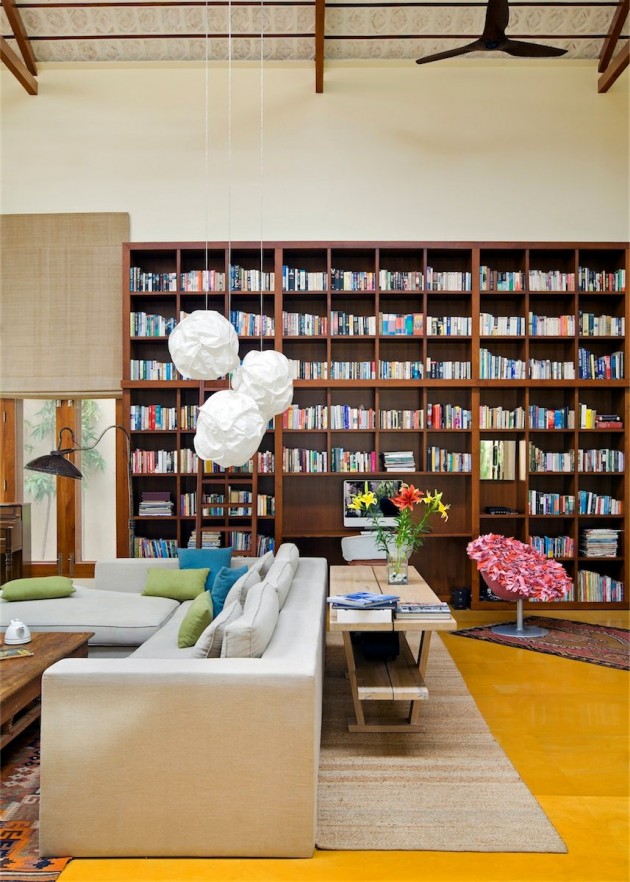
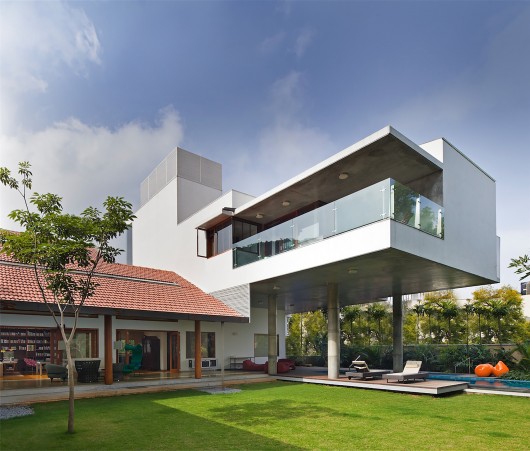
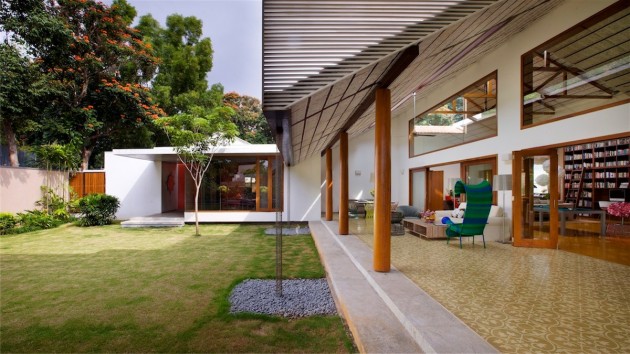
    Built for an industrialist and his writer wife, Khosla was approached with a 12 page brief, something that included in descriptive detail what the family of three wanted in their dream home. Using simple materials of Sadar Ali stone, jaisalmer stone, a custom made patterned flooring, employing a double layered roof, exhausts in flat slabs, the house is deeply rooted in its context. The program that included a gorgeous library overflowing into the reading verandah and the garden with a pool makes the home ever so exquisite. The couple being avid readers ensured that their book collection deemed a befitting name to the house.

    lh_140414_12-630x882 lib library house

    The Roxy Pub

    Located on ‘the’ Park street of India’s renaissance city, Kolkata, the Roxy pub is Khosla’s tribute to the renaissance age he says. In reality having been there I must say, its quite striking with hovering masses over a largely narrow volume. The store room of the Park hotel was converted into the pub he discloses, but one would never be able to tell!

    roxy pub

    The DPS school

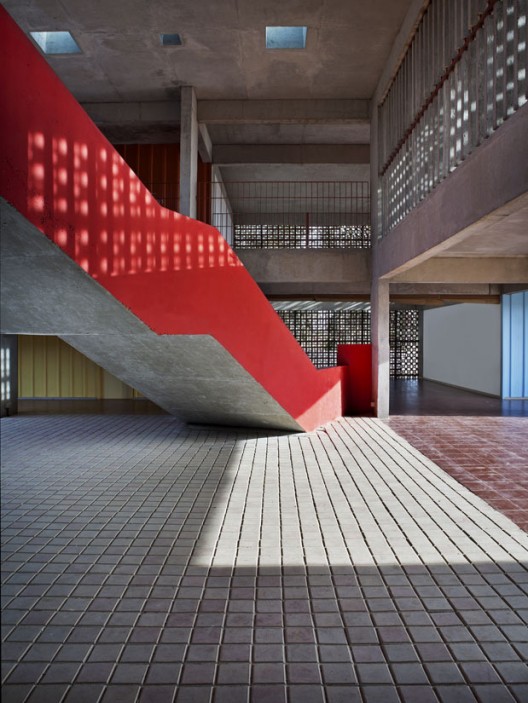
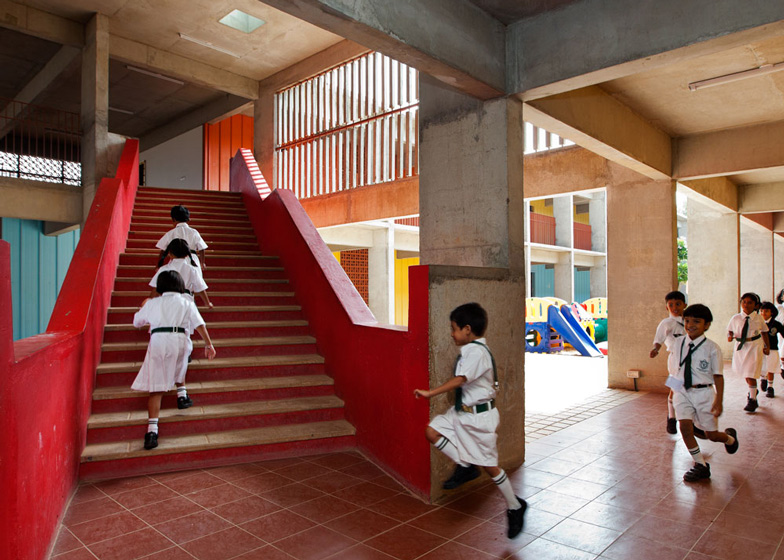
    Built at a modest cost of 1200 RS/sft and in a span of 6 months this is definitely Khosla’s most laudable project. Not just me, but the judges of the World Architecture Festival also thought as much. The school is designed as a module that could be replicated by the every expanding popular school chain in the country. Though the plan is kept simple, almost like the neighbourhood government school, Khosla nails it with an eccentric application of material and a decisive use of colour. Taking inspiration from the vibrant temples of south India and interpreting the school as a temple Khosla uses bright corrugated sheets as vertical planes to divide space and creates angans or courtyards to facilitate the gurukul style education under trees. One month he says is all it took on the drawing board and five months to complete construction. Impressive really.

    dps 1 dezeen_DPS-Kindergarten-by-Khosla-Associates_ss_7 kindergarten lead

    Here’s a link to Khosla’s portfolio for your further reading.

    We then caught up with him and his advice? Do what you believe in, your work is a part of you and will eventually attract more of the same. SO simply do what you believe in, in life.

  • The twinkle in the eye, the twinge of blush on the cheeks and a mirth in demeanor, laughing brings with it a great deal of optimism. Rolling over laughing or even bursting out in joy do much more than sky-rocketing one’s phenylethyleamine levels, take it from a girl who albeit briefly forgot how to even smile. And blessed are those who bring out the laughter in us. From stand-up comedians to witty remarks or simply those who alter the morose perspectives of life.

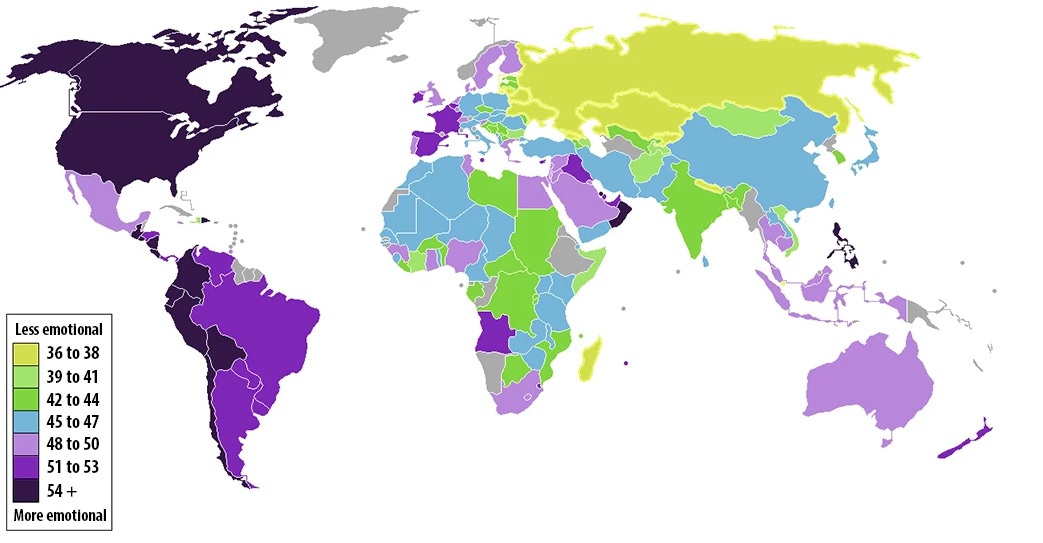
    But laughter is just one end of the emotional spectrum, the one end we’d all want to have more of, decidedly. And really how emotional is the world?! Here’s a study by Max Fisher mapping out most to least emotional countries in the world.


    map


    No wonder then that Saturday Night Live and half a dozen sitcoms that the world chortles at is mined out of the United States that clearly stands at No 1 in being emotional, specifically in being a comedy super-power. The Walt Disney Company quotes laughter as America’s most important export, but naturally! Though Germans topped some specific surveys on being Europe’s funniest nation by the Laugh Lab project, as Twain popularly remarked, “a German joke is no laughing matter”.

    Contagious and fine, laughter like Milton Berle states is an instant vacation and brings an instant lightness of being. Whether its Wodehouse who tickles your funny bone, or Russell Peters, or the good old Tom and Jerry, or 2 broke girls, or even India’s Comedy nights!

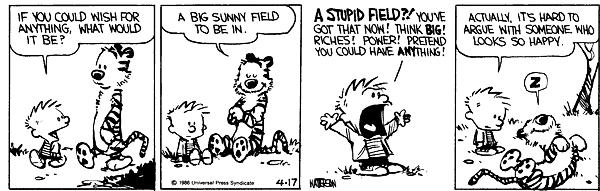
    No laughing matter is complete without Watterson and so for some Calvin time!

    CH860417_JPG

    P.S. ah for back-up there’s always chocolate of-course, considering the most chocolate consuming nation in the world is United States too.

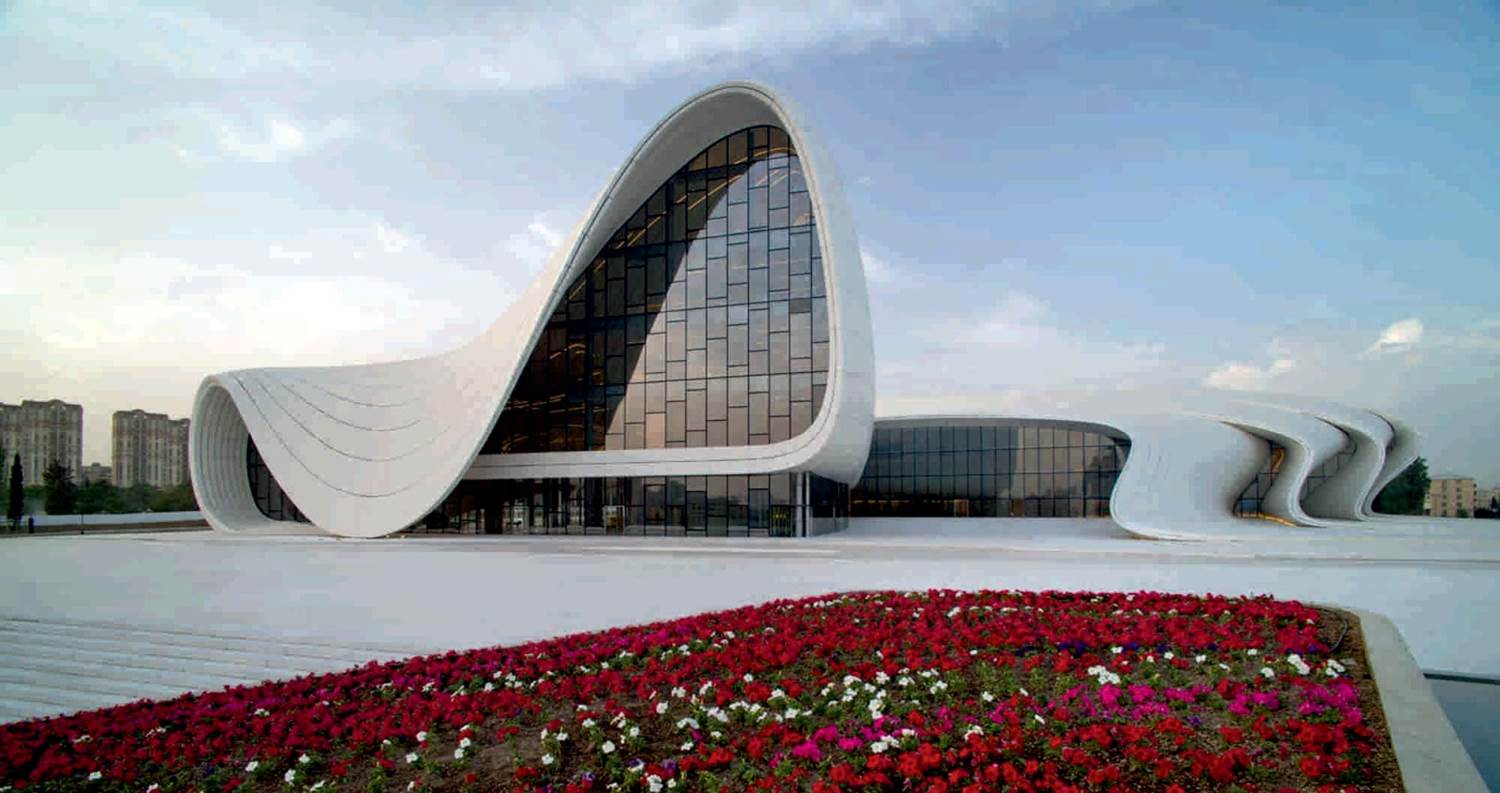
  • The Heydar Aliyev Center

    Rising unflinchingly in pure white against the tedious backdrop of Baku in Azerbaijan is the stunning Heydar Aliyev Cultural Centre designed by the celebrated Dame Zaha Hadid. With just over 4 buildings built, at the age of 53 Hadid received the Pritzker Prize in 2004, becoming the first woman to not only make her presence in the male dominated industry so clearly felt but also lauded. Ten years hence Hadid’s projects continue to stun, shock and slowly win over her even rather blunt critics. She describes her work as contemporary, organic, innovative but most importantly, inspired by nature. Just as is the Heydar Aliyev Cultural center.

    Picture1

    The structure symbolizes the beginning of an ambitious plan to trigger off a cultural revolution in a country that has only just begun a radical process of shedding it’s soviet past!

    Straight from the horse’s mouth:

    The other day my cousin decidedly declared that he would travel for cultural experiences that is to watch a play or a show rather than for architecture. Built as a cultural center I hope this piece of architecture does necessarily change his mind!

    Picture2


  • As I work on the foot-path project and write out my umpteenth article on car-free cities I stumbled upon the delightfully compiled and thoroughly analysed walk-score of various cities. While we are all rightly worried about the financial prowess of our cities through very important figures of GDP and the like, also worrying about the escalating fuel prices and war-ridden oil bearing countries this is a score one may want to take a look at.

    In regard to sustainability of our cities, transportation guzzles our planet’s resources while at the same time polluting our atmosphere. In terms of space, road networks take away about 30% of land space. Facing high environmental issues from food security to acute power shortage and over that lifestyle disorders we may want to introduce into our lives a few changes that may target many an issue at a time. One of it is walking. While I agree that one cannot possible walk everywhere, we could build our essential life around a walk-able radius. Even mass transit options when coupled with walking or biking across is much lighter on the overall environmental damage.

    Some cities with winning walk-scores provide a lively example.

    5

    The top five of my list are:

    1. New York City, America

    This isnt so surprising. With a population density of over 26ooo persons per square mile NYC is the best example there is to a city being walk-able. The city with a population of over 8 million garners a walk score of 87.6

    Lessons to learn? Mass Transit subways, match-box style living, tree-lined avenues, footpaths and a walking population!

    City-Street

    2. Florence, Italy

    Though walkscore has not gone down to listing cities apart from the United States, Australia and Canada, I would vouch for this steeped in art city of Florence.

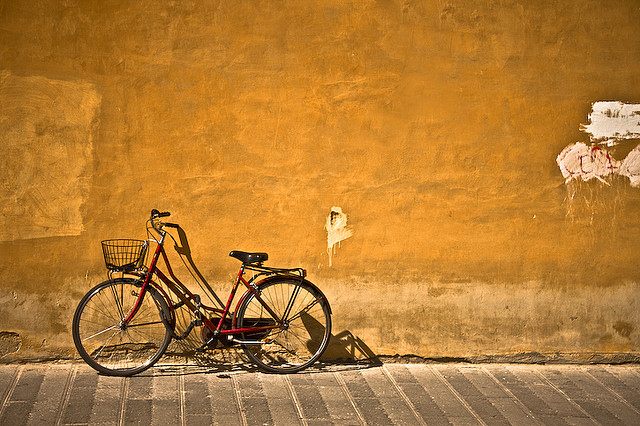
    Lessons to learn? Banning the car on majority of their roads, cobble-stone streets, making sure cars are not allowed or if they are, they don’t fit! Blaring a horn in this city is calling for social suicide!

    florence-duomo-interior

    3. Paris, France

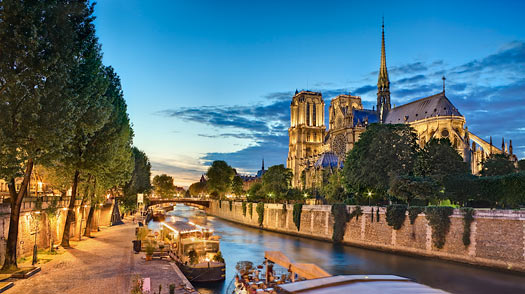
    Though the French are not so judgmental on your choosing to drive, allowing one to drive close by the Louvre or the ton of other national monuments they simply make walking and taking the public transportation so very convenient and chic with beautifully wide sidewalks that are dramatic every time of the year making one a fool to not choose to walk.

    Lessons to learn? Make walking convenient, walking as a way to stay chic, make the scenery pretty and tie the benefits of walking to life.

    paris_intro

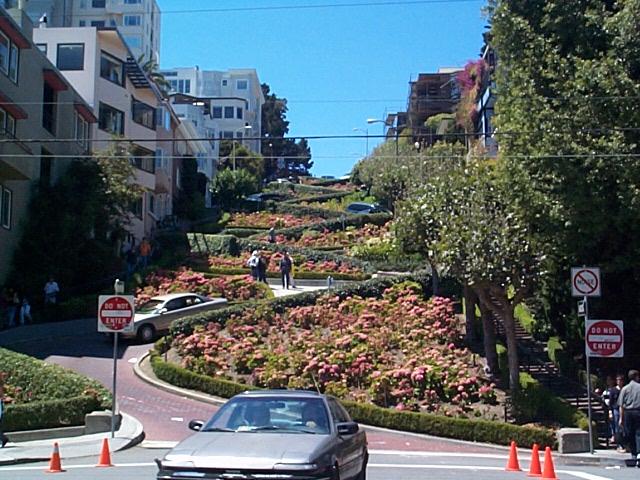
    4. San Francisco

    Great weather coupled with an easy attitude to life makes San Francisco great for walking about irrespective of the rolling hills that the city is built on. Having a tram to hop on anytime seals the deal!

    Lesson to learn? Excellent public transit, great sites, large number of walking commuters, activity lined streets and moreover great weather helps! The city also boasts of the most number of parks and points of interest per square mile.

    LombardStreet1

    5. Venice

    The best way to force people into walking? Make sure there is no place, absolutely no place for an automobile! And coming up with other rather strenuous ways to commute, making walking the easiest mode of transportation to get by, considering navigating the canals by boat could be a real challenge.

    Lessons to learn? Now really make sure there is no place for the automobile! Considering a city as an island thereby fixing the radius extent could also help. In effect a city cannot be allowed to grow beyond a certain point.

    venice1

    Which city would inspire you to ditch the car and take a walk?


    “God made us walking animals, pedestrians. As a fish needs to swim, a bird to fly, a deer to run, we need to walk, not in order to survive, but to be happy.”

    – Enrique Peñalosa, former mayor of Bogotá, Colombia.

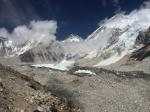
  • Comprising over a hundred mountains that peak over 7200m the Himalayas, literally meaning ‘the abode of snow’ are home to the the world’s tallest peaks and the tallest of them all, the Mount Everest. Apart from the year-round snow, the rugged peaks and enormously awe-inspiring landscape, the Himalayas are also deeply steeped in spirituality. For us Hindus its where the mighty Lord Shiva resides with his family, its where the Pandavas retreated to after the destructive Kurukshetra war, its where our holy river the Ganges emerges from. For Buddhists its where Lord Buddha went to after attaining enlightenment at Bodh-gaya in present day Bihar. The Himalayas are therefore revered to as ‘God-souled’ and embody spiritualism like no other mountain range in the world.

    Walking up the terse domain of the upper Himalayas and staring into crisp blue skies that would in a jiffy turn volatile with snow-clouds I could see why. Offering a panorama of breath-taking beauty the Himalayan range stand as immovable as the proverbial mountain in the face of ever-transforming clouds compelling one to reflect on the myriad offerings of life. The striking beauty of the landscape and the clarity of the atmosphere are perfect settings for the abode of the Gods. The harsh effects of altitude, the blazing afternoon sun, the freezing make of the nights and thinness of air do not allow the growth of any plant life and force even the most hyperactive soul to slow down. The Himalayas force one to slow down in thought, in action, slow down to survive, to let things be, and more importantly to breathe.

    In such breathtaking settings, philosophy comes easy. I hardly believe that life is short, nor do I generally prescribe to the over-hyped notion that we only live once, in allegiance to the tenets of Buddhism and Hindusim. Such beliefs stand only to be further strengthened but also then give one the tools of peace, of forgiveness. Well reading this in the climes of modern day living with highly materialistic pursuits may have you, my dear reader, rolling your eyes in contempt, but do read on, it may give you a reason to lap up exquisite views and a trek of a life-time if not for anything else!

    The 16-seater plane ride to Lukla from Nepal’s capital city Kathmandu gives one a slice of the soaring peaks that cut through the thick layer of clouds. As the plane gains stability unconvincingly, a sliver of white mountains appears at a distance in the horizon, all the peaks of the Upper Himalayas they rise against the clear blue sky. Just as one finally begin to trust the unwieldy aircraft the pilot announces descent and begins to land at the world’s most dangerous airstrip at an inclined-upwards angle. With in minutes you are disembarked and passengers are loaded in what would be the fastest turnaround time of air-travel!

    Right from the airport the Khumbu region’s (wherein lies the Sagarmatha National Park and the Mount Everest, called Sagarmatha locally) second most valuable asset greets one – the immensely likable Sherpa people. You cannot seriously be offended to see a sign of Starbucks-Lukla just off the airport, it is vastly amusing! Known for their adept skill and talent in scaling the treacherous peaks the Sherpa people facilitate mountain-climbing in their region. Tenzing Norgay, the first man to summit the peak along with New Zealand’s Sir Edmund Hillary was also a Sherpa. And the walk too begins right from the airport.

    Strapping on the back-pack, filling in the water-bottle readying for easy access the camera and chirping along with the chatty Sherpa guide and porter the easy walk into the Himalayas began for the brother and me. Gorgeous mountain peaks stand tall as trails emerge through them, the trails themselves are ever-changing landscapes, from chinar trees and spectacular cherry-blossoms at the lower levels to boulder filled, glacier-ridden encounters at upper levels they make for pleasant conversation. Thus from Lukla to Namche to Phortse to Dingboche to Loboche to Gorakshep and finally to the Everest Base camp one goes. On the way come several prayer flag covered steel-suspension bridges, milky white Rivers, timid yaks ringing their bells and Sherpa people carrying loads 3,4 or sometimes 5 times their size.

    And to rest for altitude acclimatization or to catch one’s breath are modest tea-houses. Though the toilets in these tin-roofed, plywood boarded tea-houses will not let your breathe, the shelters are just about comfortable with thick blankets and a well insulated sleeping bag. Besides the owners stir up quite delicious meals in spite of their limited means. With well endowed means of water and solar energy, the precincts of Sagarmatha National Park with the help of monasteries, the government and international aid organisations tap into the renewable sources of energy. Hot water is heated through a solar water heater and prayer wheels are rotated by micro-hydro power.

    While on the upward climb one is required to eat vegetarian food, abstain from alcohol or smoking and drink lots of water to make a successful climb. No wonder I think it’s a spiritual sojourn in a way. Though many people live such a lifestyle those who don’t are recommended to follow the same a couple of months before they actually attempt the climb. Besides also practicing walking for the long hours everyday. But I would think that no amount of walking can completely prepare you for the incline. The views though unflinchingly make up for the physical affliction!

    On the way up eating mostly comprises of Garlic soup, potato wedges, the Nepali daal-bhaat, fried rice, noodles, the Tibetan momos, hot teas, lemon teas and hot chocolate! There are tiny shops selling Pringles, Snickers, Mars and the like which offer all the extra calories.

    On the way down Tengboche offers a decent bakery aside from the oldest monastery of the region. From coffee-cake to warm brownies, from apple strudel to burger with fries could be ordered here from a rather extensive menu dished out from a rather tiny kitchen and they all taste heavenly. The Tengboche monastery is the only visible piece of architecture, of built-form from atop the Mount Everest. It is impressive considering it’s location and the arduous nature of climb up to Tengboche. From Tengboche, just like all through the region, one can view most beautifully the twin-humped peaks of Amadablam, the Mount Everest, the Lhotse and the Nupse. After an average of 8 hours of hiking each day one can put their feet up around the heating drum of the dining hall in each tea-house and either read or catch up with fellow hikers.

    Hikers leave behind their books and pick up what others have left off and the collection of books each tea-house has is amazing with titles in not just English! That was so refreshing too. As I caught up majorly on my reading I realized that I was cajoled into reading books I would have never picked out by myself! And they were all quite interesting. From titles by the adventure king Clive Cussler to spiritual titles by Songyal Rinpoche interspersed with Pulitzer prize winners. The ever talkative Sherpa people make easy and friendly conversations discussing their home-town or the latest tune belting out from Yo Yo Honey Singh with equal elan. The camaraderie got in the Himalayan setting is full of calming joy.

    Immersed in a conversation right at the start I jerked my knee on the very first day of hiking, by a boulder that dislodged when stepped on. Though not disabling, to my dismay it even looked perfectly fine with no bulge or swelling whatsoever(?!), I gritted through the pain that refused to allow easy walking over the steep climb to Namche. However by the time we trudged to Lobuche the blessed jerk came loose and I thoroughly enjoyed the walk from Dingboche to Lobuche to Gorakshep and ahead to the Base Camp.

    The joy of having a fully functional knee again after that jerk, got me to literally scale a 5545m high peak! From the peak of Kala Pathar one can see stunning views of the Mount Everest besides a gallery of other peaks. Covered in about 3 hours the hike up to the summit of Kala Pathar was hard, starting at 5 am in pitch darkness at a -12 degree temperature even the water in my bottle froze! But the sun came up super bright and piercing in just an hour and a half. Unwittingly underestimating the power of mountain morning sun I skipped the sunscreen, the sun glasses and my hat! And by 6.30 am I was shown the cruelty of the sun, which my grandfather reminds me even today can also be very kind. A rather sun-burnt nose then became my subject proof as passers-by in Thamel shops of Kathmandu picked-up conversations starting with, how was the trek up? or how far did you go? And then when I looked at them quizzically they responded by pointing to their nose, gesturing my nose as a dead giveaway of trekking in the mountains.

    After that foray into what I would certainly call Heaven, well the Alps (though a personal favorite) come close but are too clean for reality, the city of Kathmandu is quite disappointing. Thamel of course is a perfect place to prepare for any forays with a wide array of shops selling trekking gear, cafes transporting one to Paris or Rome and bringing one back equally fast as road-ragers blare their shrill horns! At the Narayanhiti Palace of the capital we saw the King’s house and bullet holes that exterminated the royal family. Impressed though we were by the Durbar Square, a Unesco World Heritage Site that holds delicate architectural pieces of old Nepal. The pagoda styled roofs are deeply inspired by Tibetan structures while the perforated Jaali screens are more inspired by the Hindu architecture across the subcontinent. The Pashupati temple complex a major centre of pilgrimage for the Hindus is also located in Kathmandu. Rivers of sludge flow in the capital city of the Himalayan kingdom.  Crowded and bustling, Kathmandu suffers from the plight of any fast developing modern city. The garden of dreams in the heart of Kathmandu not far from Thamel though is the oasis, that is both stunning and beautiful.

    It is quite interesting to know that Mount Everest is a border-mountain lining between the Himalayan kingdoms of Nepal and Tibet. Nepal is a Hindu state while Tibet is Buddhist. And the peak can be scaled from Tibet in the north-side and Nepal from the south-side, the peak of the mountain though clearly lies in Nepal! Over 10000 people visit the Sagarmatha National Park each year and about 2000 attempt to climb the Everest. The Sherpa people revere the Everest as a Goddess and never say that they conquered the mountain. One can only sneak up the Everest, they say, and then simply get the hell out of there!

    With a bag full of memories, a sun-burnt nose, several cells dissipated, a heart full of warmth, a mind full of forgiveness, extraordinary conversations, unforgettable views, renewed love for the mountains, renewed love for snow, a lung-full of gratitude, a speck of mountain stone and feeling nothing short of enlightened, the hike up to Heaven is a spiritual asset to have.


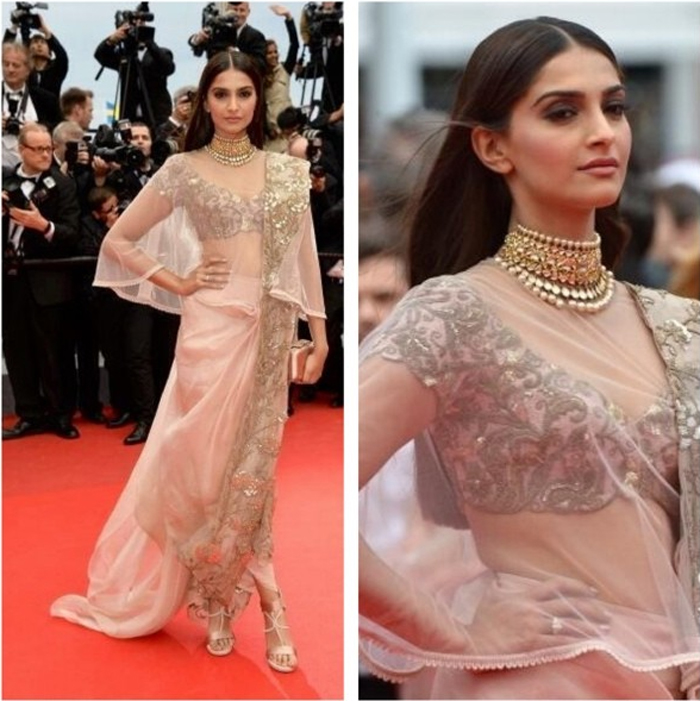
  • A twist of glory to the Indian sari! At Cannes 2014, Sonam Kapoor sports an Anamika Khanna creation looking nothing short of brilliant. A 10/10 for this look.

    sonamkapoor-anamikakhanna1

  • The_goldfinch_by_donna_tartDonna Tartt’s latest masterpiece truly haunts. Its one of those rare pieces of fiction that not just touches but yanks a chord and one can never be the same after traversing through it’s literary riches. It’s my first book of Ms Tartt and I must say she makes it to the list of my favorite authors and this book makes it to one of the best books that I have ever read. I am definitely not surprised that it both won the Pulitzer this year and stayed firmly nailed to the best-seller charts since when it was published. If art is what balms your soul in an otherwise dreary life, this tome of fiction is art. Just perfect.

    Just as Theodore Decker is introduced to the reader comes the first twist, a fateful bombing of the Metropolitan Museum of Art in New York City which takes his mother away from the 13-year old Theo. With that his adventure starts, moving to Vegas, the Dickinson life of a young lad, cruel fate, unrequited love, a little dog, subtle doses of mirth, realistic happenings, honesty and characters like no other. And his fragile life is tied to Fabritius’s master-piece, The Goldfinch. Art theft, terrorism and finally philosophy. The book ends with a serious dose of philosophy so simply explained, that nonchalantly puts up pertinent questions and cajoles you to think, to really really think. And before you know it, youre in love with the prose. Like great art, its beauty lies in the eyes of its beholder. I won’t force my opinion down your throat nor will I prod you to read it. But if you do read you may love it or hate it, but you can simply not ignore it or be non-pulsed by it.

    Here’s an extract from the book, it is out of context here, probably better appreciated when put in the context of the book, but its great writing anyway.

    “I look at the blanked-out faces of the other passengers–hoisting their briefcases, their backpacks, shuffling to disembark–and I think of what Hobie said: beauty alters the grain of reality. And I keep thinking too of the more conventional wisdom: namely, that the pursuit of pure beauty is a trap, a fast track to bitterness and sorrow, that beauty has to be wedded to something more meaningful.

    Only what is that thing? Why am I made the way I am? Why do I care about all the wrong things, and nothing at all for the right ones? Or, to tip it another way: how can I see so clearly that everything I love or care about is illusion, and yet–for me, anyway–all that’s worth living for lies in that charm?

    A great sorrow, and one that I am only beginning to understand: we don’t get to choose our own hearts. We can’t make ourselves want what’s good for us or what’s good for other people. We don’t get to choose the people we are.

    Because–isn’t it drilled into us constantly, from childhood on, an unquestioned platitude in the culture–? From William Blake to Lady Gaga, from Rousseau to Rumi to Tosca to Mister Rogers, it’s a curiously uniform message, accepted from high to low: when in doubt, what to do? How do we know what’s right for us? Every shrink, every career counselor, every Disney princess knows the answer: “Be yourself.” “Follow your heart.”

    Only here’s what I really, really want someone to explain to me. What if one happens to be possessed of a heart that can’t be trusted–? What if the heart, for its own unfathomable reasons, leads one willfully and in a cloud of unspeakable radiance away from health, domesticity, civic responsibility and strong social connections and all the blandly-held common virtues and instead straight toward a beautiful flare of ruin, self-immolation, disaster?…If your deepest self is singing and coaxing you straight toward the bonfire, is it better to turn away? Stop your ears with wax? Ignore all the perverse glory your heart is screaming at you? Set yourself on the course that will lead you dutifully towards the norm, reasonable hours and regular medical check-ups, stable relationships and steady career advancement the New York Times and brunch on Sunday, all with the promise of being somehow a better person? Or…is it better to throw yourself head first and laughing into the holy rage calling your name?” 

    or well this one;

    “Well—I have to say I personally have never drawn such a sharp line between ‘good’ and ‘bad’ as you. For me: that line is often false. The two are never disconnected. One can’t exist without the other. As long as I am acting out of love, I feel I am doing best I know how. But you—wrapped up in judgment, always regretting the past, cursing yourself, blaming yourself, asking ‘what if,’ ‘what if.’ ‘Life is cruel.’ ‘I wish I had died instead of.’ Well—think about this. What if all your actions and choices, good or bad, make no difference to God? What if the pattern is pre-set? No no—hang on—this is a question worth struggling with. What if our badness and mistakes are the very thing that set our fate and bring us round to good? What if, for some of us, we can’t get there any other way?” 

    “What if — is more complicated than that? What if maybe opposite is true as well? Because, if bad can sometimes come from good actions—? where does it ever say, anywhere, that only bad can come from bad actions? Maybe sometimes — the wrong way is the right way? You can take the wrong path and it still comes out where you want to be? Or, spin it another way, sometimes you can do everything wrong and it still turns out to be right?”

    and most preferably

    “We have art in order to not die from the truth.”

    Maybe it’s because of New York, maybe its because of art, maybe its the racy narrative, maybe its the gripping plot, maybe the literary genius (I had to fetch the dictionary almost at every other turn of the page!), maybe the sheer beauty of prose, maybe the starkness of emotion, the novel had me hanging on to every word.

    P.S. It is a hyperbole I know but five-hundred stars is what I would rate Donna Tartt’s ‘The Goldfinch’.

  • Desserts as it lexicographically implies are the perfect antidote to the stressed, but chocolates I believe are the perfect antidote to anything. Though still largely unproven by science there is great deal of truth in that statement. And besides I dont have a sweet tooth as such, except for the miraculous chocolate bean of course.  My personal favourite is the Uganda dark chocolate with over 80% cacao in the mix! However back to what’s on my mind.

    Tough times require sweet measures, and for any one in for a sweet measure, here’s a big recommendation.

    Tucked away in a small market of a teeming capital city is Big Chill Cafe, an almost cult phenomena in Khan Market located at the heart of New Delhi. The food is not as awesome as their desserts and their desserts are not all as awesome as the one in question. The Double Chocolate Decadence. Period.

    Layered in a fudge base below a well whipped mousse centre, the chocolatey delight is finished with a generous layer of chocolate dust. It sounds like your typical decadence dessert but tastes truly delicious. One bite and I was floored, roughly 10 years ago, yet am still smitten till this date! And every single time its just the right note of sheer delightfulness. If I had to deploy food as a reward, as a prize then this would be the Oscar. Yes it would. For now, its on my mind.

    Thanks to the food enthusiasts of Delhi for the image and the Mesoamericans of course for the chocolate.

    Double Decadance Chocolate Cake (Medium)


    Sigh!